The Strongest Kids Toy Brands and Their Brand Stories
How eight famous kids toy brands built their logos, visual identities, and marketing worlds, from LEGO and Barbie to Nerf, Play-Doh, Playmobil, and American Girl.

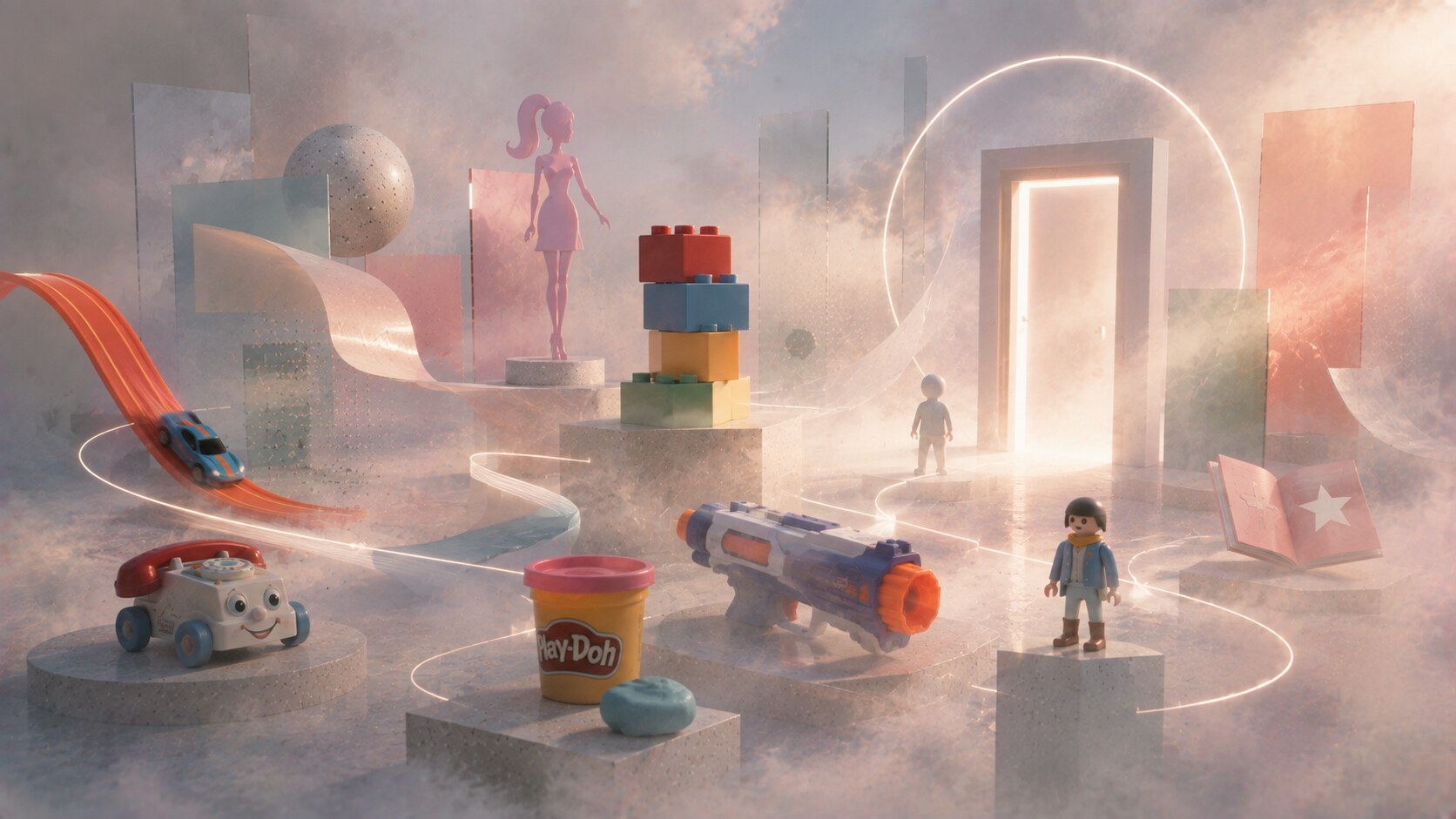
How eight famous kids toy brands built their logos, visual identities, and marketing worlds, from LEGO and Barbie to Nerf, Play-Doh, Playmobil, and American Girl.
Toy branding is harder than it first looks.
The audience is split from the beginning:
That is why the best toy brands rarely succeed through logo alone. They win through a larger system of color, mascots, shape language, packaging, storytelling, retail atmosphere, and long-term emotional repetition.
Some of the strongest brands in toys became huge because they built worlds. Others became huge because they made one product type feel inevitable.
This article sits naturally beside LEGO Brand Design Evolution, Branding and Logo Design of 8 Famous Sunglasses Brands, and Packaging Design of the Most Successful Bonbons.
“The strongest toy brands do not ask children to understand branding theory. They make recognition feel almost automatic.”
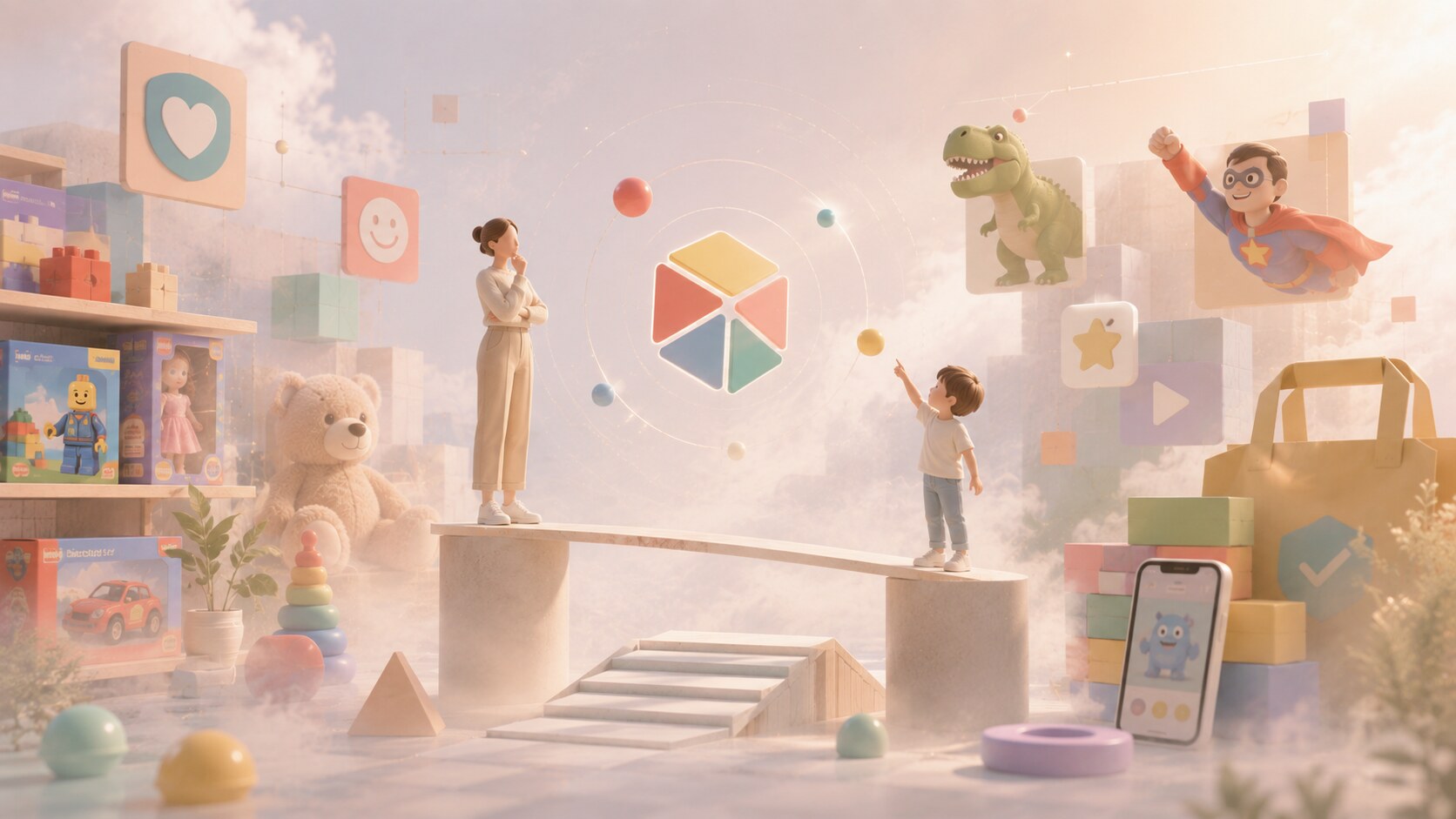
Toy branding lives in a very unusual space.
Unlike many consumer categories, the visual identity has to perform in several emotional registers at once:
That is why toy logos are often bolder, warmer, simpler, and more repetitive than logos in luxury or software. The mark has to work on shelves, in cartoons, on boxes, in retail stores, in apps, and in the memory of both a six-year-old and a tired parent.
One hidden truth in this field is that many famous toy brands were not shaped through one glamorous outside-agency story. Quite often their strongest identities came from long internal stewardship, product logic, and consistent marketing discipline.
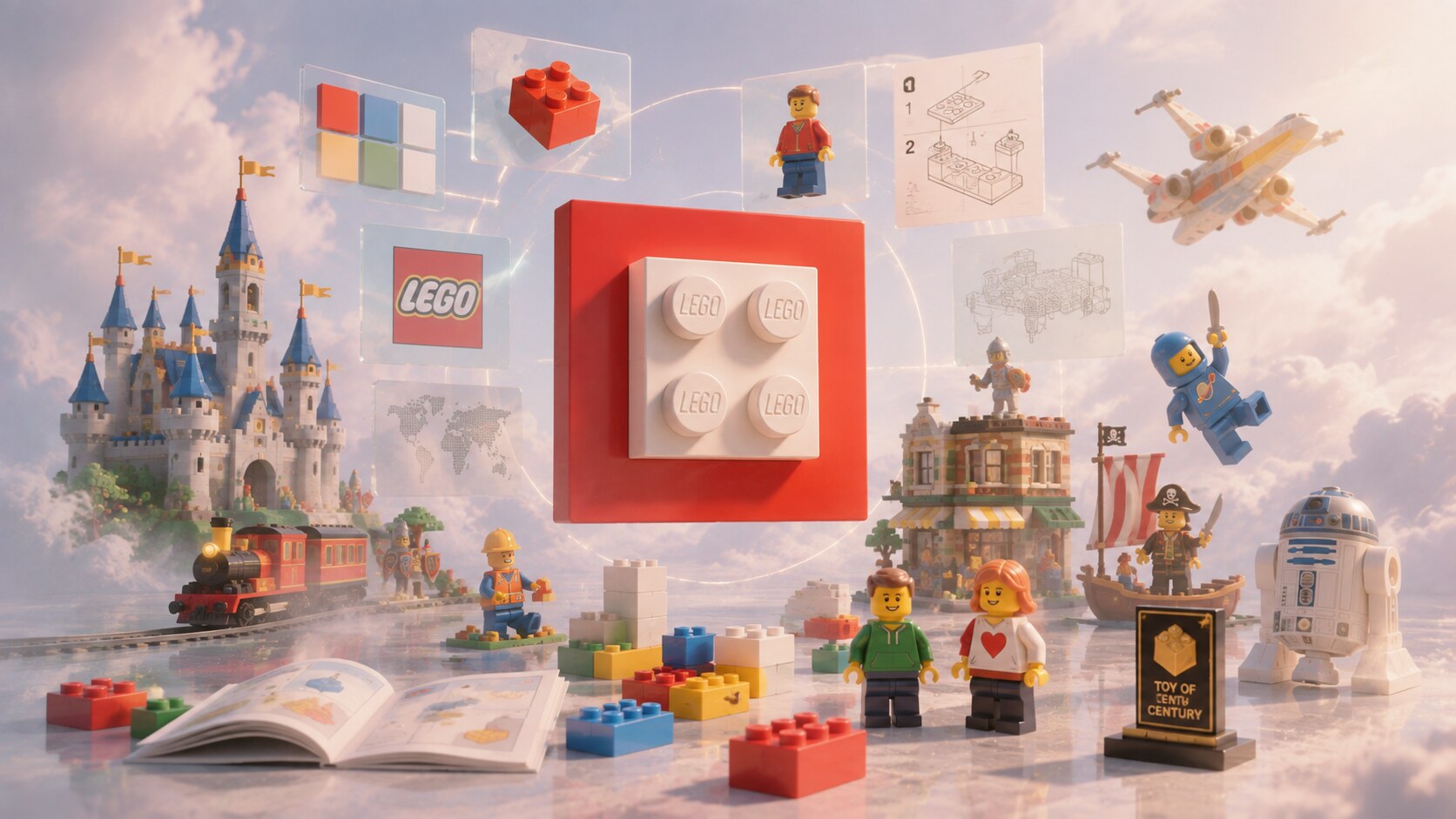
LEGO is still one of the clearest examples of long-term toy branding done correctly.
Its strength does not come only from the red square logo. It comes from the total consistency between:
The company history still points back to Ole Kirk Kristiansen and the “only the best is good enough” philosophy, which explains a lot about the brand tone. LEGO rarely feels messy because the company built discipline before it built global scale.
Because the visual identity and the product logic always reinforced each other.
The LEGO brick was named Toy of the Century twice, which says a lot about how fully the object and the brand merged.
At times, heavy franchise dependence risks making licensed worlds louder than LEGO’s own system identity.
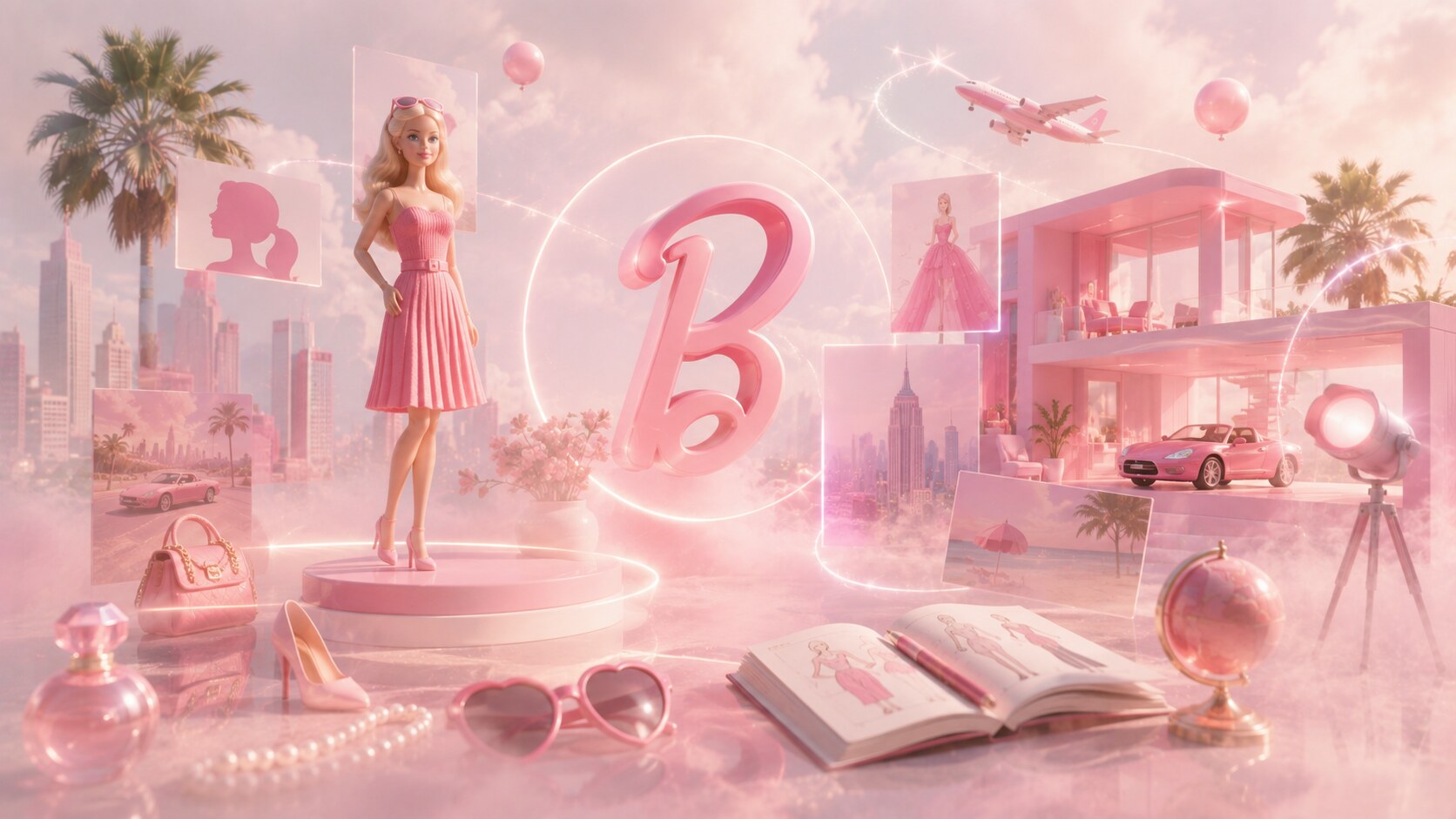
Barbie is one of the most successful branding systems in toy history because it grew far beyond a doll.
WIPO’s overview makes an important point: Barbie’s distinctive identity is strongly protected and heavily leveraged. The logo, the pink world, the name, and the slogan logic all became strategic assets, not just decoration.
The most impressive part of the brand story is how often Barbie managed to reinvent herself without losing immediate recognizability.
Her strongest branding tools include:
For the 2023 film wave, Mattel reportedly used more than 100 partnerships around Barbie, which shows how massive the brand’s marketing orbit became.
Barbie has also had very public pain points around unrealistic beauty standards and narrow representations, which forced the brand to broaden its design and messaging over time.
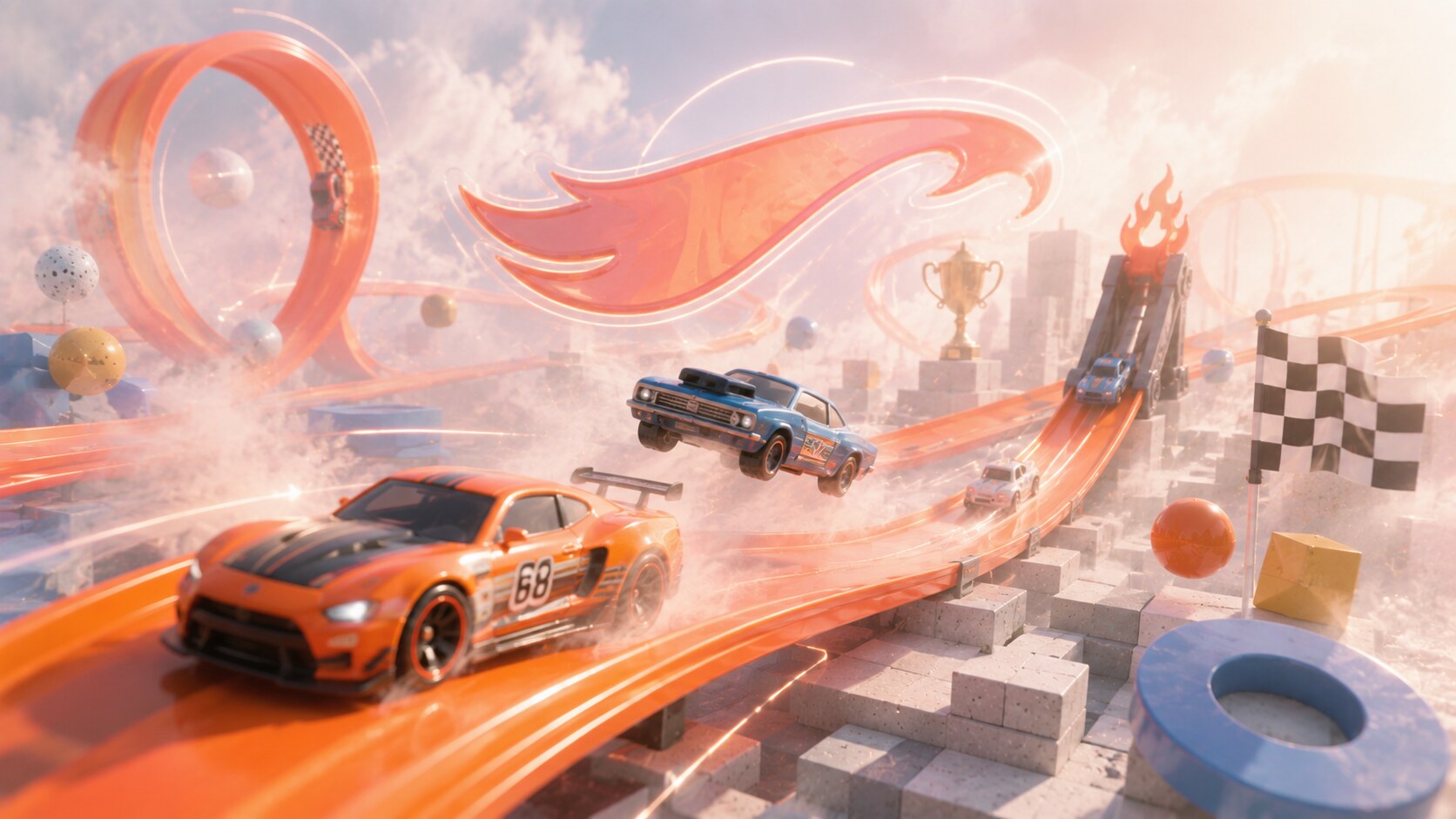
Hot Wheels is one of the smartest examples of toy branding built around motion.
Mattel’s own brand page describes it as being born from competitive spirit. That is useful because the logo, colors, track language, and whole attitude support exactly that promise.
The brand system works through:
Mattel says Hot Wheels is the number one selling toy in the world, and the brand page also points to its expansion into digital games, NFTs, live events, and broader culture.
Because the identity is not passive. It always implies movement, speed, and contest.
By 2020, Mattel said Hot Wheels had produced its 8 billionth die-cast vehicle and crossed $1 billion in annual revenue, which is an extraordinary scale signal for a toy line.
The brand can become too boy-coded or too adrenaline-coded if it narrows its own idea of who play is for.
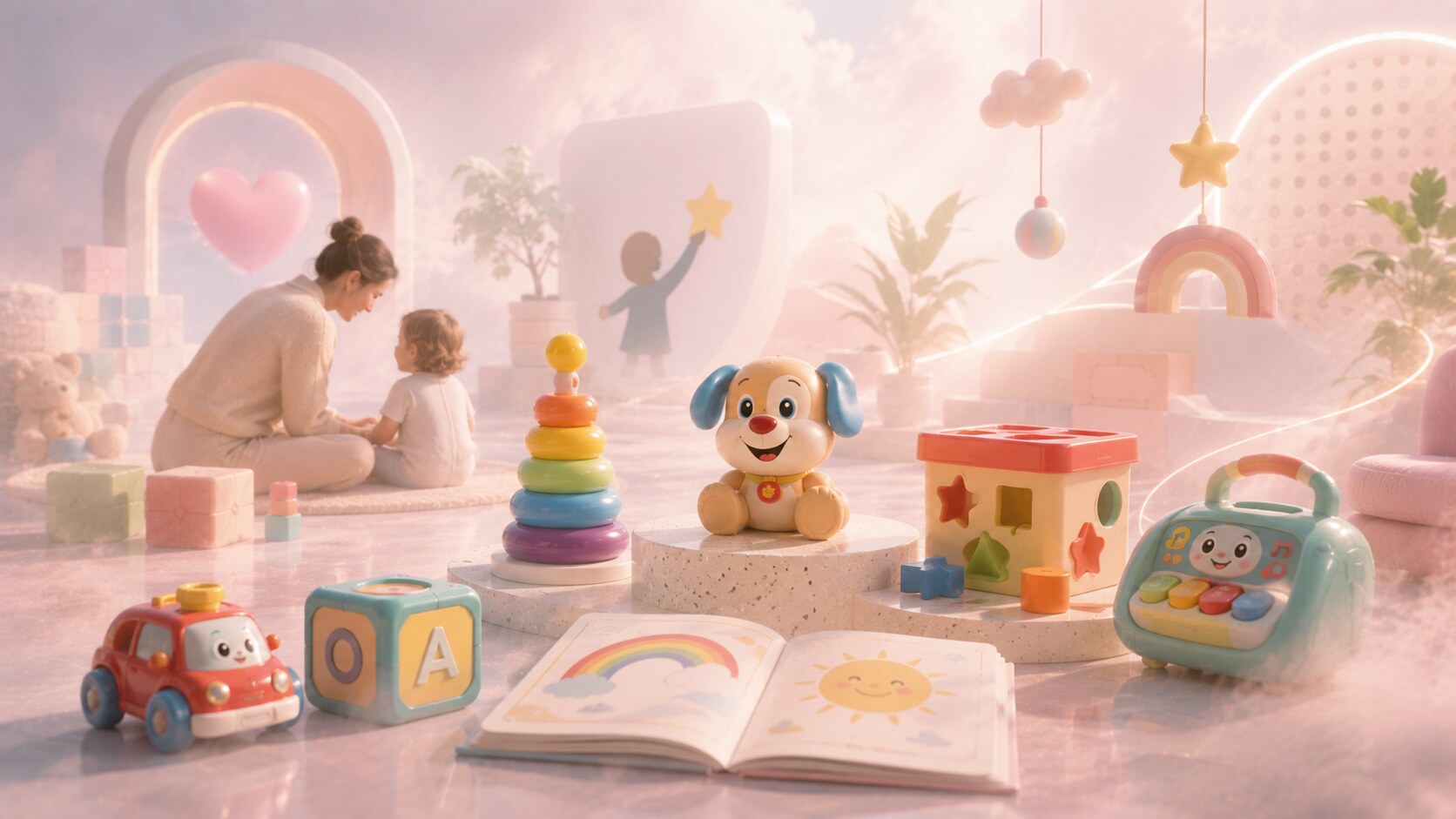
Fisher-Price represents a very different branding model from Barbie or Hot Wheels.
Its Mattel history and brand pages keep returning to the same idea: toys that support development while still being fun. That is a branding position built around parental trust as much as child delight.
The visual system benefits from:
This is why Fisher-Price remains so durable. It is not branding itself as a trend machine. It is branding itself as a safe early-life companion.
Because the identity reassures adults without becoming boring to children.
The same trust-heavy tone can sometimes make the brand feel less exciting than more character-driven competitors.
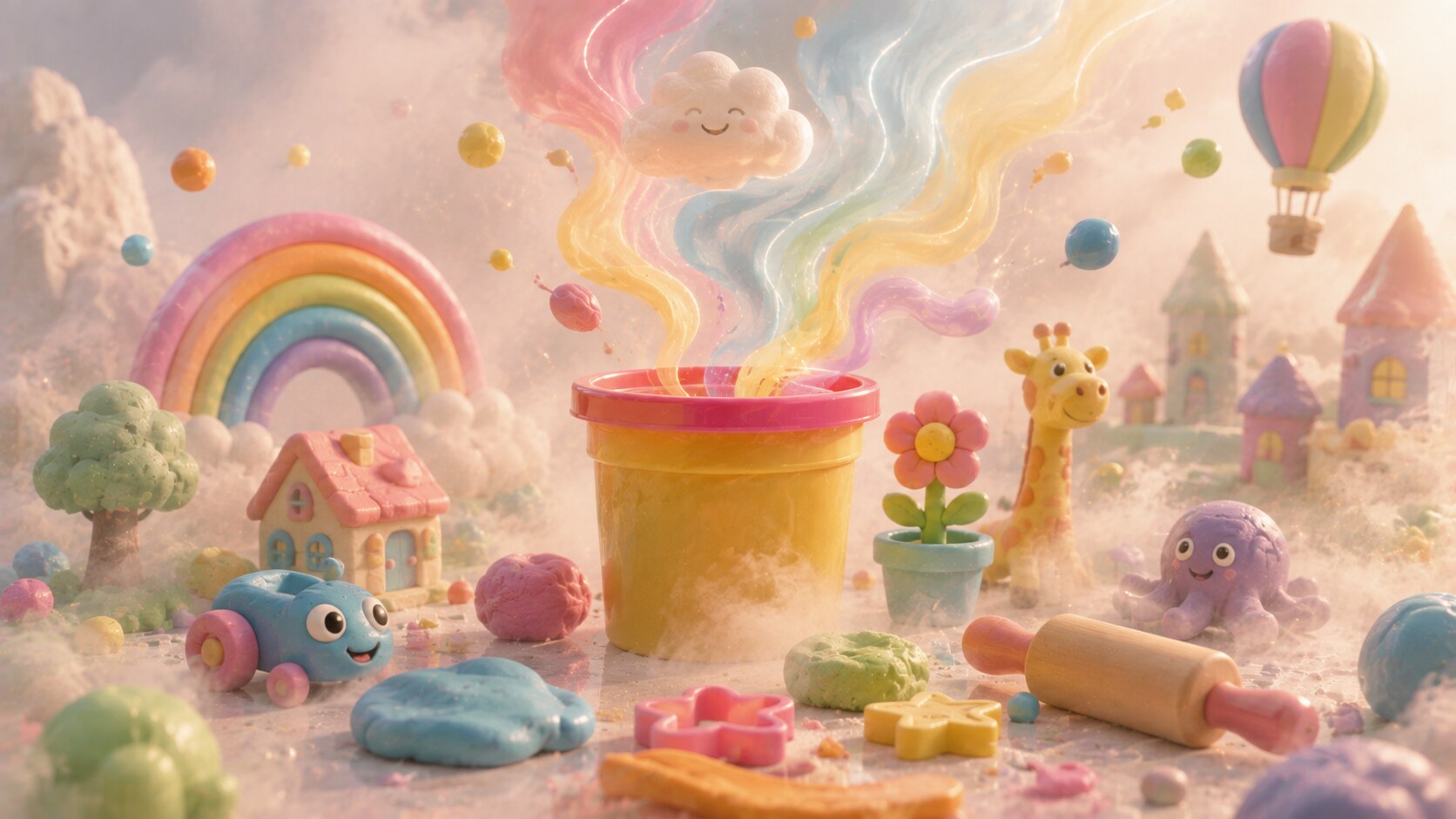
Play-Doh is one of the best examples of a sensory toy brand.
The logo is playful, soft, and easy to recognize, but the real branding power comes from a richer combination:
Hasbro’s 2018 announcement about the Play-Doh scent trademark is one of the most unusual brand facts in toys. Very few brands in any category own something as emotionally sticky as a smell memory.
Because it turned open-ended creativity into a very repeatable, highly recognizable ritual.
Play-Doh is primarily water, salt, and flour-based, which sounds humble for a brand so culturally famous.
The biggest risk is visual stagnation. A tactile classic can start to look too educational or too expected if the surrounding design world never refreshes.
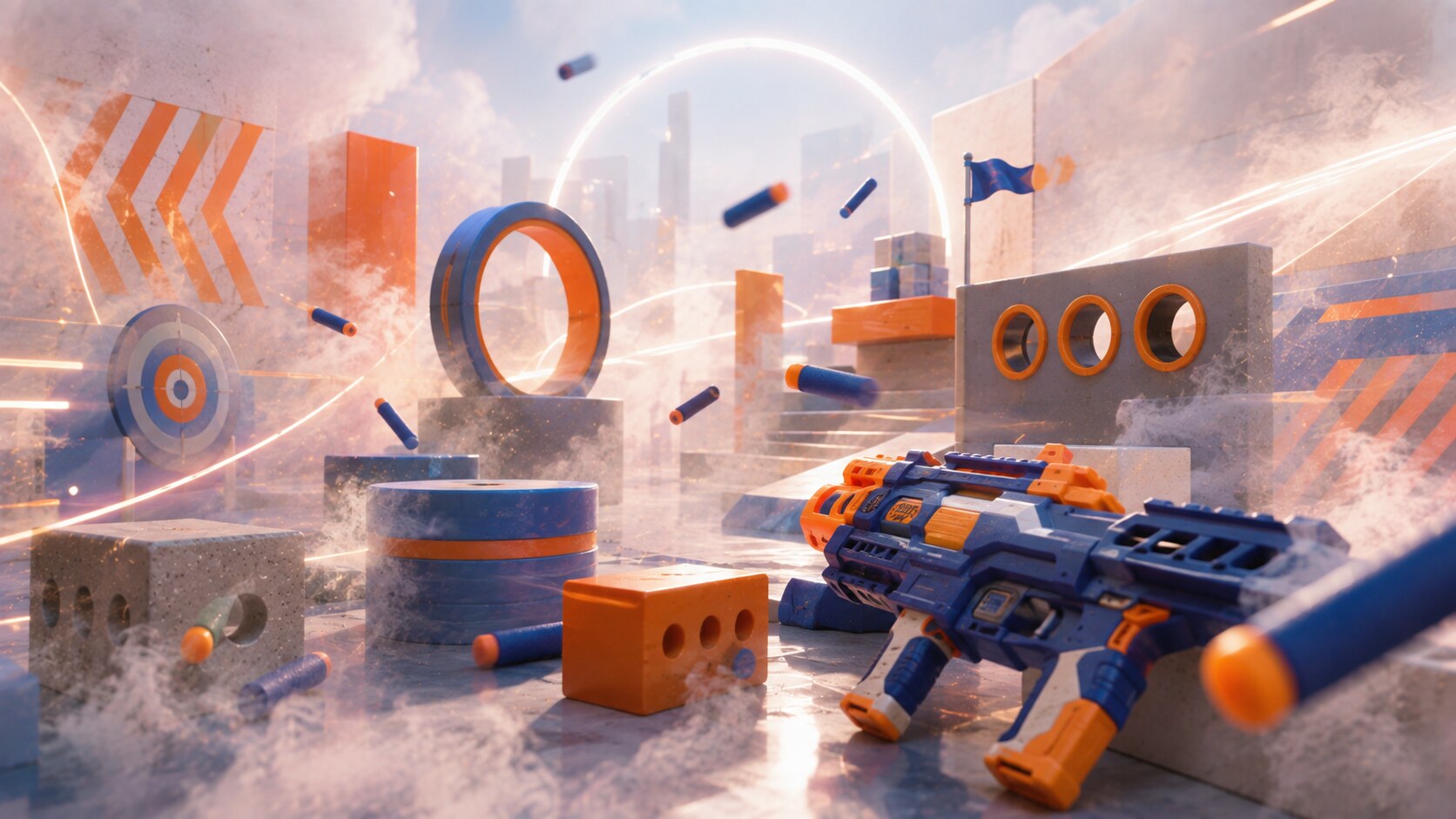
Nerf is branding inversion at its best.
Foam is soft, harmless, indoor-friendly material. But the brand identity turned that into action, velocity, and mock combat energy instead of gentleness.
Hasbro’s corporate brand list still treats Nerf as one of its core marks, and even older official materials around the blaster book show how the brand evolved from a foam ball into a whole blaster universe.
The visual strategy is clear:
Because it made “safe action” feel exciting rather than compromised.
Nerf sometimes risks becoming too noisy, too line-extended, or too dependent on one type of action fantasy.
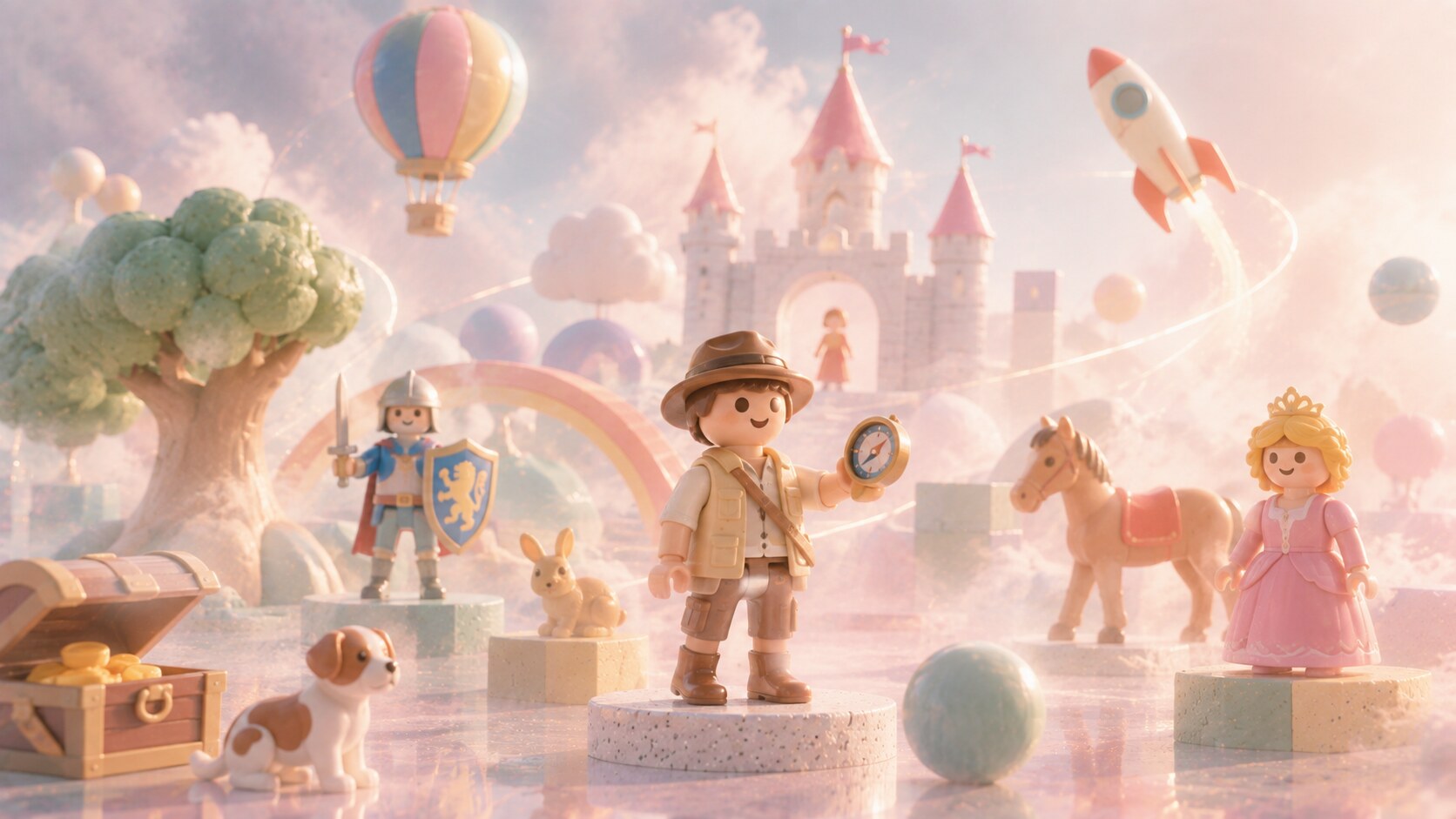
Playmobil is one of LEGO’s most interesting toy-brand contrasts.
Instead of brick logic, it built its brand around small figures, scene-building, and story-ready playsets. Its licensing description still emphasizes the 7.5 cm figure as the cornerstone of the whole system, and says more than 3.5 billion figures have been produced since launch.
That matters because Playmobil’s brand clarity is very physical:
This is a brand that usually feels less chaotic than many character-toy competitors. It favors composure and clear scene logic over visual overload.
Because the figure became an instant brand signal across many themes.
Its quieter visual tone can look less urgent on today’s hyper-stimulated shelves, especially next to noisier licensed brands.
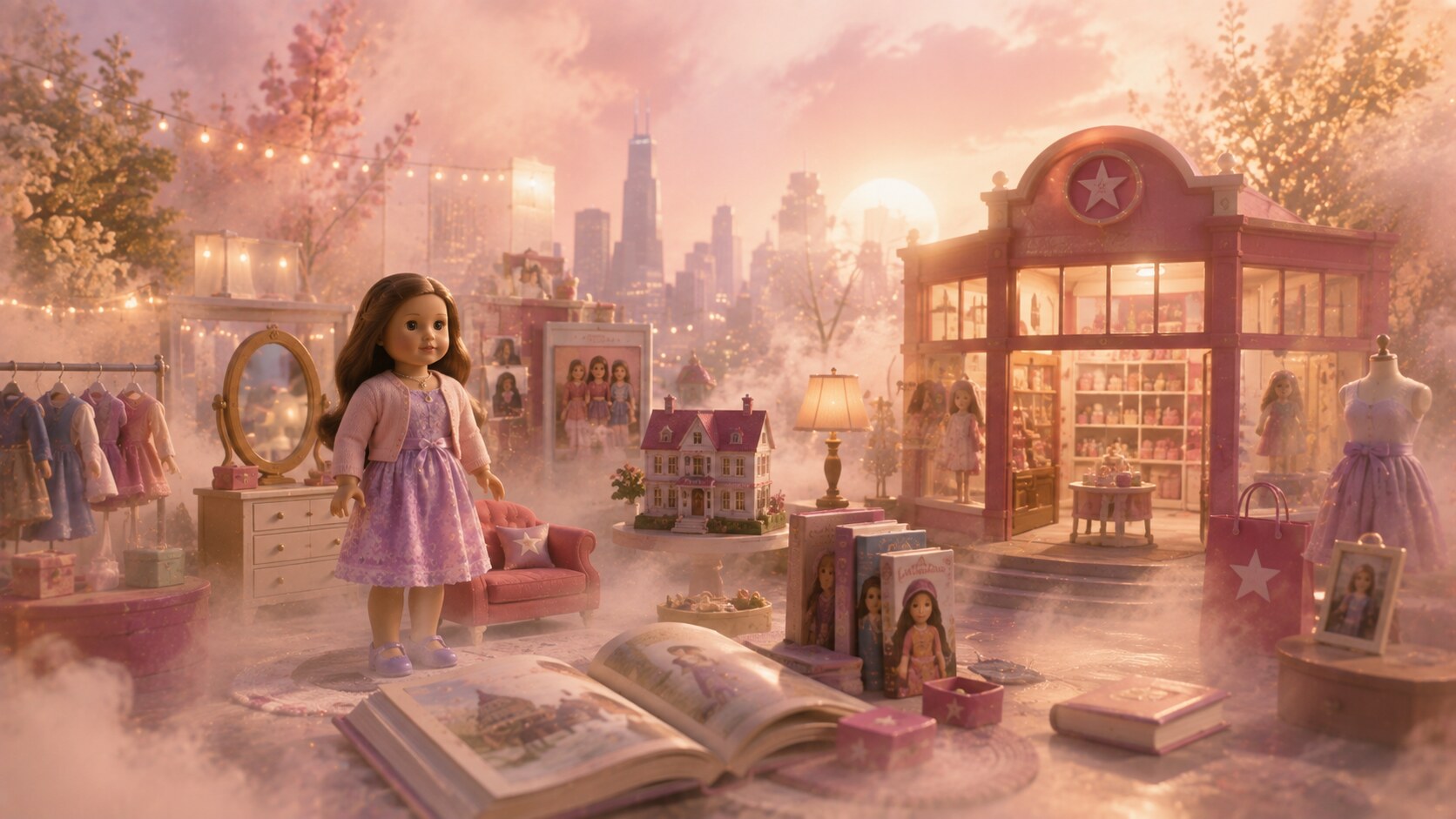
American Girl followed one of the smartest premium toy-brand paths in the category.
Its own story page still frames the mission around courage, confidence, and strength of character. Founder Pleasant Rowland built the brand from the idea that books, historical context, and dolls could work together as one educational-emotional package.
This meant the brand identity was never only about the doll. It was about:
The first flagship store in Chicago in 1998 showed how far ahead this thinking was. American Girl understood experiential retail before many brands even used the phrase seriously.
Because it turned product, story, store, and self-projection into one system.
Its premium positioning can make the brand feel inspiring and exclusive at the same time, which is not always an easy balance.
| Brand | Core branding strength | Main risk |
|---|---|---|
| LEGO | total system coherence | licensed worlds overpowering the core |
| Barbie | reinvention with instant recognition | cultural backlash around representation |
| Hot Wheels | speed and challenge identity | narrowing the audience too much |
| Fisher-Price | parental trust and developmental value | looking too safe or expected |
| Play-Doh | sensory memory and open creativity | visual stagnation |
| Nerf | safe action with high excitement | line overload and repetition |
| Playmobil | figure-based world clarity | lower shelf urgency |
| American Girl | story, aspiration, and retail immersion | premium distance and exclusivity tension |
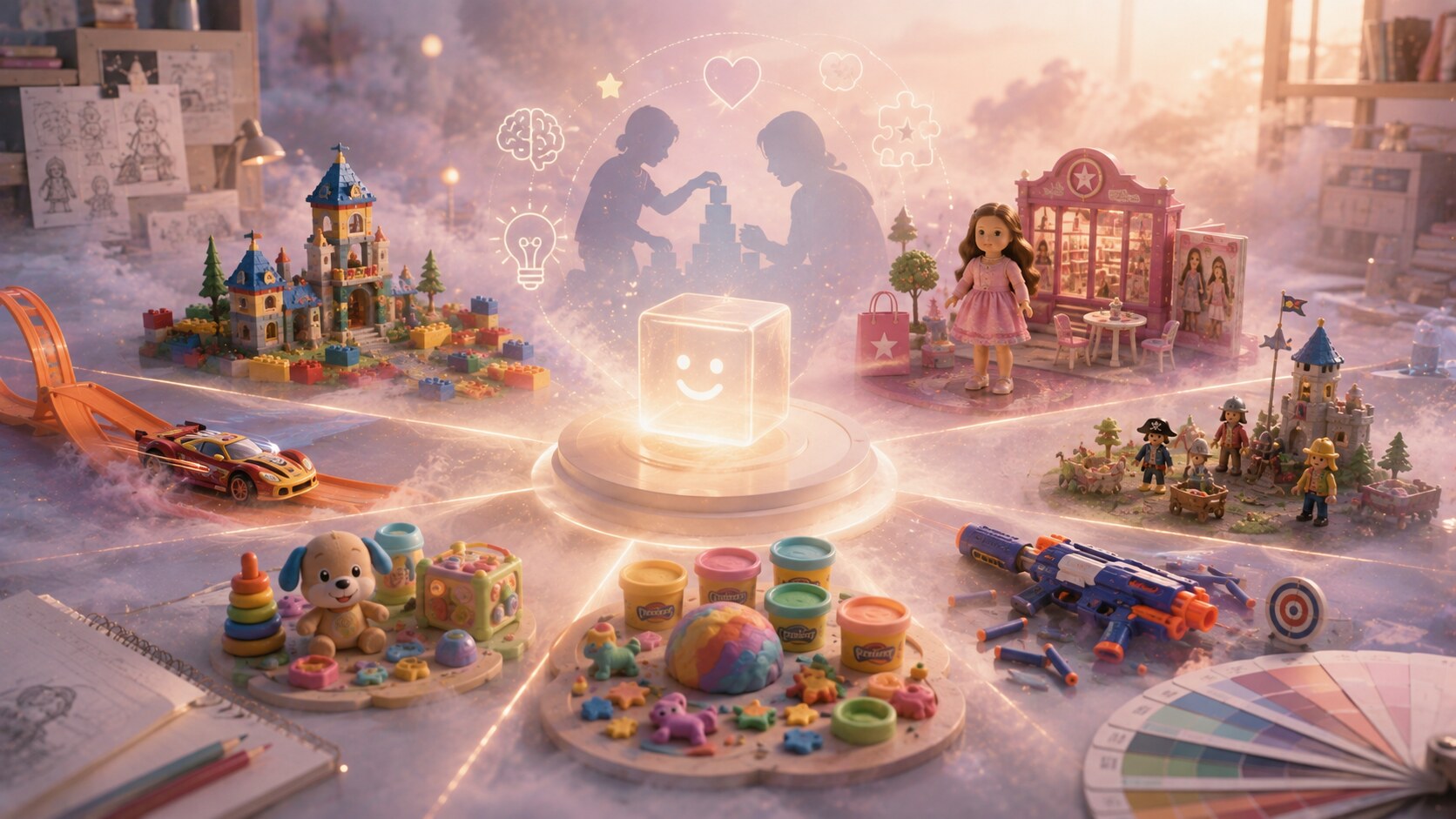
The comparison makes the main lesson obvious. Great toy branding is not about one visual style. It is about making the right promise feel easy to recognize and easy to trust.
One future pattern is already visible: the biggest toy brands are no longer only toy brands. They are becoming entertainment brands, retail brands, digital-play brands, and in some cases even cultural-IP machines.
That may sound simple, but it is actually a deep branding achievement.
LEGO made systems legible. Barbie made aspiration legible. Hot Wheels made speed legible. Fisher-Price made trust legible. Play-Doh made creativity legible. Nerf made foam action legible. Playmobil made miniature worlds legible. American Girl made story-led identity legible.
That is why these brands lasted. Their logos and marketing were not only attractive. They helped children and adults understand, very quickly, what kind of play experience was being offered.
News, insights, case studies, and more from the rausr team — straight to your inbox.
Send us your brief, your wildest idea, or just a hello. We’ll season it with curiosity and serve back something fresh, cooked with care.