How Sunglasses Are Designed: From First Sketch to 3D Model
A closer look at the design process behind sunglasses, from early sketches and CAD modeling to prototyping, materials, 3D printing, and the brands that shaped modern eyewear.

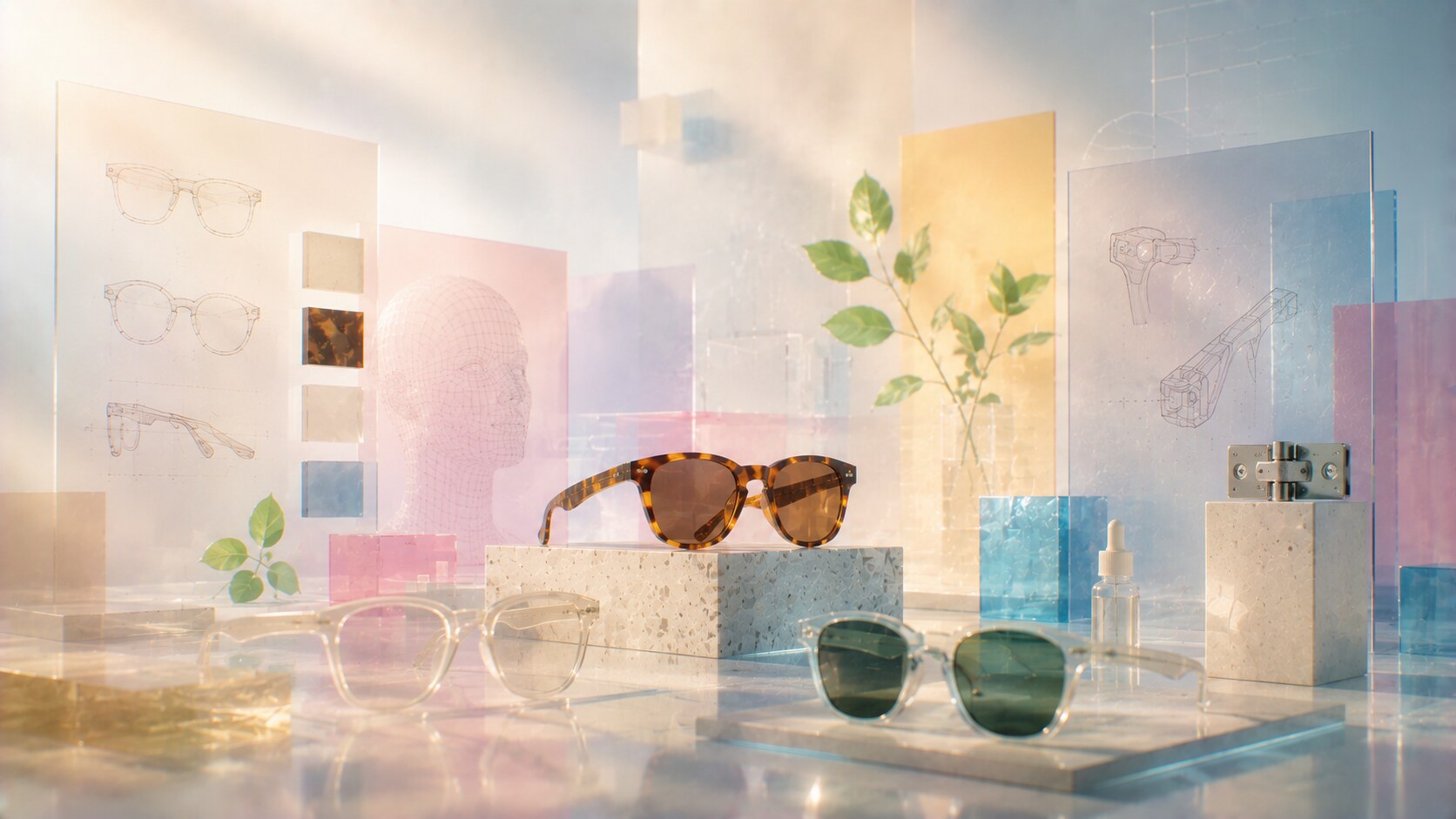
A closer look at the design process behind sunglasses, from early sketches and CAD modeling to prototyping, materials, 3D printing, and the brands that shaped modern eyewear.
People often look at sunglasses as a fashion object first. That is understandable, because the category sells attitude very well. But behind the finished frame there is usually a much more technical process than most people expect.
A sunglass designer is not only shaping a silhouette. They are balancing face geometry, lens curve, bridge comfort, hinge strength, manufacturing limits, visual identity, and sometimes even retail psychology. A frame can look excellent in a sketch and still fail completely when it sits on a real nose.
That is why the design process behind sunglasses is so interesting. It sits somewhere between fashion, industrial design, ergonomics, and small-scale engineering.
This article sits naturally beside How to Choose an Optimal Computer for Graphic Design, Choosing Optimal Monitor Setup for Graphic Design, and The Role of Display Quality in Graphic Design.
“The best sunglasses do not begin by asking how bold the frame looks. They begin by asking whether the object can survive real wear while still looking effortless.”
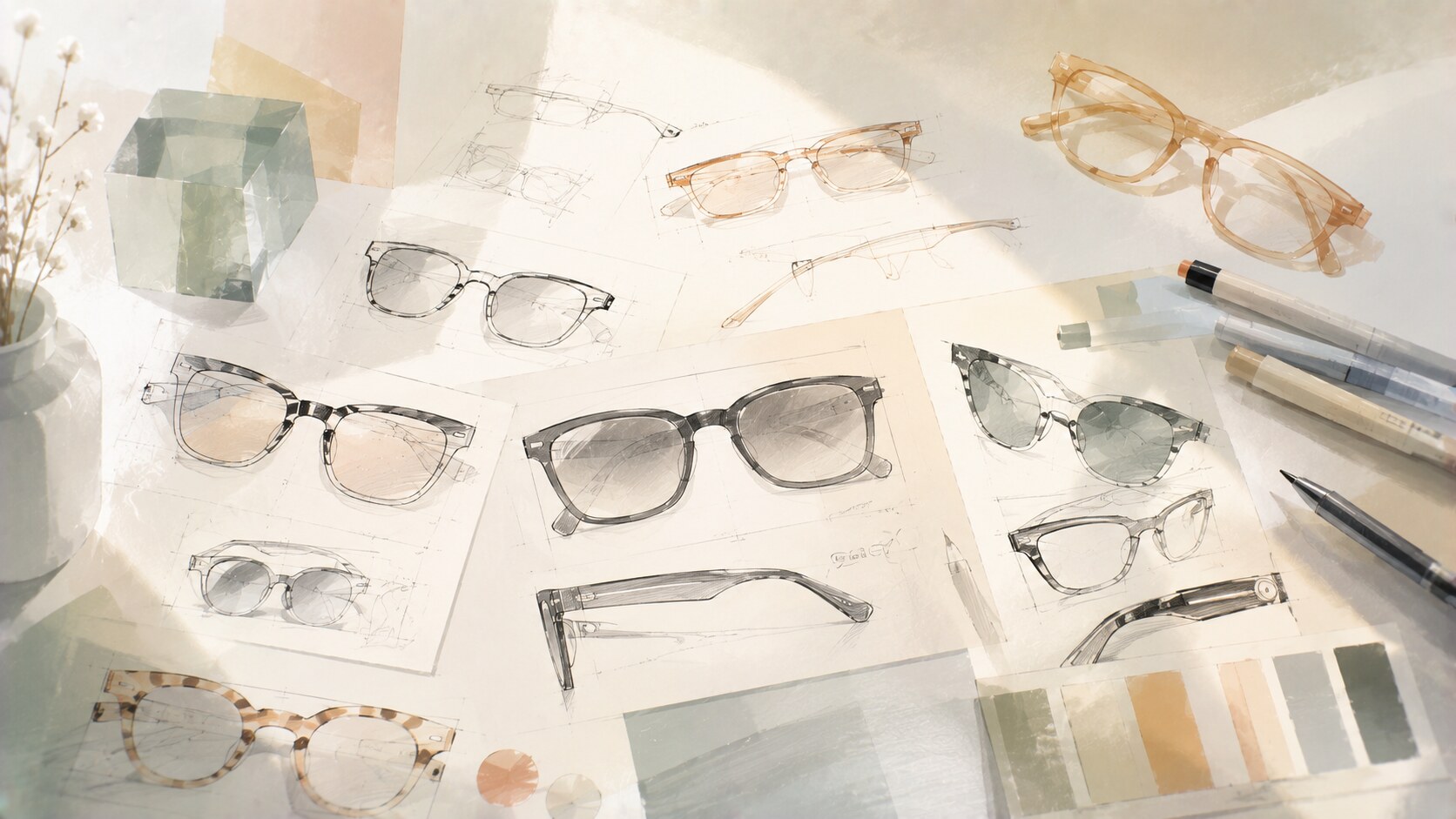
The first phase is normally loose. Designers sketch proportions, front shapes, temple thickness, lens relationships, and hinge positions without committing yet to exact engineering.
Some still work on paper because it is the fastest way to judge character. Others begin on an iPad in Procreate, Photoshop, or Illustrator. In both cases the goal is similar: decide the family of the frame before building technical reality around it.
In this phase designers usually explore:
The hidden truth is that many good eyewear concepts are decided surprisingly early. The later 3D work refines, validates, and rescues the idea, but the emotional direction is often visible in the first sketch hour.
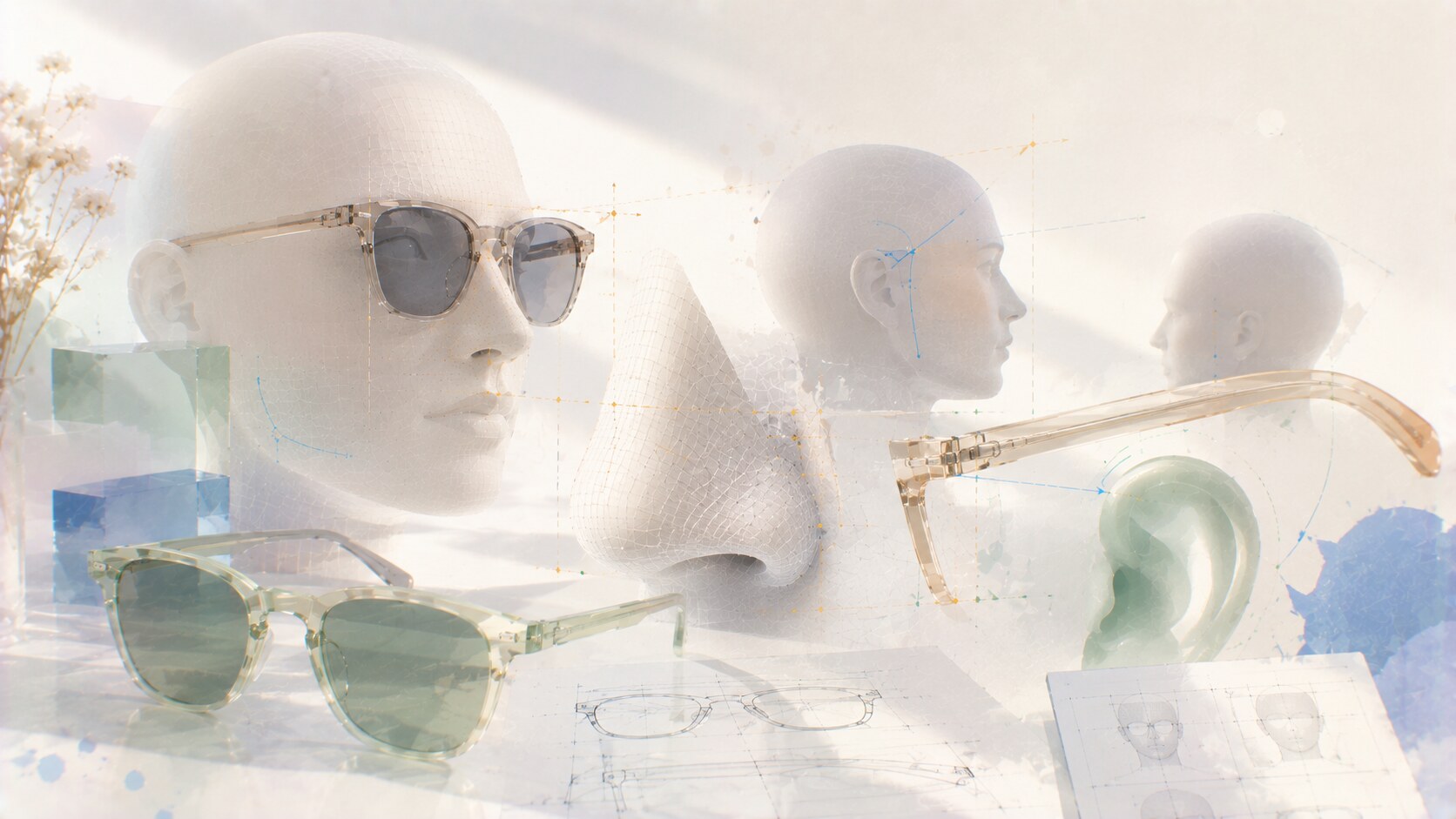
This is where the process becomes less romantic and much more serious.
A sunglass frame has to deal with bridge width, lens width, temple length, front curvature, pantoscopic tilt, pressure points, and how the frame lands visually on different face types. One millimeter can matter more than a whole color change.
Good eyewear designers learn quickly that a strong front view is not enough. The side view, the temple bend, the nose contact, and the weight balance often decide whether a model becomes a bestseller or an item people try once and never wear again.
One unknown but important detail: many eyewear problems are not caused by the front shape at all. They come from weak bridge decisions or badly judged temple geometry, which customers can feel immediately even if they cannot describe it.
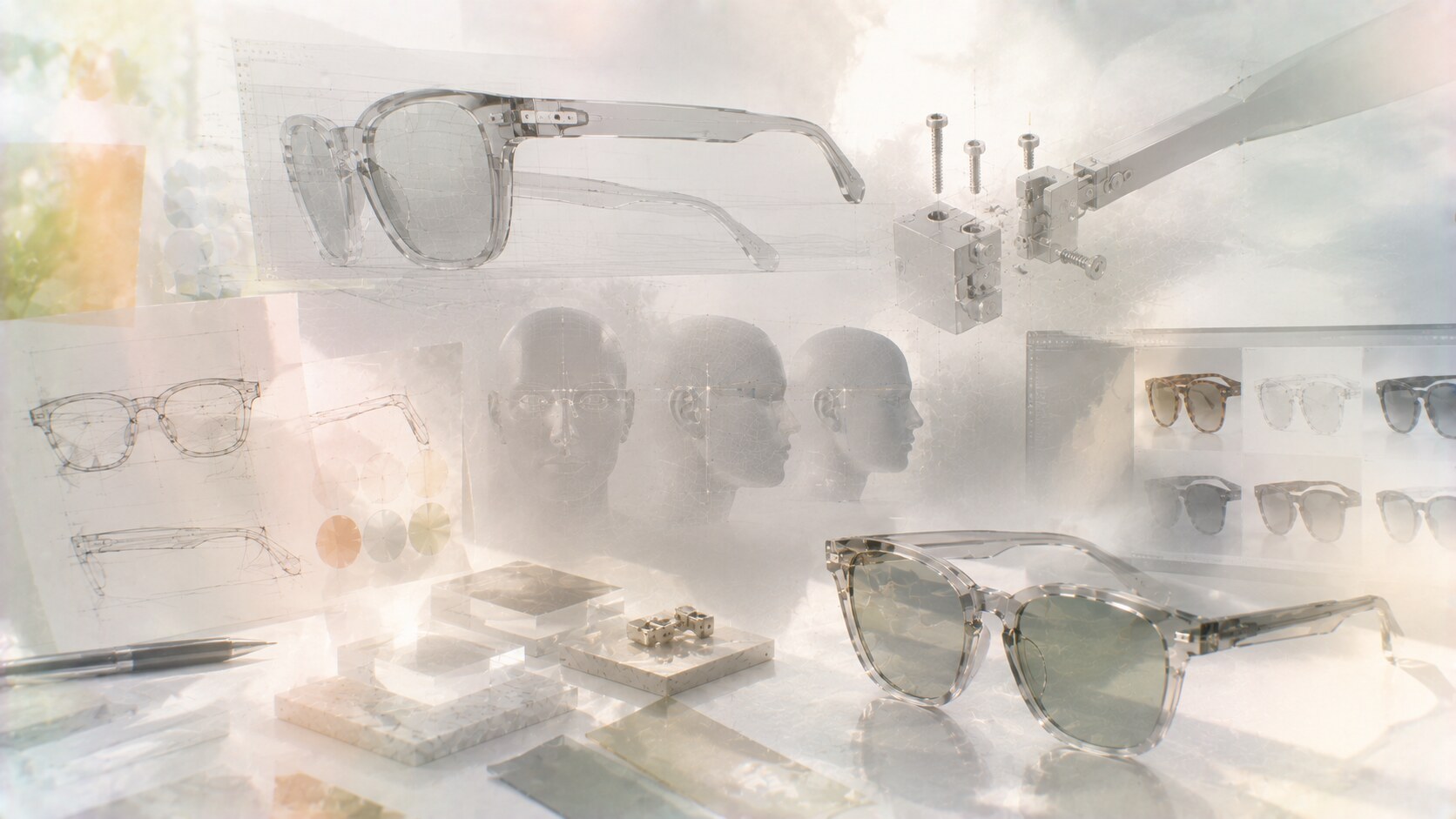
In eyewear, software choice usually depends on whether the team is exploring form, engineering a production-ready frame, or presenting the concept.
Rhino is often favored for curve control and surface work. It is popular in fields where designers need elegant geometry without jumping too early into heavy mechanical constraints.
SolidWorks or Fusion tend to become more useful when the design moves closer to production logic, assemblies, hinge tolerances, and technical detailing.
Blender is increasingly helpful for visualization, concept exploration, colorway checks, and campaign-ready renders, even if the final engineering happens elsewhere.
Here the process often splits naturally:
The important part is not the software brand itself. The important part is whether the team knows when to stop making pretty geometry and start solving manufacturable geometry.
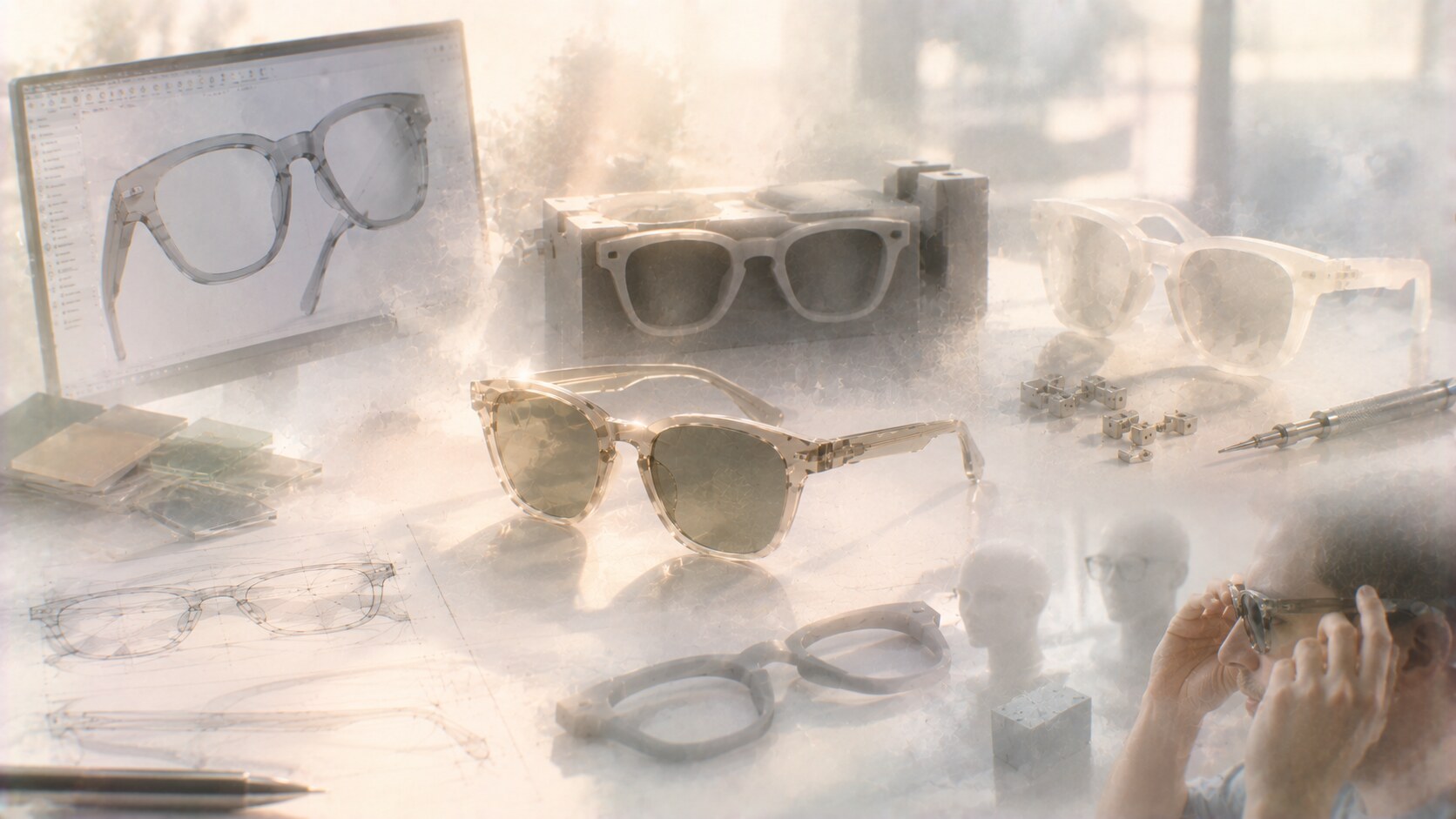
This is the stage where designers get humbled.
A beautiful digital frame often looks thicker, sharper, flatter, or less balanced in the hand than it did on screen. That is why prototyping is essential. First samples may be rough, but they reveal proportion problems immediately.
Typical steps include:
Designers also review how the frame behaves under movement. Sunglasses are not static gallery objects. They get pushed onto heads, hooked into shirts, left in hot cars, and opened one-handed. Weak decisions get exposed very fast.
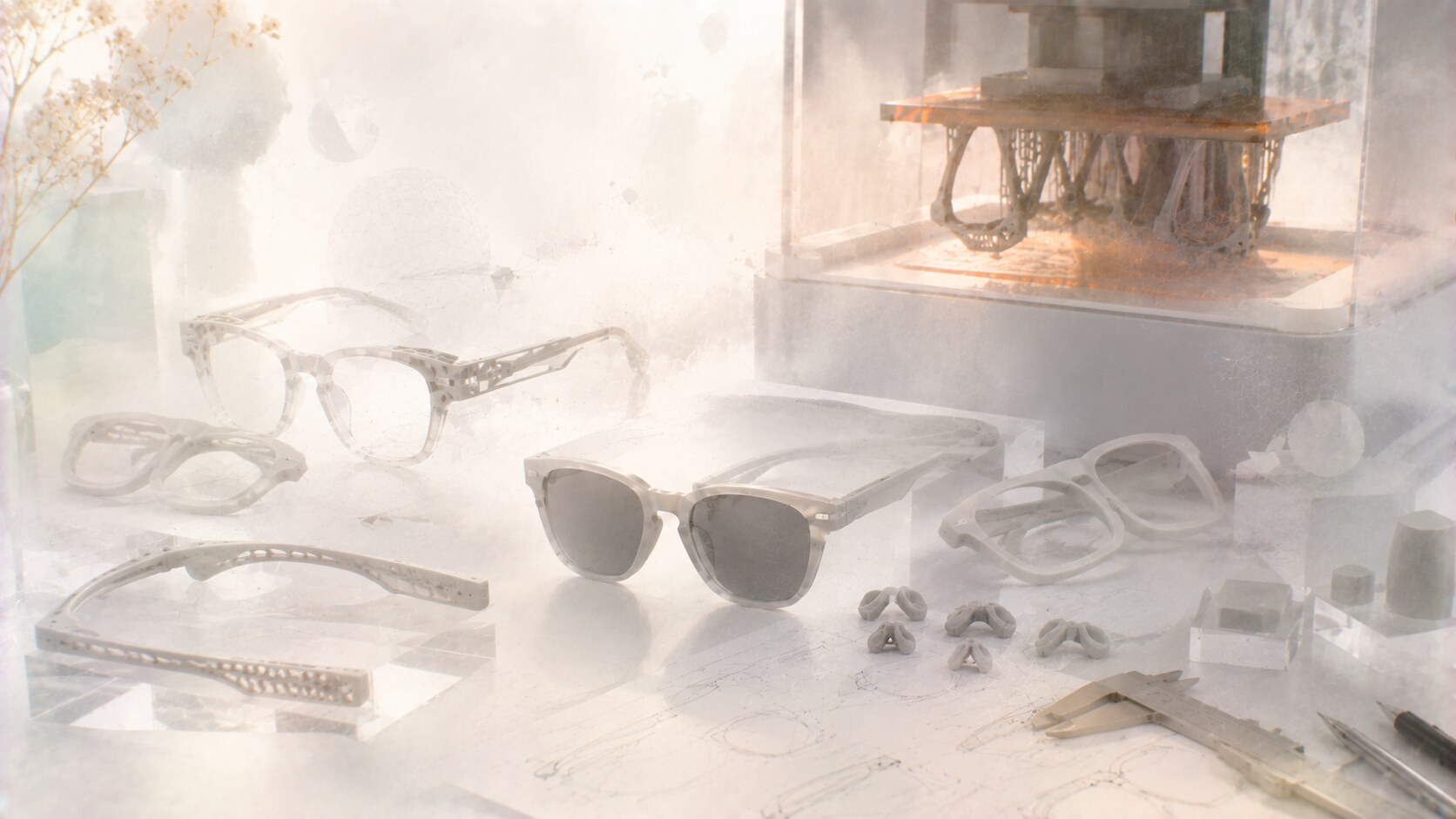
3D printing changed eyewear design in a very real way. It made early iteration faster, cheaper, and more democratic. Designers can test multiple fronts, bridges, or temple volumes before investing in tooling.
It also opened space for brands such as MYKITA, whose MYLON material became one of the most discussed examples of 3D-printed eyewear entering premium design territory.
But it is still too easy to romanticize the printer.
3D printing solves some things very well:
It does not automatically solve:
That is why many studios use 3D printing as a bridge, not as the whole story.
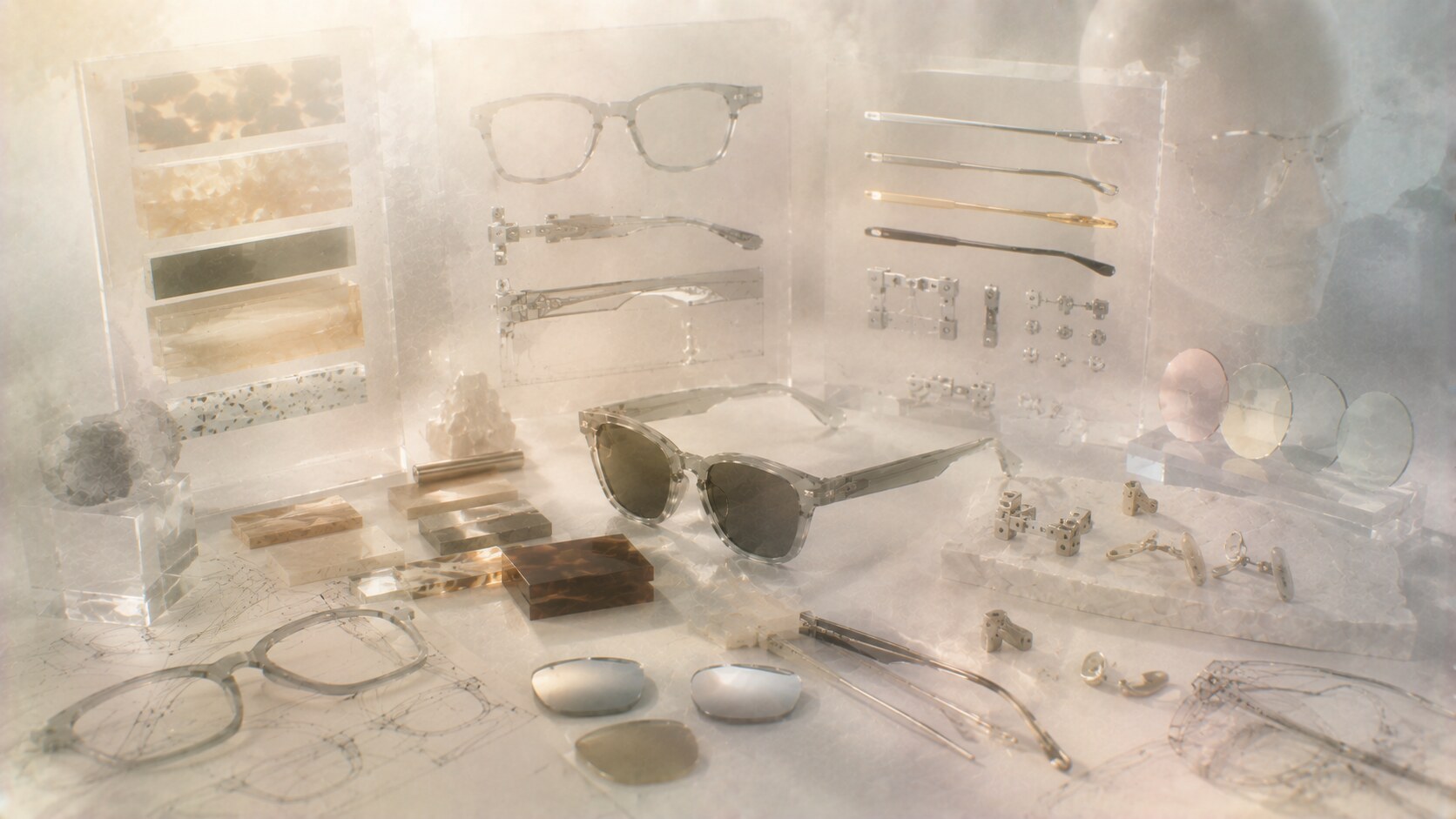
A frame drawn as thin and elegant may become impossible in thick acetate. A sporty wrap concept may need a different lens and front structure than a fashion square frame. A metal design may look light, but it can introduce new comfort and production challenges.
Material choice changes everything:
This is where famous brands separated themselves historically. Ray-Ban became iconic through clear model families like Aviator and Wayfarer, where shape and cultural meaning worked together. Persol built a different kind of reputation through tactile refinement, flexible temple details, and an old-world sense of material confidence.
One useful hidden fact: many acetate sunglasses are not sculpted as one romantic handmade object from zero. In practice they are often cut from acetate sheets, machined, tumbled, polished, assembled, and then finished by hand.
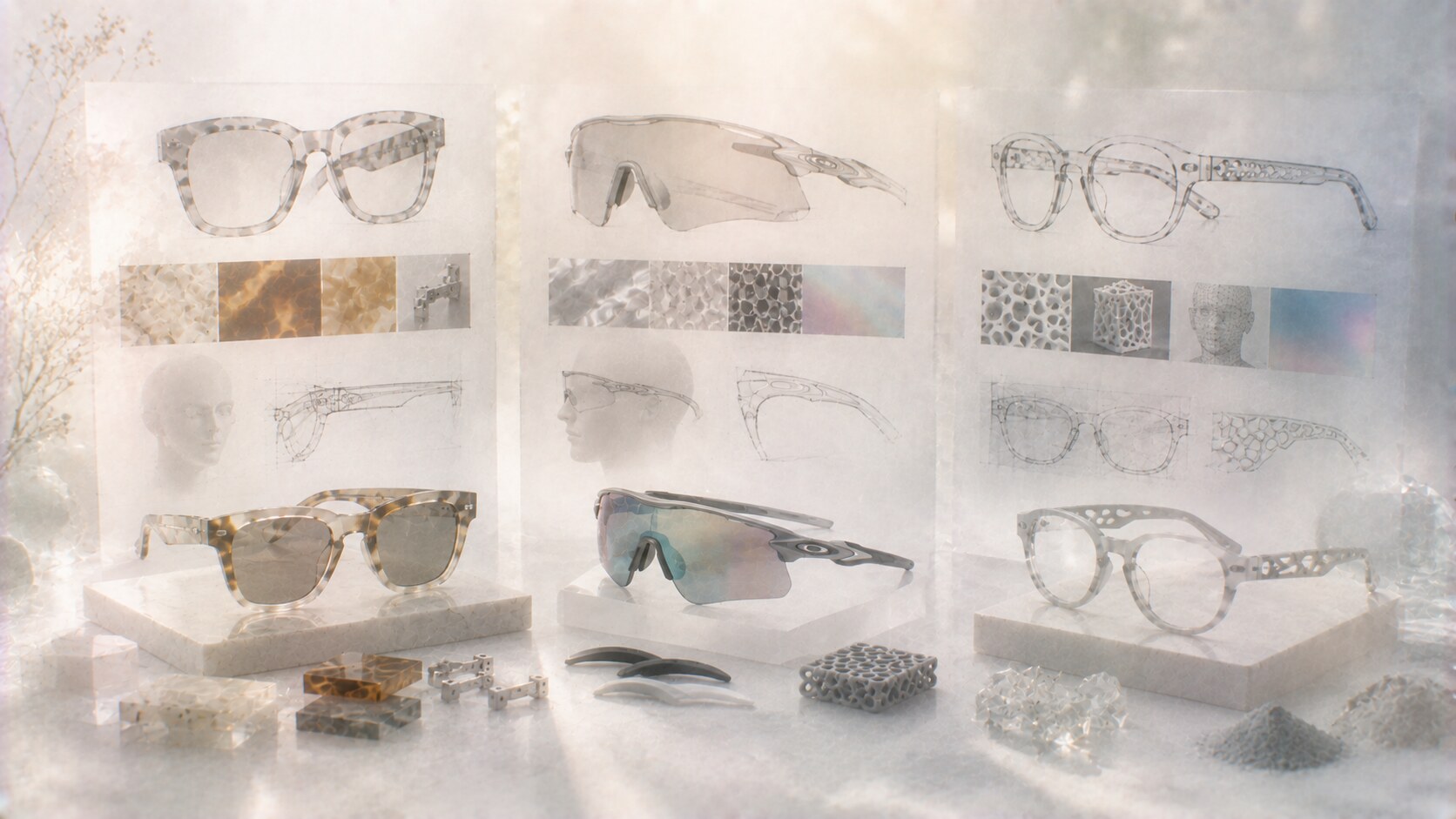
Not all sunglasses follow the same logic. The design priorities shift depending on the brand position and use case.
| Process style | Main priority | Design and production focus |
|---|---|---|
| Luxury acetate | Character and finish | silhouette, bevel, polish, color depth, and consistent hinge finishing |
| Sport performance | Stability and coverage | wrap geometry, grip, lens technology, and reliable fit under movement |
| Bespoke or custom-fit | Face accuracy | bridge tuning, personal proportions, and scalable customization quality |
| 3D-printed experimental | Fast iteration or unusual forms | geometry freedom, quick testing, and the challenge of surface quality and durability |
This is why it is dangerous to talk about eyewear design as one single discipline. Oakley solves different problems than Persol. Gentle Monster often sells a stronger fashion statement than a classic pilot-derived frame. MYKITA sits in another conversation again, closer to design-led construction and new fabrication methods.
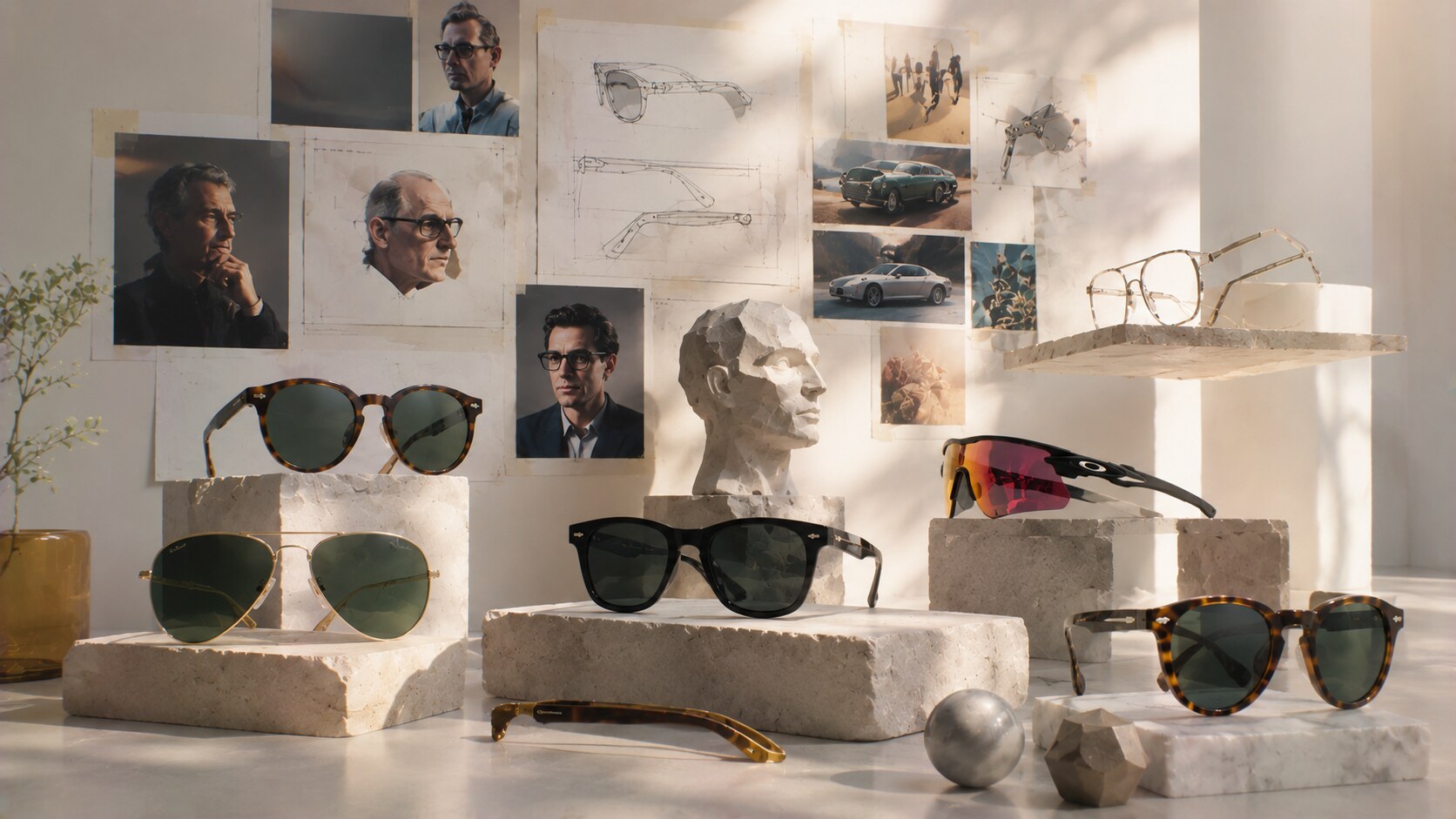
Some names are worth knowing because they changed what eyewear could look like.
Alain Mikli helped push eyewear further toward expressive design culture instead of pure optical utility. Tom Davies became strongly associated with bespoke eyewear thinking. Kenneth Grange, better known in industrial design more broadly, also touched eyewear and showed how product discipline can sharpen this field.
On the brand side, a few companies repeatedly set the tone:
“Many iconic sunglass models succeeded not because they were the wildest designs in the room, but because they translated one clear idea so well that the market never forgot them.”
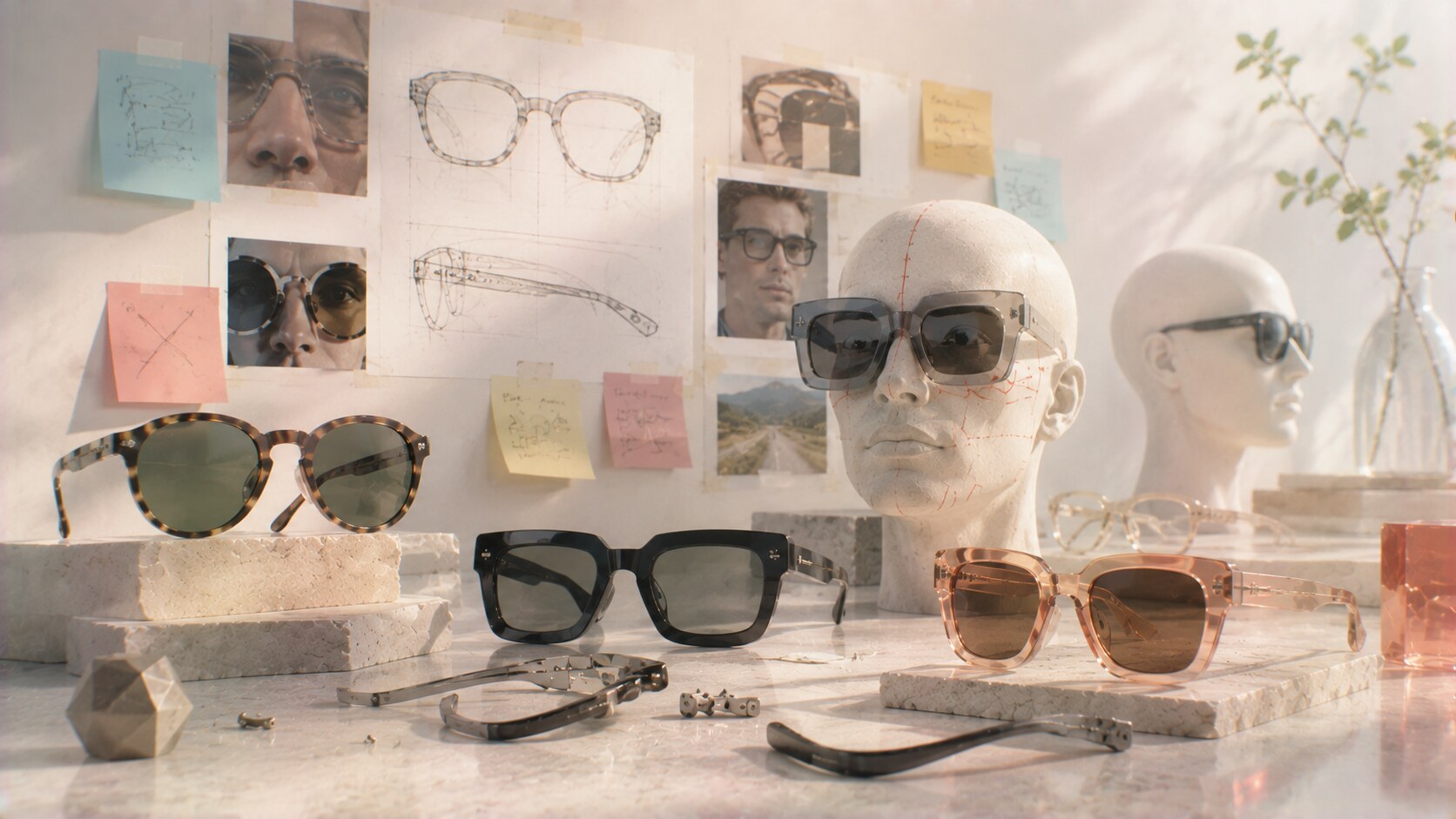
There are many ways for a sunglass project to fail.
Sometimes the front view is overdesigned and the temples are almost an afterthought. Sometimes the frame looks expensive in a render and cheap in the hand. Sometimes a bridge is too aggressive, the hinge placement is wrong, or the model depends on details that are hard to manufacture consistently.
Some very common blind paths are:
One sad truth of the category is that many bad sunglasses are not truly original failures. They are usually rushed copies of frames that were already successful elsewhere.
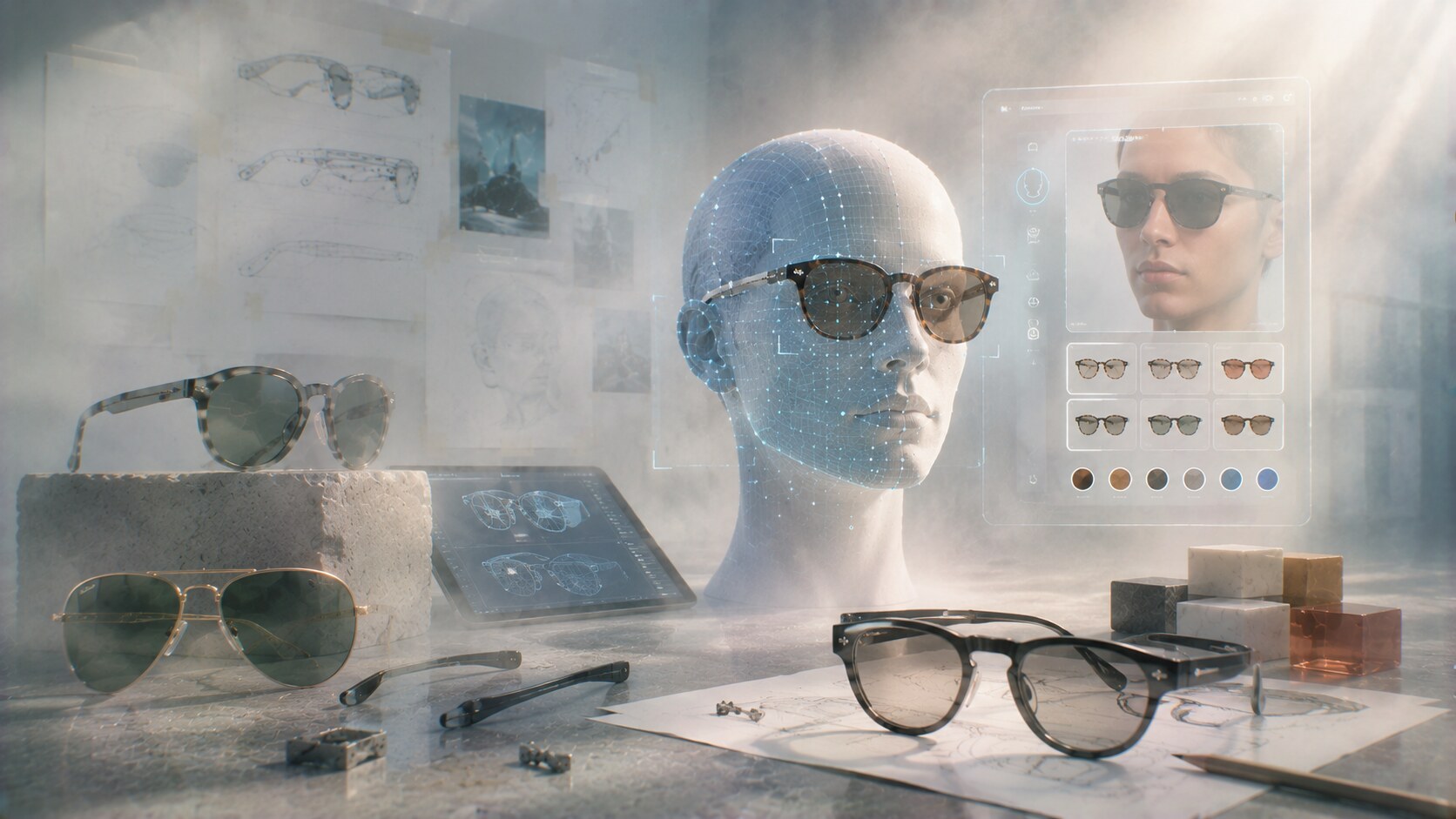
The next phase of sunglass design will probably become more hybrid. Face scanning, digital fitting, virtual try-on, and better rendering tools are helping teams evaluate ideas earlier and present them more clearly, easily and faster.
That does not mean design suddenly became easy.
If anything, software now exposes weak taste faster. It is easier than before to make a finished-looking render. It is still difficult to make a frame that feels inevitable, wearable, and distinct.
The strongest future advantage will likely go to teams that can combine three things well:
Behind every strong sunglass model there is usually a sequence of disciplined steps: sketching, fit thinking, CAD building, prototyping, material decisions, refinement, and only then the styling confidence people notice first.
3D printers, better CAD tools, and virtual fitting systems have made the process faster. They have not removed the real challenge. The real challenge is still judgment.
That is why the best sunglasses feel simple when finished. A lot of complicated work had to disappear for them to look that natural.

News, insights, case studies, and more from the rausr team — straight to your inbox.
Send us your brief, your wildest idea, or just a hello. We’ll season it with curiosity and serve back something fresh, cooked with care.