Designers and Nature: Is the Outdoors a Quiet Institution of Creativity?
Nature isn’t a magic muse, but research suggests it reliably restores attention, lowers stress, and reopens the mental bandwidth creative work depends on.

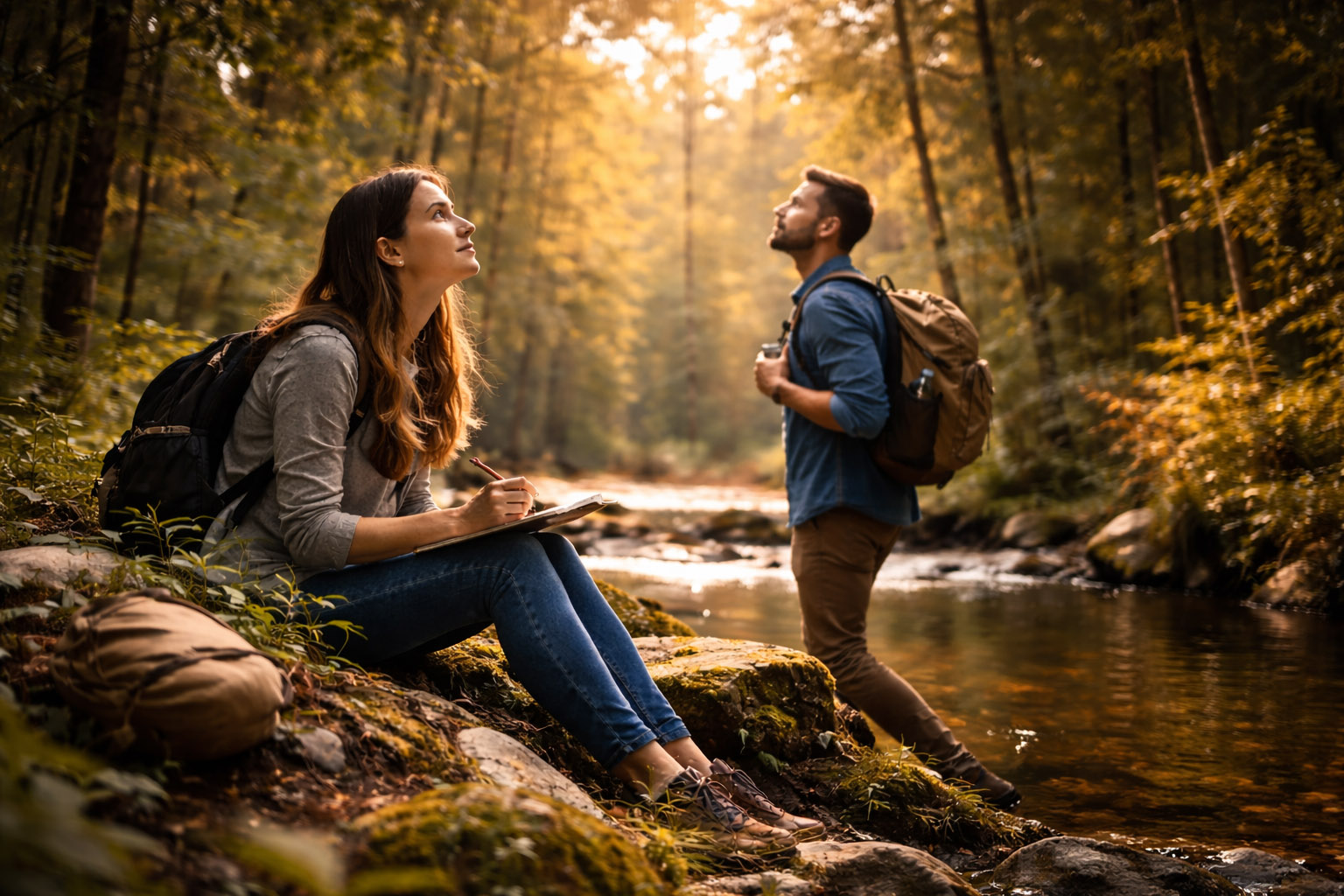
Nature isn’t a magic muse, but research suggests it reliably restores attention, lowers stress, and reopens the mental bandwidth creative work depends on.
Creative people talk about nature the way engineers talk about sleep: not optional, but routinely skipped.
Nature gets mythologized as a “muse” — a centralized institution of creativity, calm, and open-mindedness. That framing is poetic, but the research story is more practical:
“Nature doesn’t give you ideas. It gives you back the cognitive room to have ideas.”
If you’re a graphic designer (or any creative discipline) whose work is built on judgment, taste, iteration, and restraint, that room is often the real bottleneck.
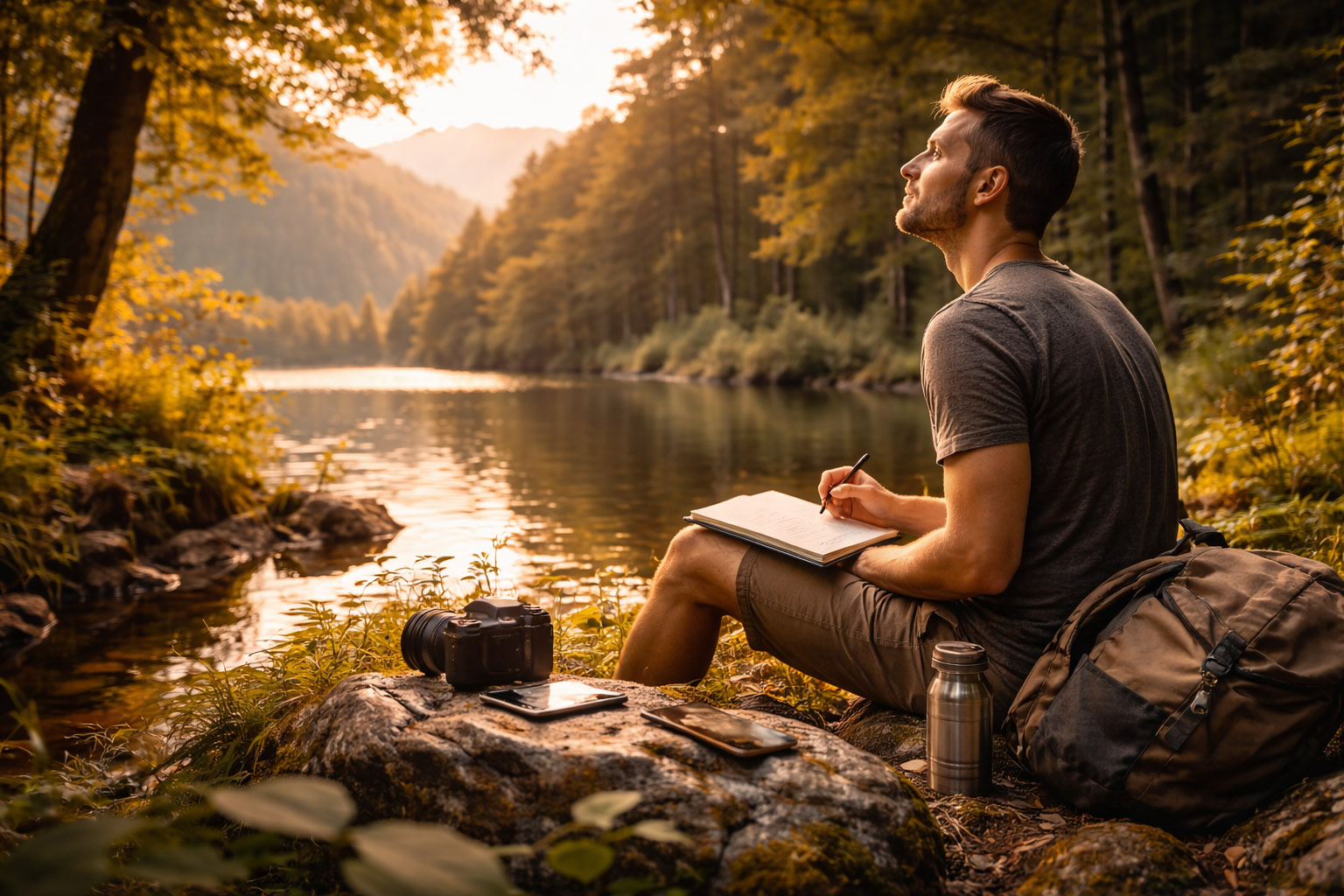
A lot of design work is not “creative” in the fireworks sense. It’s sustained executive control:
That control system tires. Not because you’re weak, but because it’s a limited resource in humans.
Attention Restoration Theory (ART) proposes a simple mechanism:
Natural environments are unusually good at producing soft fascination: movement of leaves, water, clouds, bird calls, variation without demand.
The subjective experience (“I can breathe again”) often shows up before you can explain it. Two forces stack:
Stress Reduction Theory (SRT) suggests natural scenes reduce stress responses more quickly than urban or high-stimulation environments.
In creative work, stress isn’t just unpleasant — it changes cognition:
That’s great for emergencies, not for good typography.
One under-discussed creativity killer is rumination: repetitive, self-referential loops (“this is bad”, “I’m behind”, “why can’t I solve this”).
Research on nature walks has found reductions in rumination compared with urban walks. For designers, that matters because rumination consumes the exact resource you need for craft: attention.
Many “creative blocks” are not a lack of ideas. They’re a mind that can’t stop monitoring itself long enough to play.

Here’s a less obvious effect that shows up in practice:
When you’re in a screen-saturated loop, your brain starts treating high-contrast, high-novelty stimuli as the default “signal”. Everything else feels dull. Then design work starts to feel like pushing a boulder: you need constant stimulation to stay engaged.
Nature flips that expectation:
After 20–60 minutes, many people report that subtle differences feel “louder” again:
That’s not mystical. It’s your perceptual system recalibrating away from overstimulation.

Nature time is not equally useful for everyone, because disciplines run on different cognitive modes.
The common thread is not “nature gives ideas”. It’s “nature restores the conditions ideas require”.
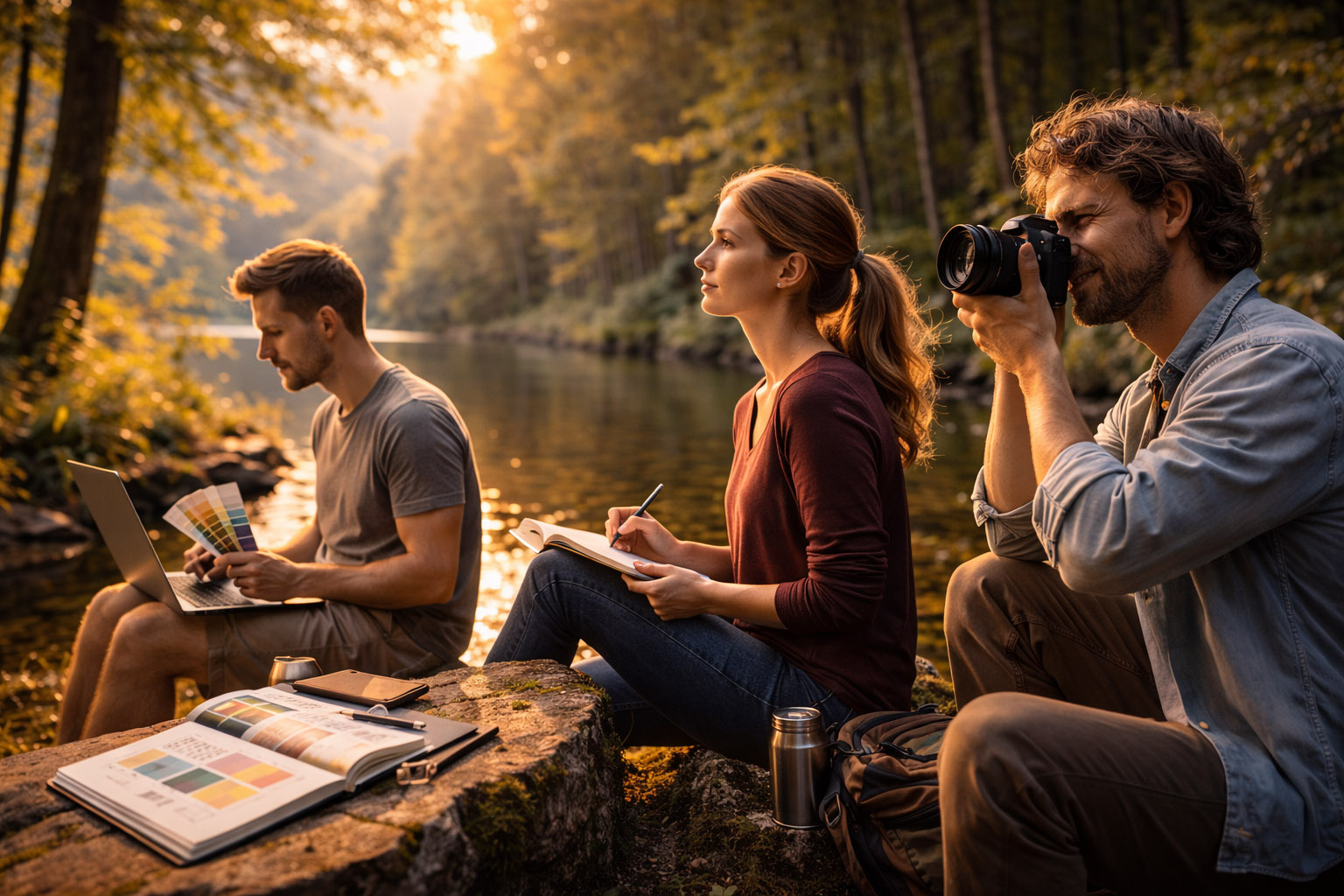
Nature is not always a net gain — especially if it becomes procrastination cosplay.
Practical fix: treat nature breaks like a tool, not a reward.

You don’t need a mountain. You need a predictable reset.
15 minutes: minimum viable reset
Walk without music. Let your eyes drift. Don’t “optimize”.
30–45 minutes: problem-solving reset
Start with 10 minutes unfocused. Then ask one question: “What is the actual decision I’m avoiding?”
90 minutes: deep restore
Best used weekly, not daily. This is where perspective shifts happen.
Bring one capture tool:

Designers often live in evaluation: your work is critiqued, compared, and revised. That constant evaluation easily becomes identity pressure.
Nature doesn’t fix that structurally — but it interrupts the loop:
Inside peace isn’t passive comfort. It’s the baseline state that allows:
More designers will treat nature like a productivity input
Not as lifestyle content — as a scheduled part of a creative system.
Cities will compete on restoration, not just stimulation
The best creative hubs won’t only have cafés and coworking. They’ll have accessible quiet green space that actually resets attention.
Biophilic design will shift from aesthetic to cognitive
Plants and wood textures are not the point. The point is reducing cognitive load and supporting recovery between intense focus blocks.
Nature isn’t a centralized institution of creativity. It’s closer to a maintenance mechanic: boring, reliable, and easy to ignore until you burn out.
If your work depends on seeing clearly, choosing well, and staying emotionally steady under revision, time in nature is less “inspiration” and more cognitive hygiene.

News, insights, case studies, and more from the rausr team — straight to your inbox.
Send us your brief, your wildest idea, or just a hello. We’ll season it with curiosity and serve back something fresh, cooked with care.