Most Popular Logo Fonts and Logotype Typefaces
The most popular logo fonts and logotype typefaces, from Helvetica and Futura to Gotham and Avant Garde, plus what today’s startup logo trends reveal.

The most popular logo fonts and logotype typefaces, from Helvetica and Futura to Gotham and Avant Garde, plus what today’s startup logo trends reveal.
There are fonts people use for paragraphs. There are fonts people use for posters. And then there are fonts that somehow cross into another category entirely: they become part of logo history.
These typefaces get used because they solve several branding problems at once:
That is why certain names keep returning in logotype conversations. Helvetica. Futura. Gotham. Univers. Avant Garde. Gill Sans. Bodoni. Frutiger. Some were used everywhere because they were neutral enough to carry many identities. Others became popular because they were less neutral than people admitted and therefore gave brands a very particular voice.
This article sits naturally beside The Process Behind Iconic Logo Design, Why Companies Sterilize Their Logos, and When Being Trendy Backfires.
“A logo font becomes powerful when people stop seeing it only as typography and start reading it as attitude.”

Helvetica became one of the biggest logo fonts in modern branding because it offered something many companies wanted desperately: clarity without drama.
Originally developed in 1957 as Neue Haas Grotesk by Max Miedinger with Eduard Hoffmann, it later became Helvetica and spread across corporate identity with unusual force.
Why did it work so well in logotypes?
That “neutrality” was always slightly mythological. Helvetica has a very specific personality: closed, controlled, compact, urban, and authoritative. But precisely because it feels so settled, brands have used it for decades to project trust and system-level confidence.
Because it let companies remove visual noise while still looking established.
The 2019 Helvetica Now redesign happened because one of the world’s most used typefaces needed help adapting to modern digital conditions, especially small screens and varied text sizes. Even icons of neutrality need maintenance.
Too much Helvetica use can flatten distinctiveness. When every brand chooses the same “safe” voice, neutrality stops feeling premium and starts feeling generic.

If Helvetica became the language of polished neutrality, Futura became the language of geometric confidence.
Designed by Paul Renner and released in 1927, Futura carries the optimism of early modernism very directly. Its circles, straight strokes, and engineered rhythm made it one of the clearest “modern” voices a brand could borrow.
That made it incredibly attractive in logos:
Futura was especially powerful for brands that wanted to look progressive but not cold. It brings a little more idealism than Helvetica, which is one reason it has remained beloved in fashion, publishing, technology, and cultural work.
Because it made modernity feel elegant rather than bureaucratic.
Futura went to the moon. It was used on the plaque left by Apollo 11, which tells you how deeply its modernist authority entered twentieth-century symbolism.
Futura’s geometry can also become stiff. In the wrong hands, it starts feeling more like a historical costume than a living brand voice.
One hidden reason Futura stayed alive so long is that geometric forms age differently from fashionable details. Even when its ideology shifts, its visual discipline still feels convincing.

Adrian Frutiger’s Univers, released in 1957, matters in logo history not only because of how it looks, but because of how it thinks.
Univers was one of the first major type families to present itself as a coherent system of weights and widths. That made it especially valuable for identity work, because a brand rarely needs only one wordmark. It usually needs a whole hierarchy around it.
This gave Univers a major advantage:
That systems logic made Univers one of the most usable identity typefaces of the modern era.
Visually, it feels calmer than Futura and often slightly more refined than Helvetica. It carries structure without shouting about it.
Because it behaved like a branding family, not just a single attractive face.
The original marketing of Univers deliberately leaned into the logic of classification and order. Even the numbering system of the family helped reinforce the sense that this was a rational tool for serious typographic systems.
Univers can be so well-behaved that it disappears. For some brands, that is ideal. For others, it is a missed opportunity.

If one typeface became shorthand for twenty-first-century brand confidence, it was probably Gotham.
Designed by Tobias Frere-Jones with Jesse Ragan and released by Hoefler & Co. in 2002, Gotham drew on vernacular New York lettering rather than Swiss purity alone. That gave it a more human civic strength.
Gotham works in logos because it feels:
It became especially powerful after its public association with the Obama campaign, but its wider design value was always larger than politics. Gotham gave brands a way to sound fresh, solid, and contemporary without becoming quirky.
Because it looked modern, but not fragile.
Netflix eventually replaced Gotham with its custom Netflix Sans, partly to reduce licensing costs. That is one of the clearest business reminders that popular logotype fonts eventually create pressure for bespoke alternatives.
Gotham became so successful that it helped create a whole wave of same-sounding brands. Once too many companies adopt the same “fresh but credible” tone, freshness disappears first.
“Gotham did not only become popular. It became a shortcut for seriousness without stiffness.”
This is where the story becomes especially interesting.
ITC Avant Garde Gothic was based on the logo for Avant Garde magazine, created by Herb Lubalin, then developed into a full typeface with Tom Carnase. That means this is not only a font used in logos. It is a font that came out of logo behavior.
That origin matters because the face carries unusually strong display instincts:
Avant Garde became hugely influential in music, fashion, culture, and high-style branding because it looked designed even before the logo was customized.
Because it gave brands immediate visual flair without needing illustration or ornament.
The typeface’s alternate characters and ligatures are a huge part of its magic. Many weak digital uses ignored that and made the typeface seem flatter than the original concept actually was.
Used carelessly, Avant Garde becomes cliché very fast. It is one of those fonts that can look brilliant in expert hands and painfully dated in average ones.

Designed by Eric Gill in 1928, Gill Sans gave brands something that Helvetica and Futura did not: a more human and slightly literary modernity.
Its proportions, open feeling, and calligraphic traces helped it become important in identity systems that wanted clarity without total machine logic.
That made it attractive for:
Gill Sans became deeply entangled with British visual culture, which is both part of its power and part of its limitation.
Because it made sans-serif branding feel cultured instead of merely efficient.
Many people use Gill Sans for “timeless sophistication” without knowing how strongly its voice is tied to a specific national design atmosphere.
Its warmth can become vagueness. And once designers start using Gill Sans as a shortcut for tasteful heritage, it can become more mannered than useful.
Not every popular logotype font is a sans serif.
Bodoni, associated with Giambattista Bodoni, became central to luxury, fashion, beauty, and editorial branding because it offers something almost opposite to Helvetica:
In logos, Bodoni often says: refined, expensive, curated, glamorous.
This is why so many fashion and beauty identities either used Bodoni directly or leaned into its wider typographic atmosphere. It gave brands a fast route to luxury language.
Because it turns letterforms into performance.
A huge amount of modern “luxury serif” branding is not literally Bodoni, but it still depends on the visual memory Bodoni helped establish: high contrast, vertical stress, thin hairlines, and editorial elegance.
Overuse made this look predictable. Once every beauty brand and fashion startup reaches for the same sharp serif drama, luxury starts turning into template.
One secret behind many luxury logos is that the type is often less original than the spacing, redrawing, and restraint around it.

Frutiger, designed by Adrian Frutiger, is more famous for signage and legibility than for flashy wordmarks. But that is exactly why it belongs here.
It represents a category of brand typography that works because it is:
Frutiger does not usually dominate the logo in the way Avant Garde or Bodoni can. Instead, it supports identity systems that need durability across environments, especially where information design and branding have to coexist.
In that sense, it is one of the most usable logo-adjacent typefaces of all.
Because not every brand needs spectacle. Some need reliability that can scale.
Frutiger became a model for a kind of modern humanist signage language that influenced countless later type choices, especially where transport, airports, institutions, and information systems meet brand expression.
Its politeness can underperform when a brand needs stronger memorability. Frutiger is often admired more than loved.
This is one of the most repeated complaints in modern branding, and it is not imaginary.
Many startups choose a similar logo voice because the incentives line up:
That is how the landscape fills with similar marks: clean, lower-contrast, modern sans-serif, carefully spaced, mildly friendly, never too strange.

The style survives because it works well enough. It is rarely disastrous. It is also rarely unforgettable.
This is where custom typography starts becoming attractive again. Not because custom is automatically better, but because sameness becomes expensive once everybody sounds equally safe.
“Startups often do not choose the same logo style because it is the best. They choose it because it is the least dangerous.”
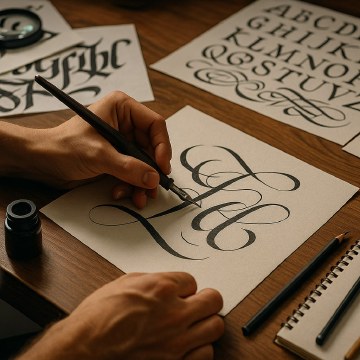
Custom logotypes are powerful because they can solve several problems at once:
But custom is not automatically superior.
If the brand strategy is weak, custom letters only decorate the weakness. And many excellent identities begin with existing type, then become strong through adjustment:
So the real hierarchy is not: custom good, existing bad.
It is:

That is also where the future seems to be going. Variable fonts, responsive logotypes, and AI-assisted type exploration are all expanding what a brand can do. But the old truth remains: originality only helps when it makes the brand clearer, not noisier.
One fun hidden fact: many so-called “font logos” people assume are untouched are actually redrawn far more than they realize. A lot of famous wordmarks sit in the zone between pure typeface and full custom lettering.
Helvetica, Futura, Univers, Gotham, Avant Garde, Gill Sans, Bodoni, and Frutiger each became important for different reasons.
Some offered neutrality. Some offered glamour. Some offered system logic. Some offered civic strength. Some came directly out of logo thinking itself.
What they share is not one style. What they share is usefulness.
They helped brands say something quickly, consistently, and with enough confidence to be remembered.
The future probably belongs less to blindly choosing famous fonts and more to knowing when to:
That is the deeper lesson. A font does not become a great logo because it is famous. It becomes a great logo tool because it helps a brand sound specific at the exact moment it needs a voice.
News, insights, case studies, and more from the rausr team — straight to your inbox.
Send us your brief, your wildest idea, or just a hello. We’ll season it with curiosity and serve back something fresh, cooked with care.