The most valuable part of a product may be the part that cannot be touched
Put two physically similar products on a shelf. One has a known name, a clear package, a convincing story and a familiar visual system. The other has no memory around it. Their materials may cost almost the same, yet one can be easier to notice, easier to trust and easier to sell at a higher price.
That difference is sometimes described as value created from nothing. It can certainly look like that from the outside. A logo weighs nothing. A name adds no battery capacity. Copywriting does not make a shoe faster, and an illustration does not add more drink to a bottle.
But branding is not really nothingness. It is an invisible structure made from decisions, intellectual property, reputation, consistency, distribution and remembered experience. Its production cost can be small compared with the revenue it influences, but building it well may take years.
The more useful question is therefore not, “How can a company charge so much for a logo?” It is, “Who created demand, who reduced the customer’s risk, who owns that relationship and who is able to repeat it?”
This article extends ideas from Graphic Design as a Main Sales Power, Bold Distinctive Branding vs Beautiful Generic Branding, and Branding Codes That Stick.
“Branding does not turn nothing into money. It turns scattered value into a reason to choose, remember and return.”
Nothingness has real economic weight

Intangible does not mean imaginary
Economists call this invisible layer intangible capital. It includes research, software, patents, design, brands, data, organizational knowledge and relationships. A WIPO study estimated that intangible capital represented an average of 30.4 percent of the value of manufactured goods sold between 2000 and 2014. Its contribution was about twice that of machinery, buildings and other tangible capital in the study.
The trend has continued. WIPO’s 2026 overview estimated that intangible investment exceeded $10 trillion in 2025 across the economies it covered and had grown more than three times faster than tangible investment since 2008. Brands and design are only part of that total, but they sit beside software, R&D and organizational know-how as productive assets rather than final decoration.
Here is the strange accounting fact: a valuable brand may be almost absent from the company’s own balance sheet. IAS 38 generally does not allow an internally generated brand to be recognized as an asset because its cost cannot be separated and measured reliably. A purchased brand may appear after an acquisition; a brand patiently built inside the company often does not.
So the invisible asset can influence billions in future sales while officially appearing mainly as past expenditure.
More than 60 percent of intangible investment is still missed by standard national accounting measures, according to WIPO’s 2025 work. The modern economy is partly powered by assets that its traditional instruments struggle to see.
From idea to object: the complete branding chain

The logo is one link, not the whole machine
A brand premium is rarely created by one brilliant mark. It grows through a sequence in which every layer must support the next one.
- The idea defines what problem the product solves and why the company should exist.
- Positioning and naming give that idea a place in the customer’s mind.
- Identity design creates recognizable codes through logo, type, color, image, sound and motion.
- Copywriting converts strategy into language people can understand and repeat.
- Product and packaging design make the promise physical.
- Production delivers the quality, reliability and scale promised by the story.
- Distribution and service make the product available and reduce the risk of buying it.
- Memory grows when all of those experiences remain consistent over time.
If one link is weak, the premium becomes fragile. Beautiful packaging can win the first purchase, but a poor product harms the second. Excellent production without clear positioning may remain an anonymous supplier. Clever copy can attract attention, but customer service determines what people later tell their friends.
This is why branding should begin before the logo and continue after the sale. It is not a graphic layer added to a finished object. It is the coordination of what the company says, makes and repeatedly proves.
Who in this food chain earns the most?

Ownership usually has more upside than authorship
The person who makes the most visible contribution does not automatically capture the most economic value. A designer may create an enduring logo and receive a project fee. A copywriter may write a line used for decades and receive a salary. The company that owns the trademark, funds distribution and accepts the commercial risk can keep earning from both.
| Participant | Normal payment | Long-term upside |
|---|
| Designer or copywriter | salary or project fee | limited unless royalties or equity are agreed |
| Agency or manufacturer | fee, markup or contract margin | grows through scale and specialist power |
| Brand owner or investor | residual profit and asset growth | highest potential, but also carries failure risk |
United States wage data illustrate the hierarchy, although they are not a global law. The Bureau of Labor Statistics reported 2025 median pay of about $62,960 for graphic designers, $114,850 for art directors and $166,790 for marketing managers. The numbers reflect seniority and management responsibility, not the value of any single idea. Founders, shareholders and rights owners sit outside that simple salary comparison and can gain far more, or lose their investment entirely.
The famous Nike Swoosh makes the point sharply. Carolyn Davidson, then a design student, invoiced Nike $35 for the mark in 1971. The Swoosh became immensely valuable only after decades of products, athletes, advertising, distribution and cultural repetition. Nike later recognized Davidson with shares and a gold ring, but the original fee did not contain the future value of the symbol.
The lesson is not that logo designers deserve every dollar a company later earns. It is that fee, value created and value captured are three different numbers. Creatives who want more upside must negotiate licensing, royalties, retainers or equity, while accepting some of the risk that comes with them.
The smile curve explains where profit collects
Standardized assembly often sits between two knowledge-heavy ends
The smile curve, popularized by Acer co-founder Stan Shih, is a simple picture of a global value chain. Research, technology and design sit high on the left. Standardized manufacturing sits lower in the middle. Branding, distribution, retail and service rise again on the right.
It is not a universal law. A specialized factory can have enormous power, while a weak retailer may have almost none. But the curve explains why interchangeable suppliers face price pressure. If ten factories can make the same object to the same standard, the buyer can move the order. If only one company owns the patent, customer relationship or trusted name, replacing it is much harder.
Three forces usually decide who captures the value:
- Scarcity: How difficult is this capability to replace?
- Control: Who owns the trademark, patent, data, retail shelf or customer account?
- Risk: Who pays before demand is known and absorbs unsold stock or failure?
This also explains why many manufacturers try to move outward on the curve. They develop their own products, protect industrial designs, build direct sales channels and place their own name on the box. They are not escaping production. They are adding control around it.
Apple: the product is not cheap, but the system earns the premium
A better example of orchestration than value created from nothing
Apple is often used as proof that the West creates a story while Asia cheaply makes the object. That interpretation misses much of the real work.
An iPhone contains advanced processors, displays, cameras, radio systems, materials, manufacturing tools and supplier inventions. Its production value is not low, and final assembly is only one part of a network spanning the United States, Taiwan, South Korea, Japan, China, India and other economies. Suppliers such as chip makers and component specialists own valuable knowledge of their own.
What Apple controls is the orchestration: product definition, custom silicon direction, operating system, industrial design, privacy position, naming, packaging, stores, services and the relationship with the customer. Each part reinforces the next. The box does not ask buyers to understand the supply chain; it presents one authored experience.
WIPO’s analysis of the iPhone 7 estimated that Apple captured about 42 percent of an approximately $810 retail price. That figure was a proxy for returns to intangible capital, not a claim that 42 percent came from the logo or became net profit. Important component suppliers also captured substantial value through their own technology.
Apple’s 2025 accounts make another distinction visible. Product gross margin was 36.8 percent, while services gross margin was 75.4 percent. Once hardware has built an installed base and trusted payment relationship, software and services can earn a higher margin without reproducing a complete physical device for every transaction.
The craft inside this kind of coordinated system is explored further in The Design Process Inside Big Tech.
Nike: a small symbol supported by a giant cultural machine
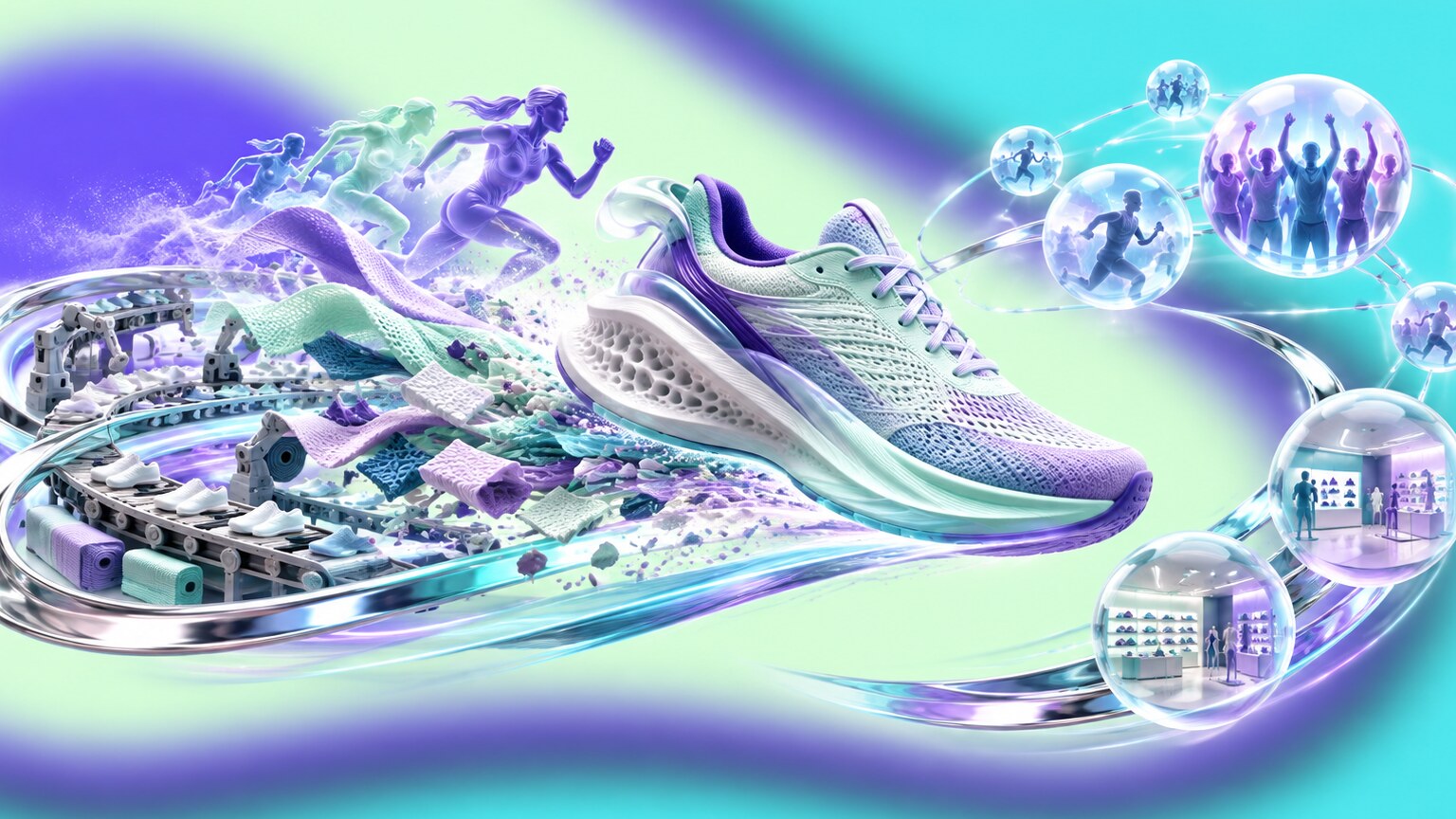
Nike makes the economics easier to see. Nearly all of its footwear and apparel is produced outside the United States by independent contract manufacturers. In fiscal 2025, factories in Vietnam made about 51 percent of Nike Brand footwear, Indonesia 28 percent and China 17 percent.
Yet Nike is not simply adding a Swoosh to a generic shoe. It specifies products, develops cushioning and materials, works with athletes, forecasts demand, finances inventory, manages global campaigns and controls wholesale and direct retail relationships. It combines performance evidence with cultural storytelling.
Its fiscal 2025 gross margin was 42.7 percent, but that margin moved down as the company used markdowns and discounts to clear products. This is an important correction to the idea of unlimited brand power. A famous mark does not remove inventory risk or make every design desirable. If distribution, novelty or demand is misjudged, the premium weakens quickly.
The Swoosh itself is extremely efficient. It can appear without the company name, work at small size, move across footwear and clothing, and absorb associations from thousands of athletes and events. Davidson designed a useful container. Nike spent decades filling it.
Coca-Cola: the highest margin is not in moving the heaviest object

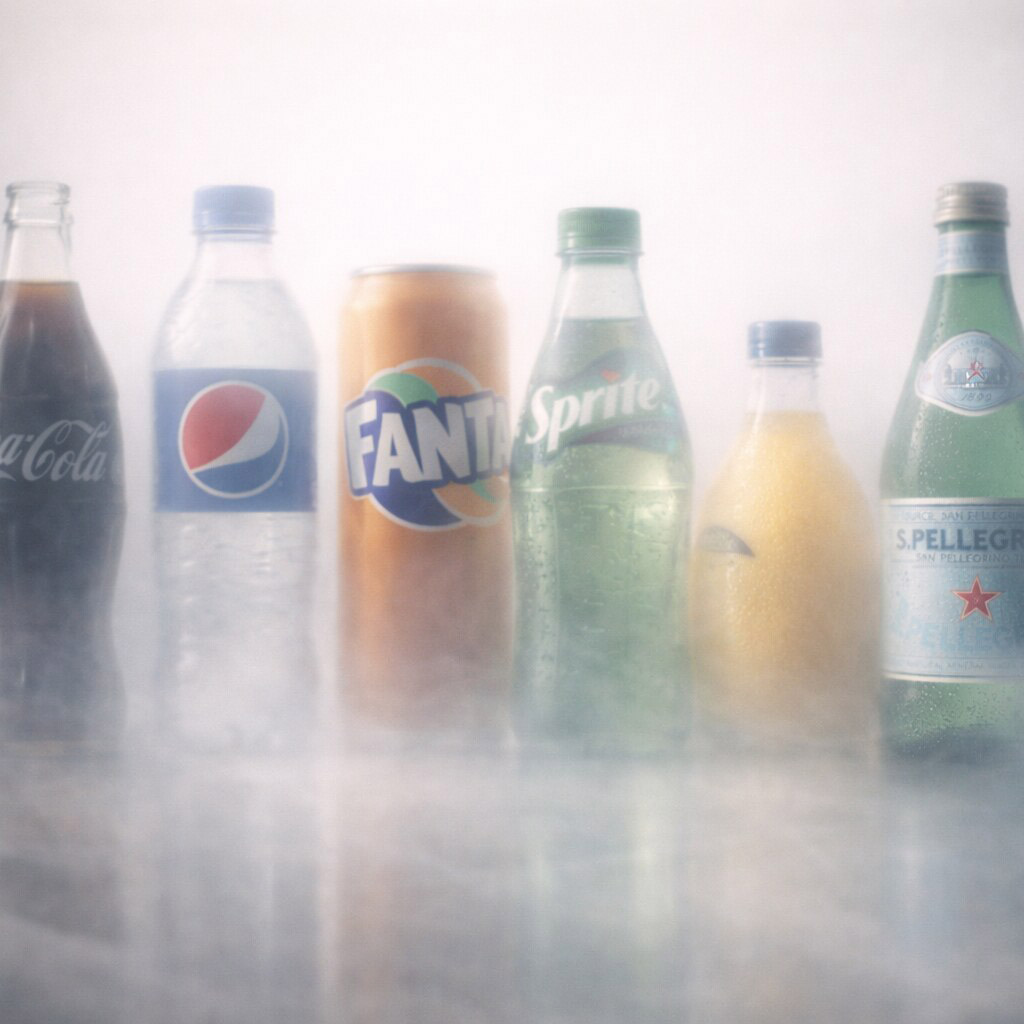
Coca-Cola offers one of the clearest examples of value separated across a chain. The company sells concentrates and syrups to authorized bottling partners, while bottlers combine, package and distribute finished drinks in local markets. Coca-Cola also owns some finished-product operations, but its reporting states that these generally produce higher revenue and lower gross profit margins than concentrate operations.
The lightest part of the system can therefore earn a stronger percentage margin than the heavy work of bottles, water, trucks and shelves. That does not make bottling unimportant. Without cold availability and reliable local distribution, the brand promise disappears exactly when a customer wants a drink.
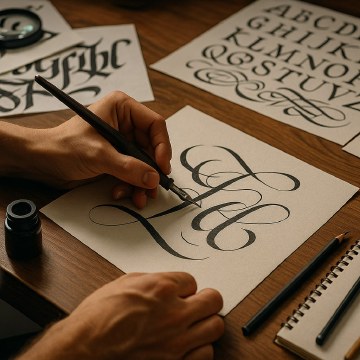
The identity also grew from practical commercial thinking. In 1886, bookkeeper Frank M. Robinson proposed the Coca-Cola name because he believed the two Cs would work well in advertising, then wrote it in flowing Spencerian script. The later contour bottle was developed partly so the product could be recognized by shape, even in darkness or when broken.
This is mature branding: the name, lettering, package, recipe, distribution and availability all protect one another. Remove the operational system and the logo becomes nostalgia. Remove the recognizable codes and the liquid becomes easier to substitute.
MUJI proves that even no-brand is a brand position
MUJI is the perfect paradox for an article about the power of nothingness. Its Japanese name, Mujirushi Ryohin, translates as no-brand quality goods. It began in 1980 with 40 products and positioned itself against wasteful mass consumption and expensive logo display.
Its system was based on material selection, streamlined processes and simplified packaging. Art director Ikko Tanaka helped turn that philosophy into a visual world of kraft paper, calm photography, restrained typography and deep red.
MUJI did not eliminate branding. It moved branding from a loud symbol into a recognizable behavior. Customers learned to expect quiet objects, rational proportions and minimal packaging. The apparent absence became consistent enough to identify the store from a distance.
That is a hidden rule of brand value: difference can come from subtraction, but subtraction must be specific. Generic beige minimalism is easy to copy. MUJI’s value comes from decades of product decisions that make the restraint believable.
The company also demonstrates why branding cannot be separated cleanly from production. Its “no-brand” promise depends on materials, dimensions, sourcing and package reduction. If those become poor, the visual modesty starts to feel cheap rather than intelligent.
Asia is no longer the middle of someone else’s curve
Specialized production can be as scarce and profitable as branding
The statement that the West owns ideas while the East only produces them describes part of late twentieth-century globalization, but it is too broad for the present.
First, “Asia” contains very different economies and capabilities. Japan, South Korea and Taiwan have long histories of global technology, industrial design and brand ownership. Chinese companies increasingly own patents, software ecosystems, retail channels and globally competitive product brands. WIPO’s 2025 innovation ranking placed China in the global top ten and first in indicators including trademarks and industrial designs.
Second, manufacturing is not one undifferentiated activity. Commodity assembly may have thin margins because buyers can switch suppliers. Advanced semiconductor fabrication is extremely difficult to replace. TSMC’s 2025 annual report showed a gross margin of 59.9 percent and a net margin of 45.1 percent. Its value comes from manufacturing excellence, process R&D, scale and customer trust.
This is higher than the gross margin Apple reported for products. The comparison is not perfectly like-for-like, but it destroys the idea that production is automatically low value.
The modern map is better described by capability than geography:
- routine work faces replacement pressure wherever it happens
- protected knowledge earns leverage wherever it is owned
- direct customer access increases control
- trusted quality can turn a supplier into a strategic partner
- manufacturers can build brands, and brand owners can build production knowledge
The curve is still useful, but companies and countries can move along it.
Branding cannot rescue a product with no defensible value
Perception can accelerate reality, but it cannot replace reality forever
Juicero became a near-perfect warning. The Silicon Valley startup raised about $134 million and launched a beautifully engineered, internet-connected juice press that initially sold for $699. Its product, subscription packs and visual language attempted to build a premium wellness ecosystem.
Then reporters demonstrated that users could squeeze the juice packs by hand. The machine still offered scanning, expiry controls and recall functions, but the central physical promise suddenly looked unnecessary. Juicero shut down in 2017.
The failure was not proof that industrial design or branding is dishonest. It showed what happens when the story grows larger than the problem being solved. The company had craft, funding and attention, yet the customer could perform the core task without the expensive object.
Branding is strongest when it amplifies a defendable truth:
- the product performs better
- the service removes friction
- the experience feels safer or easier
- the identity helps a community recognize itself
- the company behaves consistently enough to deserve trust
Without one of those foundations, premium design may increase the speed of the first sale and the scale of the later disappointment.
How to build value from idea to craft
Start with proof, then make the proof easy to recognize
The useful process is less magical than the final result appears.
Begin with the product truth. What does it do better, differently or more conveniently? If the answer is vague, a logo project is premature. Test the proposition with customers and compare it with real alternatives, including doing nothing.
Next, choose a position. A product cannot mean everything. Decide which audience, situation and tension matter most. Good naming and copywriting compress this decision into language. Good identity design gives it a recognizable sensory form.
Then connect the promise to production. Materials, tolerances, packaging, accessibility, delivery and support should all express the same priority. A sustainable story with wasteful packaging is not a small design inconsistency; it is evidence against the position.
Finally, build memory through repetition rather than constant redesign. The logo, distinctive color, package shape, tone of voice or illustration style becomes valuable because people encounter it across useful experiences. Consistency compounds.
For a closer look at the strategic and production stages, continue with How to Rebrand: A Complete Breakdown of the Process and Workflow for Complex Branding Design.
“The premium is not created when the designer exports the logo. It is created when the whole organization keeps the same promise after the launch files are closed.”
AI will make visible craft cheaper and invisible judgment dearer
Abundant output increases the value of selection, ownership and trust
Generative tools can now produce names, logo sketches, illustrations, package mockups and campaign copy in minutes. This lowers the cost of making plausible material. It does not automatically lower the cost of deciding what should exist, proving legal distinctiveness, coordinating production or building memory over years.
When everyone can produce polished surfaces, polish becomes less scarce. More value may collect around:
- original product insight and proprietary data
- taste strong enough to reject most generated options
- legal ownership and usable intellectual property
- distribution and access to a real audience
- operational consistency across thousands of touchpoints
- trust that survives errors, imitations and changing tools
The effect may be uncomfortable for production-focused creatives. A client can generate fifty reasonable illustrations more cheaply than before. But a company still needs someone to define the system, find the right idea, recognize cultural risk and make hundreds of outputs feel like one brand.
This returns us to ownership. If AI reduces the fee for isolated execution, designers and writers may need to move toward strategy, systems, long-term stewardship and shared commercial upside. The valuable contribution will be less “I made this file” and more “I helped this business create and protect a choice people understand.”
Conclusion
The greatest premium comes from alignment, not decoration
Branding can create extraordinary economic value, but not from literal emptiness. It names a difference, makes it visible, places it in culture and helps customers remember what happened after purchase.
The brand owner often captures the largest upside because it owns the rights, funds the risk and controls the customer relationship. Designers, writers, agencies, factories and distributors usually receive salaries, fees or margins. Any of them can capture more when their capability becomes scarce, protected and difficult to replace.
Apple demonstrates orchestration. Nike shows how culture fills a simple symbol. Coca-Cola reveals the margin power of concentrate, identity and distribution. MUJI proves that even no-brand can become a precise position. TSMC proves that advanced production can sit at the top of the value curve. Juicero shows that beautiful meaning cannot indefinitely cover a weak reason to exist.
The practical conclusion is simple: do not use branding to hide how little value a product has. Use it to clarify, connect and multiply the value that is already real.