Pixel-Perfect or Overrated? The Role of Display Quality in Graphic Design
Do you really need a top-tier display to create exceptional design work? A deep dive into color accuracy, resolution, and the real-world practices of designers.

Do you really need a top-tier display to create exceptional design work? A deep dive into color accuracy, resolution, and the real-world practices of designers.
“The monitor is your window to the work — but how much does the view affect the outcome?”
When you ask seasoned designers about essential tools, high-end monitors often come up alongside powerful computers and professional software.
Apple’s Retina displays, Eizo’s ColorEdge series, NEC’s SpectraView, and Iiyama’s ProLite range are often held up as the gold standard for visual professionals.
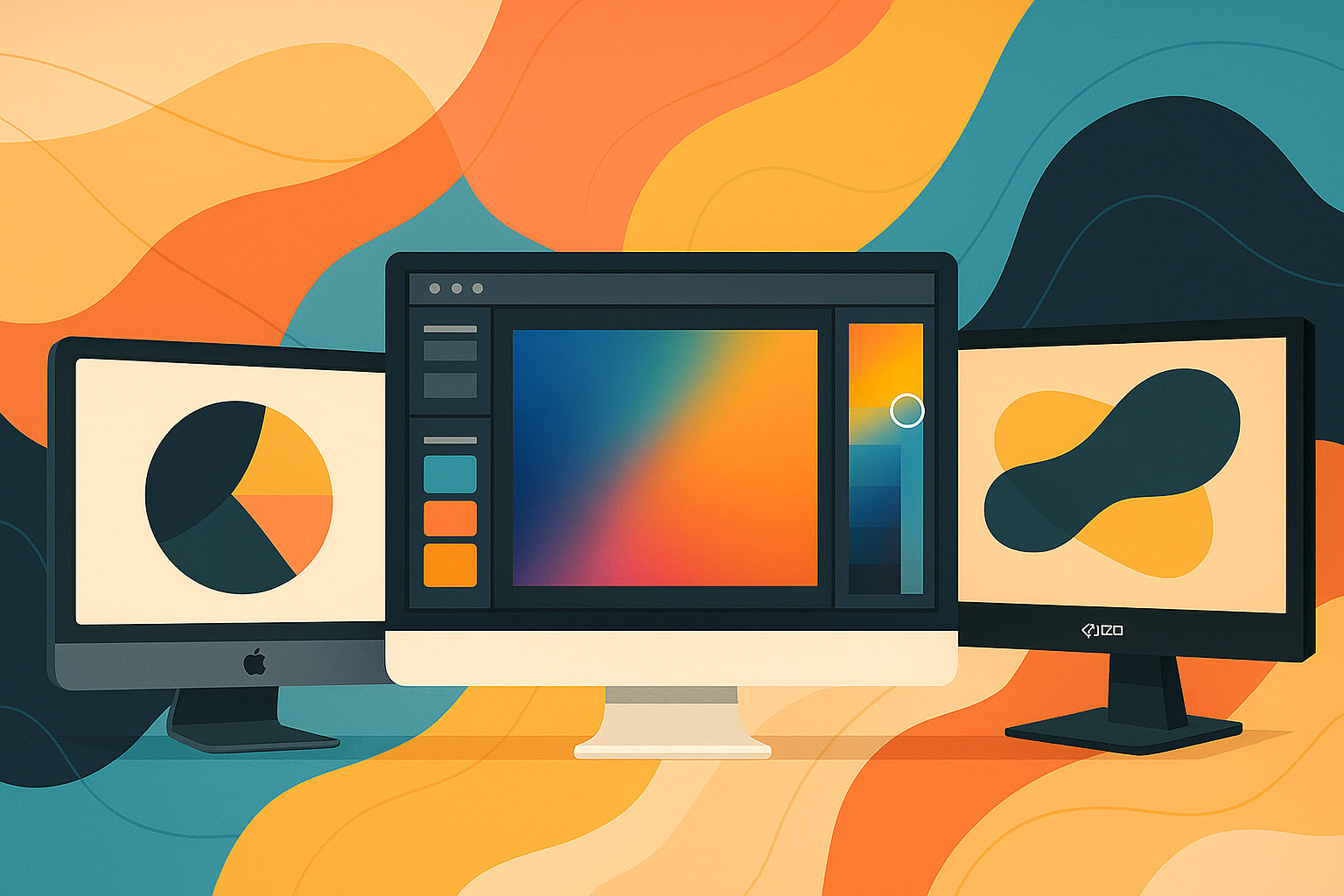
But here’s the reality: exceptional work is not exclusively born on exceptional screens. The creative process is multi-faceted, and history is full of examples — like designer Musho, who delivered award-winning projects on a basic, non-calibrated Samsung display — proving that vision and skill matter as much as, if not more than, hardware.
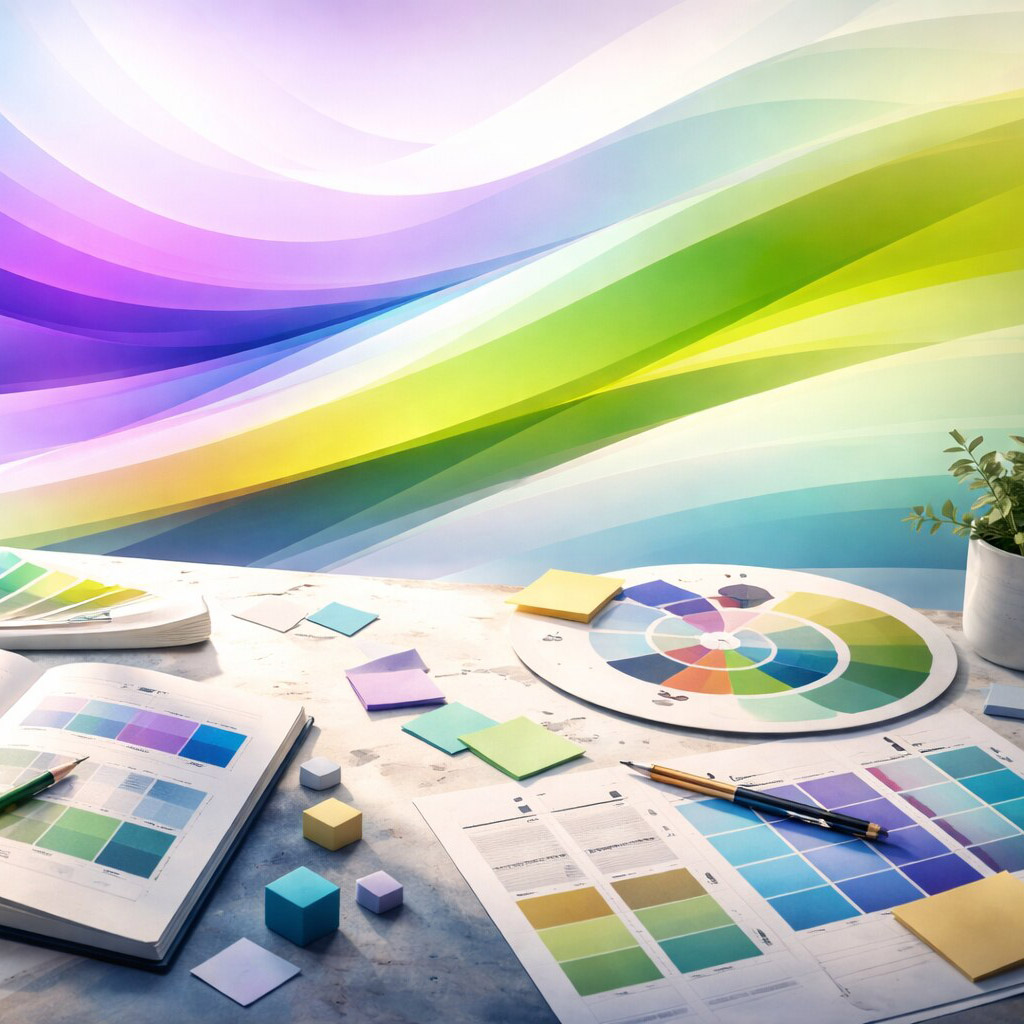
For branding, print design, and photography, a display that shows colors accurately is crucial. Eizo and NEC displays are known for:
Apple’s Retina screens offer extremely high pixel density, making text and vector shapes appear razor-sharp. This is particularly valuable for:

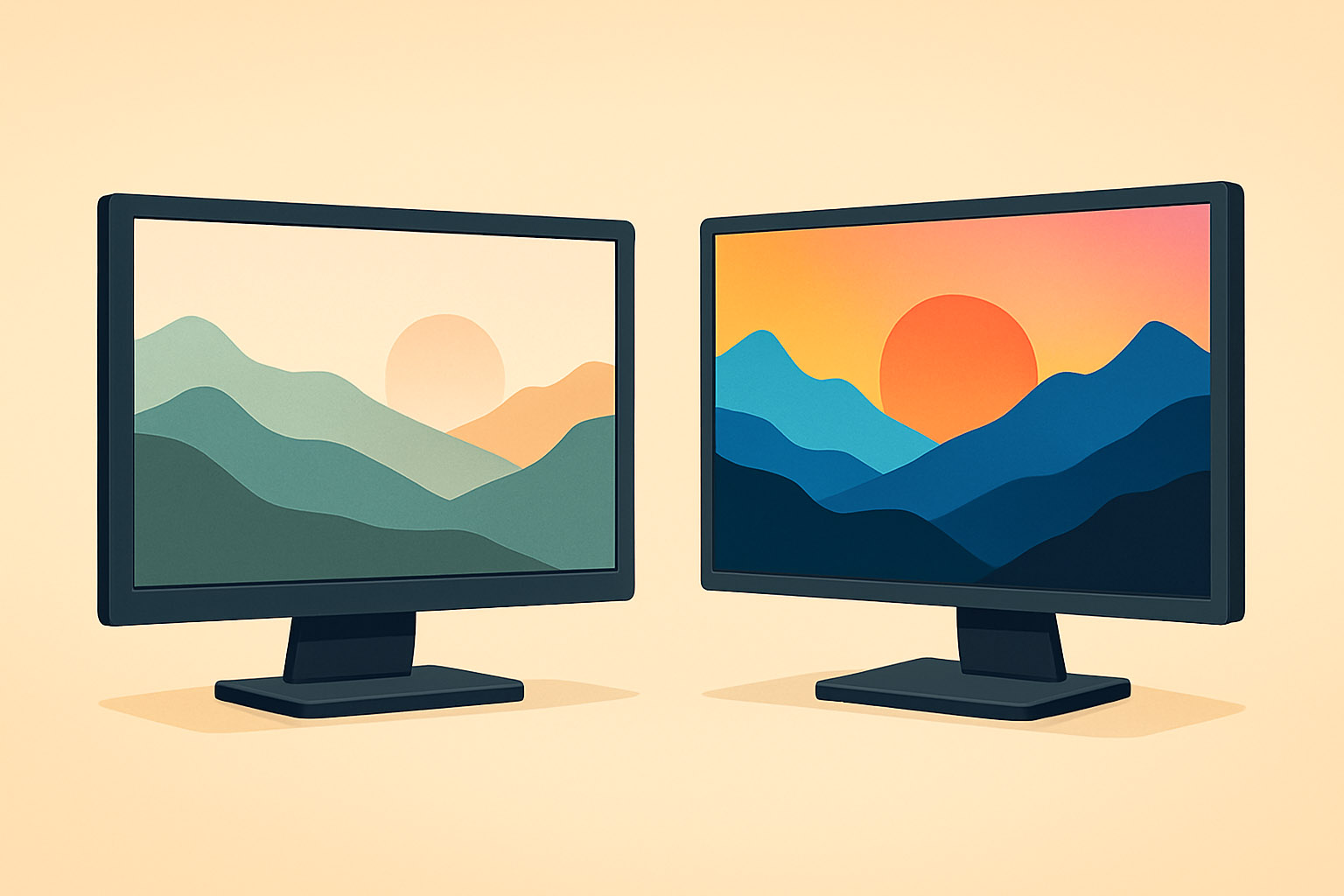
A good display reduces the guesswork when moving designs from screen to print or cross-platform, cutting down on time spent proofing and correcting.
Despite the advantages of premium monitors, many designers achieve excellence with modest hardware by:
This serves as a reminder that, in many cases, creativity, problem-solving, and visual literacy can outweigh even the most advanced technical specifications when deadlines are tight and the strength of the idea takes precedence over the tools used to realize it.
| Brand / Model | Strengths | Drawbacks |
|---|---|---|
| Apple Retina | Sharp text, accurate P3 color | Limited calibration, glossy |
| Eizo ColorEdge | Top color accuracy, uniform panel | Expensive, bulky |
| NEC SpectraView | Wide gamut, precise calibration | Slower refresh |
| Iiyama ProLite | Affordable, decent color | Lower uniformity, smaller gamut |
| Generic Low-Cost | Budget-friendly, usable w/ proofing | Poor accuracy, uneven backlight |
These can allow a talented designer to deliver print-perfect results even on a mid-range or budget screen.
Ultimately, a high-end display is a tool, not a guarantee. For color-critical print production, an Eizo or NEC can save headaches. For digital design or UI work, an Apple Retina display is often enough. But the decisive factor will always be the designer’s skill, process, and understanding of their medium — not just the monitor they’re looking at.

News, insights, case studies, and more from the rausr team — straight to your inbox.
Send us your brief, your wildest idea, or just a hello. We’ll season it with curiosity and serve back something fresh, cooked with care.