Where Creativity Is Born: A Philosophical and Neuroscientific Exploration
Origins of creativity — how the brain generates ideas, why individuals differ, and how memory, emotion, and neural networks shape imagination.
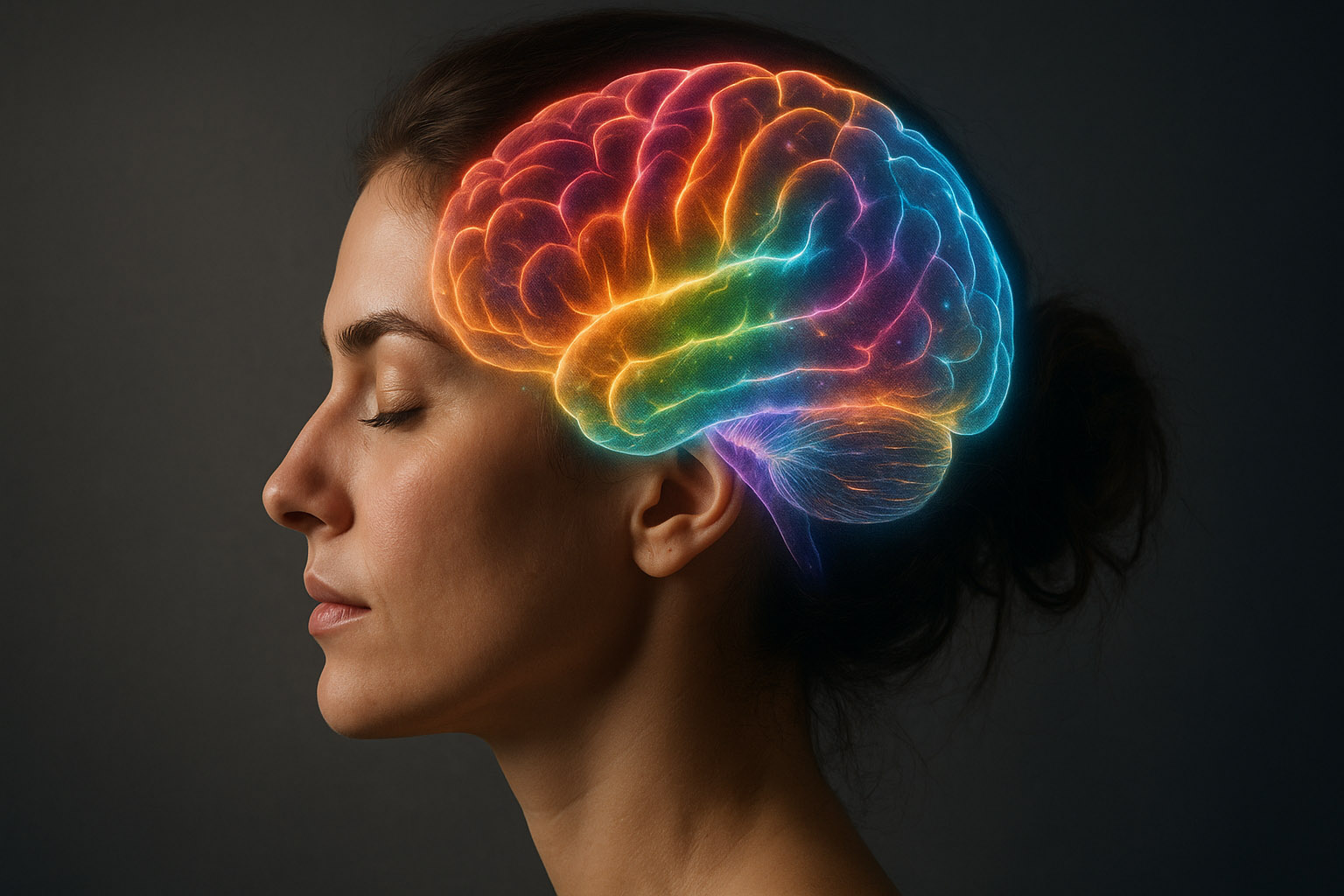
Origins of creativity — how the brain generates ideas, why individuals differ, and how memory, emotion, and neural networks shape imagination.
Creativity feels like a spark — an unexpected connection between two ideas that never touched before. But how does this spark actually appear? Is it biological, psychological, philosophical… or a mix of all three?
This article explores the origin of creativity through the lenses of neuroscience, memory, personality, and lived experience.
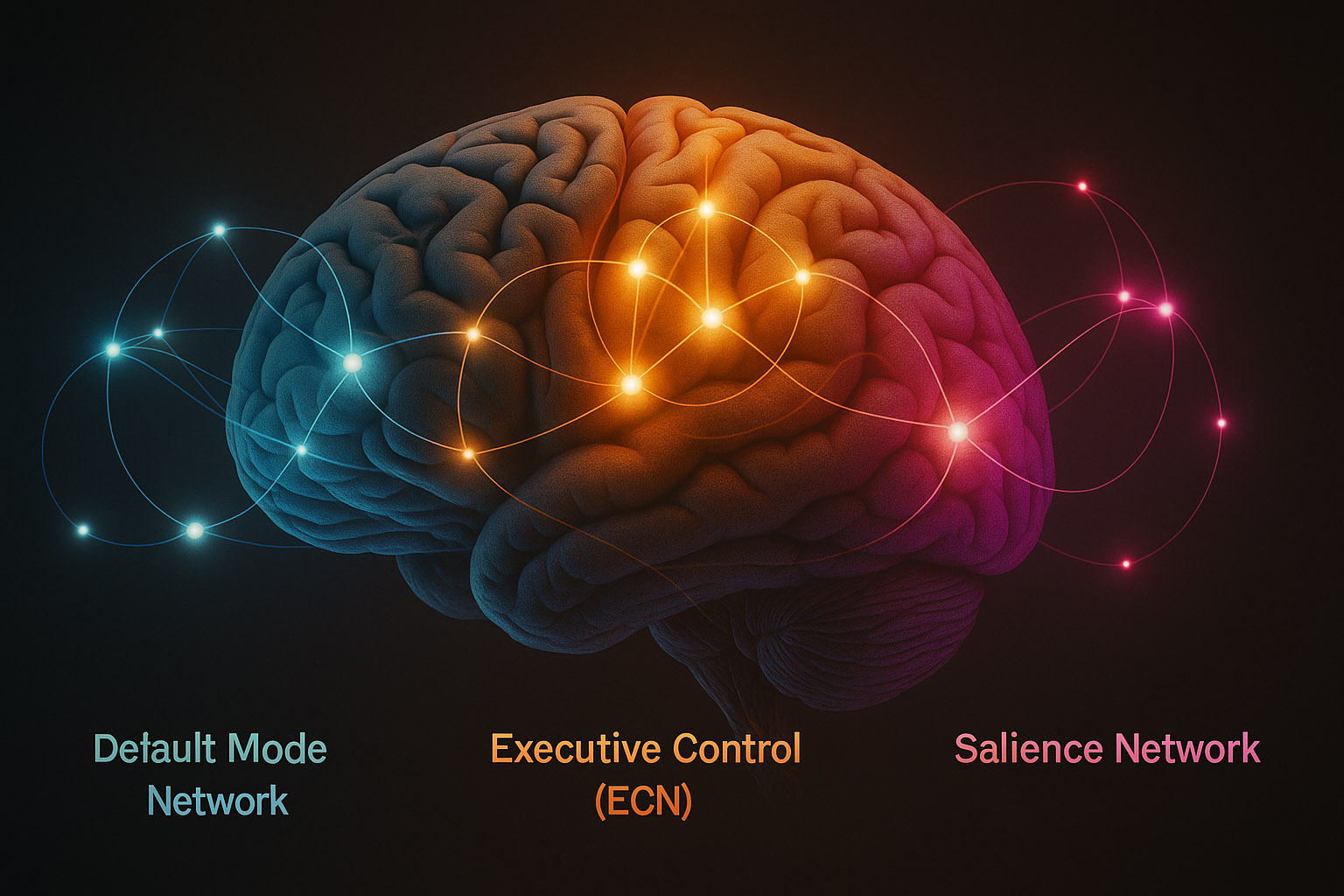
Short answer: no single region is responsible for creativity. Long answer: creativity emerges from interaction between several major networks:
Active during:
Generates spontaneous associations.
The “editor.” Filters ideas, checks logic, organizes thoughts.
Switches attention between imagination and control. Identifies which idea matters emotionally.
“Creativity is not a place — it is a dynamic relationship between networks.”
Yes — but not simply.
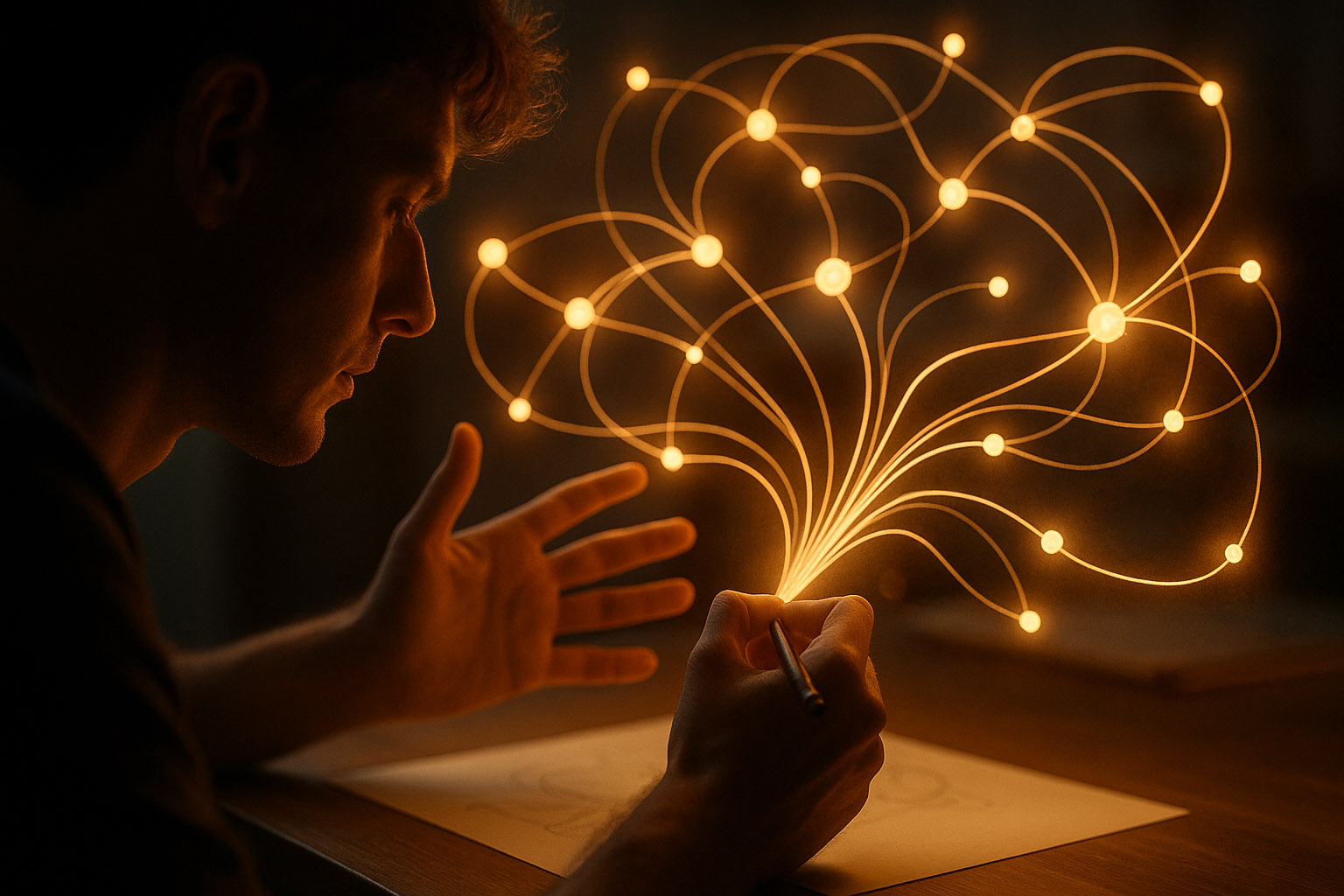
Creative thoughts arise when the brain recombines neural patterns from memory, sensory input, emotions, and abstract concepts.
Memory fragments, sounds, visuals, and lived experiences blend into new forms. Creativity is neural recombination shaped by emotion and meaning.
During creative work, the brain shows increased global connectivity, meaning distant regions synchronize unexpectedly.
Creativity is the brain breaking its usual rules.
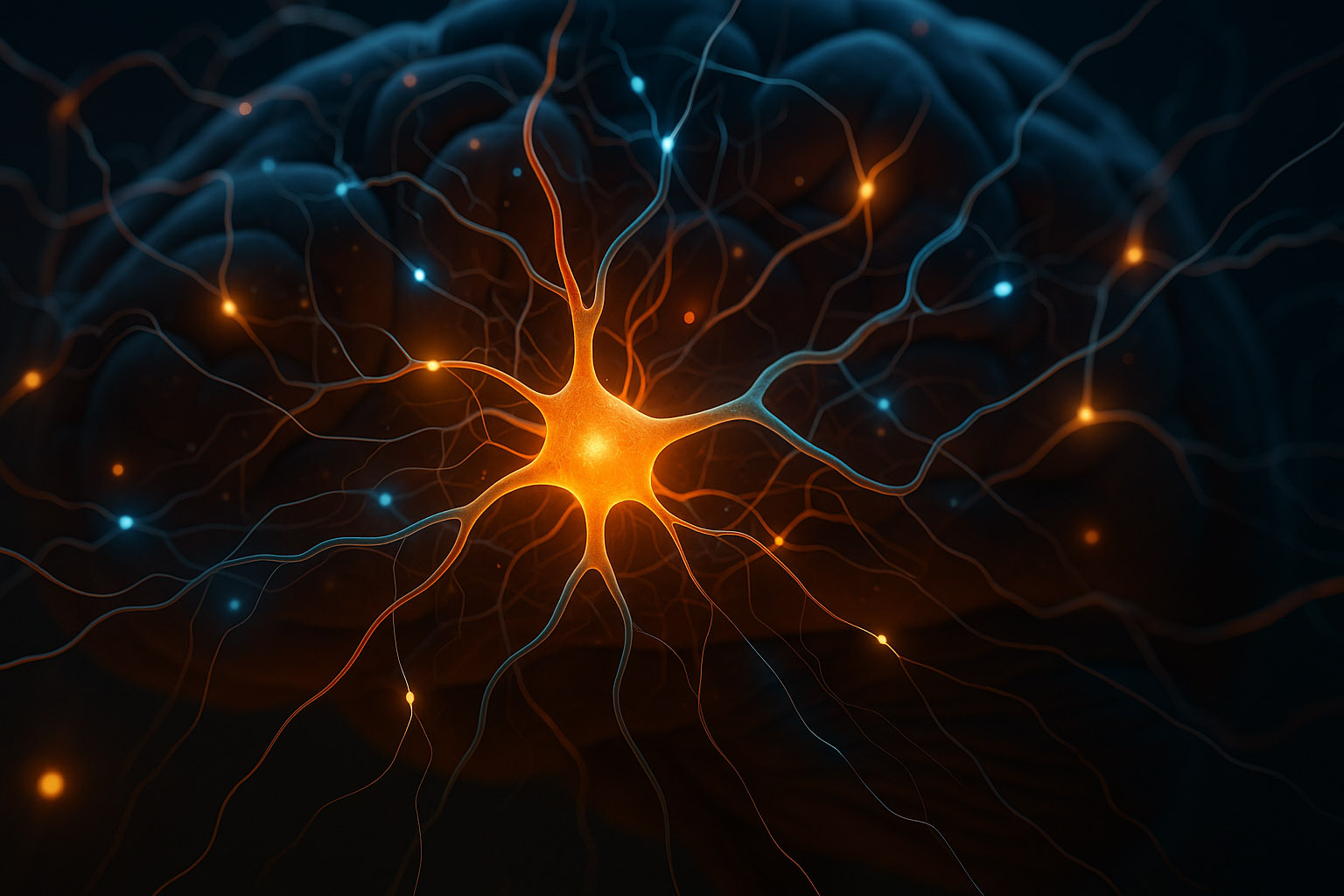
Absolutely. But they don’t copy life — they transform it.
Two people can witness the same moment; one stores it plainly, the other turns it into symbolic material.
Creative individuals:
Meaning emerges through reinterpretation.
Someone with blurred memory often uses:
Their brain blends these elements into new combinations.
“Creativity = memory × personality × emotional significance.”
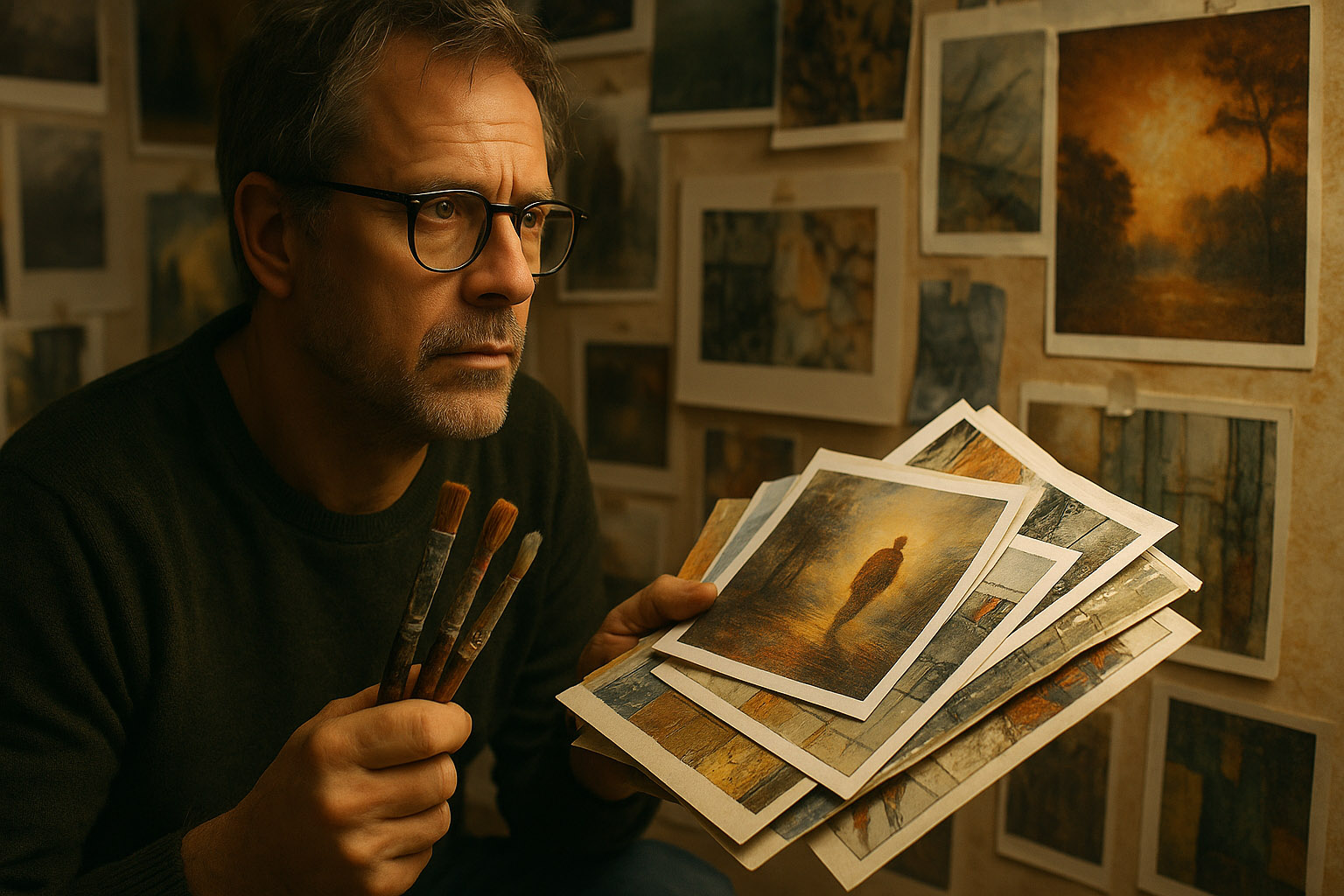
Yes — all humans have creative capability. But expression varies due to:
Creativity is a universal human function, but talent distribution is uneven.
Creativity thrives on specific traits:
Generates many possibilities.
Jumps between unrelated ideas.
Holds multiple concepts at once.
Interprets meaning deeper.
Lets unusual thoughts surface.
Constant drive to explore and observe details.
Highly creative individuals show slightly irregular neural firing, creating internal controlled chaos.
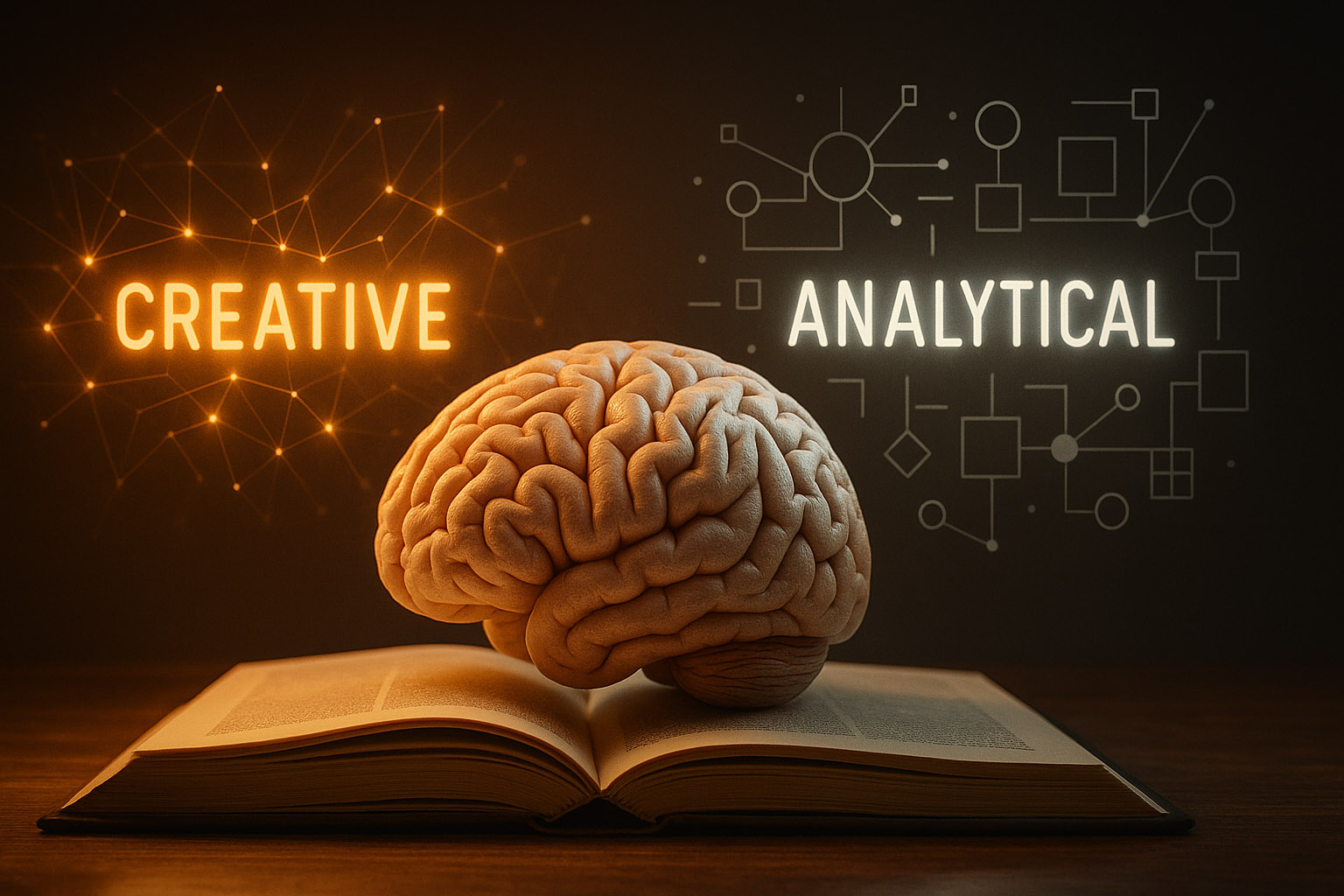
Analytical thinking:
Creative thinking:
But the most powerful ideas come from hybrid minds. The best innovators combine:
This rare dual activation is observed in highly creative professionals.
Combining neuroscience and philosophy:
Creativity is born in the space between disorder and structure.
It starts as:
Then becomes valuable through:
Creativity is the bridge between the inner unknown and outer reality.
Creativity is the human ability to reorganize reality into new meaning.
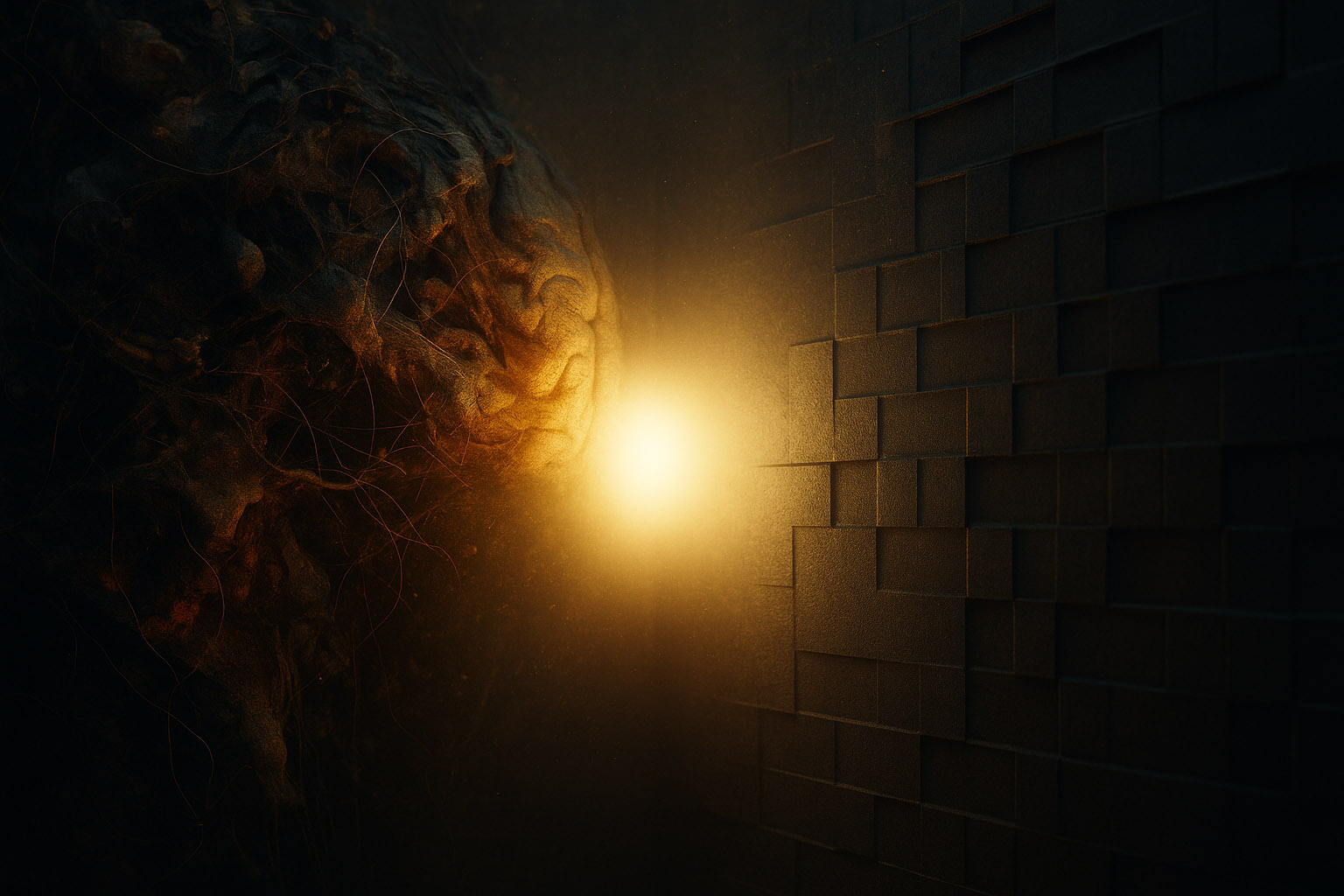
Creativity is not a gift, not a single talent, not a single region of the brain. It is a process — a conversation between imagination, memory, personality, and awareness.
Some people naturally have stronger traits that feed creativity, but everyone can cultivate it.
“Creativity is not something you have. It is something you build.”
News, insights, case studies, and more from the rausr team — straight to your inbox.
Send us your brief, your wildest idea, or just a hello. We’ll season it with curiosity and serve back something fresh, cooked with care.