A Story about: Why Adobe Still Rules the Creative World
Adobe dominates the design software world—but how did it get here, why is it still on top, and is there space for new players?

Adobe dominates the design software world—but how did it get here, why is it still on top, and is there space for new players?
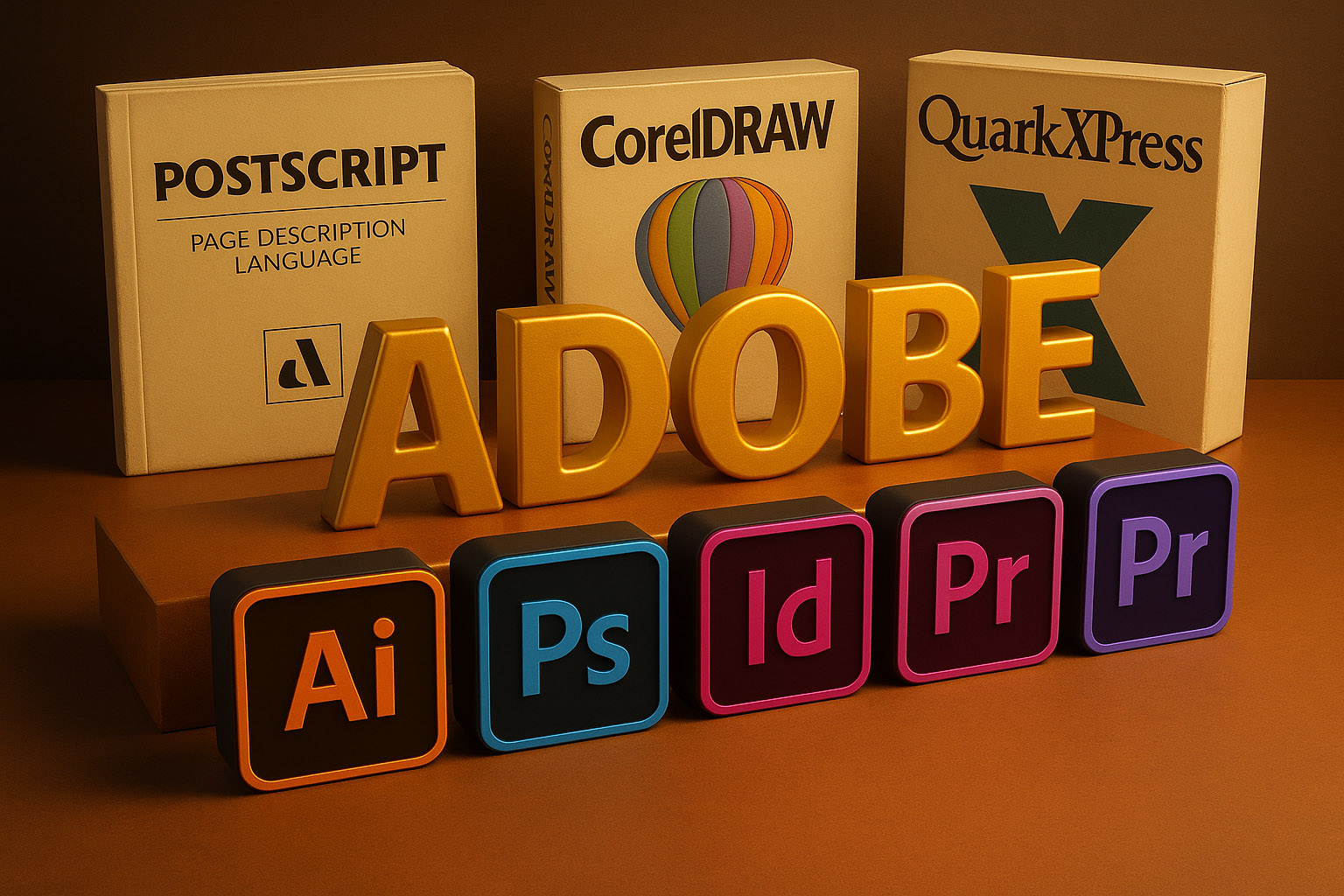
Adobe didn’t become a creative giant overnight. Its roots go back to the 1980s, when it launched PostScript, a revolutionary page description language used by Apple’s LaserWriter. This technology fundamentally changed desktop publishing by enabling precise printing of fonts and graphics, setting the stage for the digital design revolution. Around the same time, Adobe was competing fiercely with other players like CorelDRAW, which was popular for vector graphics, and QuarkXPress, the dominant page layout software before InDesign came along. Then came Illustrator (1987) and Photoshop (1989)—each defining its category and setting high standards that competitors struggled to match.
By the mid-1990s, Adobe had acquired or out-innovated competitors (like Aldus PageMaker, which became InDesign). This strategic move helped Adobe consolidate its position in the market. It built a full suite: Illustrator, Photoshop, InDesign, Premiere, After Effects. The Adobe Creative Suite was born—and with it, the standard toolkit for every professional designer. This suite wasn’t just a collection of apps; it was a tightly integrated ecosystem that made switching away from Adobe feel like a daunting task.
Interestingly, in a 2010 public conversation, Steve Jobs referred to Flash—then owned by Adobe—as a “sad” technology, citing its instability and lack of mobile support. This wasn’t just a casual jab; it marked a major rift between Apple and Adobe. Flash was notorious for crashing, draining battery life, and being a security nightmare on mobile devices. Apple’s refusal to support Flash on the iPhone effectively spelled the beginning of the end for the technology.
Despite this, Adobe apps remained highly Mac-friendly, optimized for creative workflows on macOS. Designers and creatives stuck with Photoshop, Illustrator, and InDesign because they simply worked well on Macs and were deeply embedded in professional pipelines. While Flash was phased out, Adobe’s core creative tools continued to thrive on Apple hardware, proving that the company’s relationship with Mac users was far from broken. The tension between Apple and Adobe over Flash was a chapter in tech history, but it didn’t shake Adobe’s hold on the creative community.
In 2013, Adobe made its most controversial move: switching from perpetual licenses to a subscription model. No more buying Photoshop once and owning it forever. You had to subscribe monthly. This shift was met with a mix of outrage and reluctant acceptance. Critics called it greedy and monopolistic, but Adobe gained significant advantages:
This move locked users into an ecosystem where leaving Adobe became harder and harder. It wasn’t just about the software anymore; it was about the entire creative infrastructure Adobe built around its cloud services.
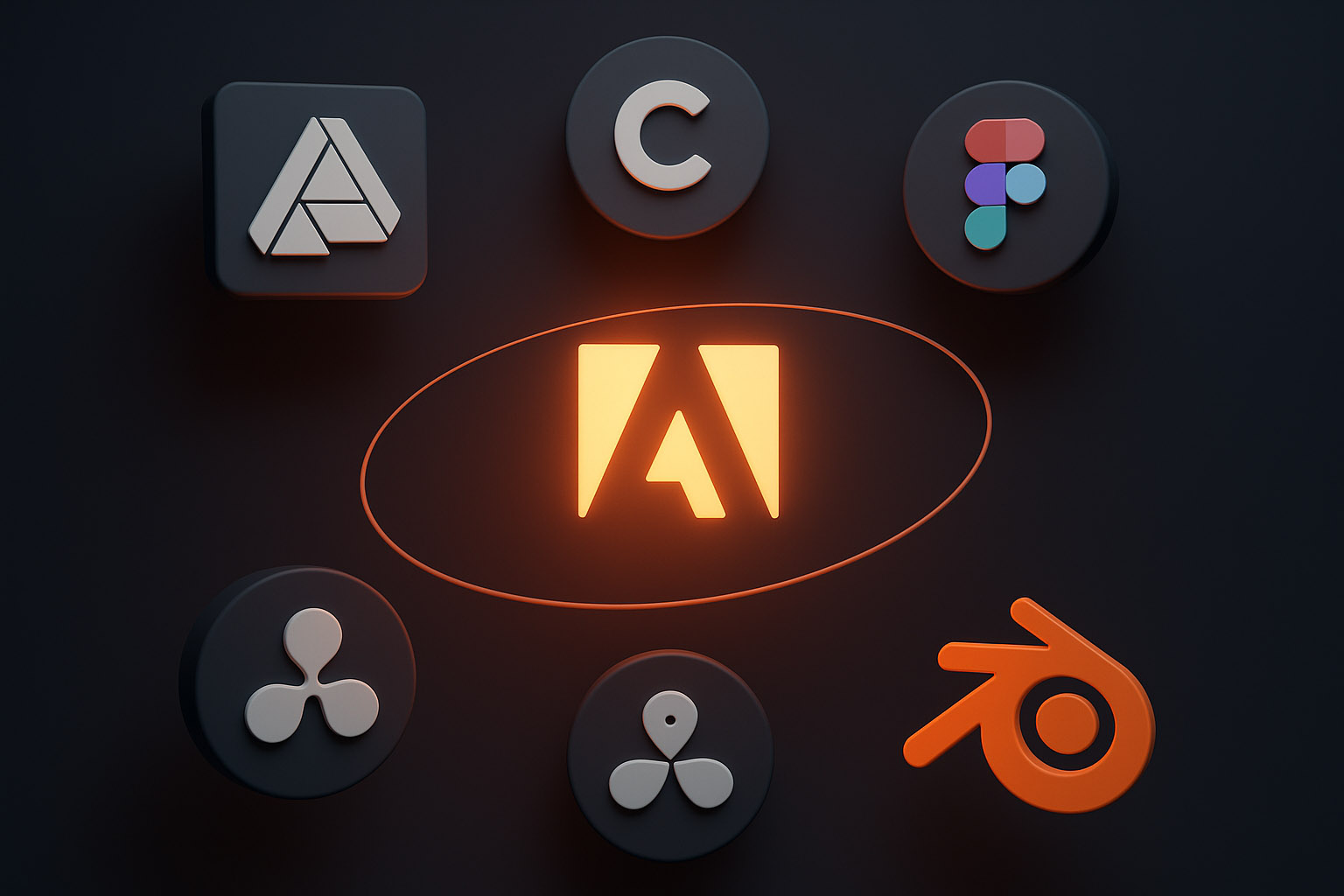
There are challengers—but none with the same reach:
But even with these, most agencies and studios still require Adobe files. That’s the real moat—interoperability, client demands, and the entrenched workflows that keep Adobe at the center of professional creative work.
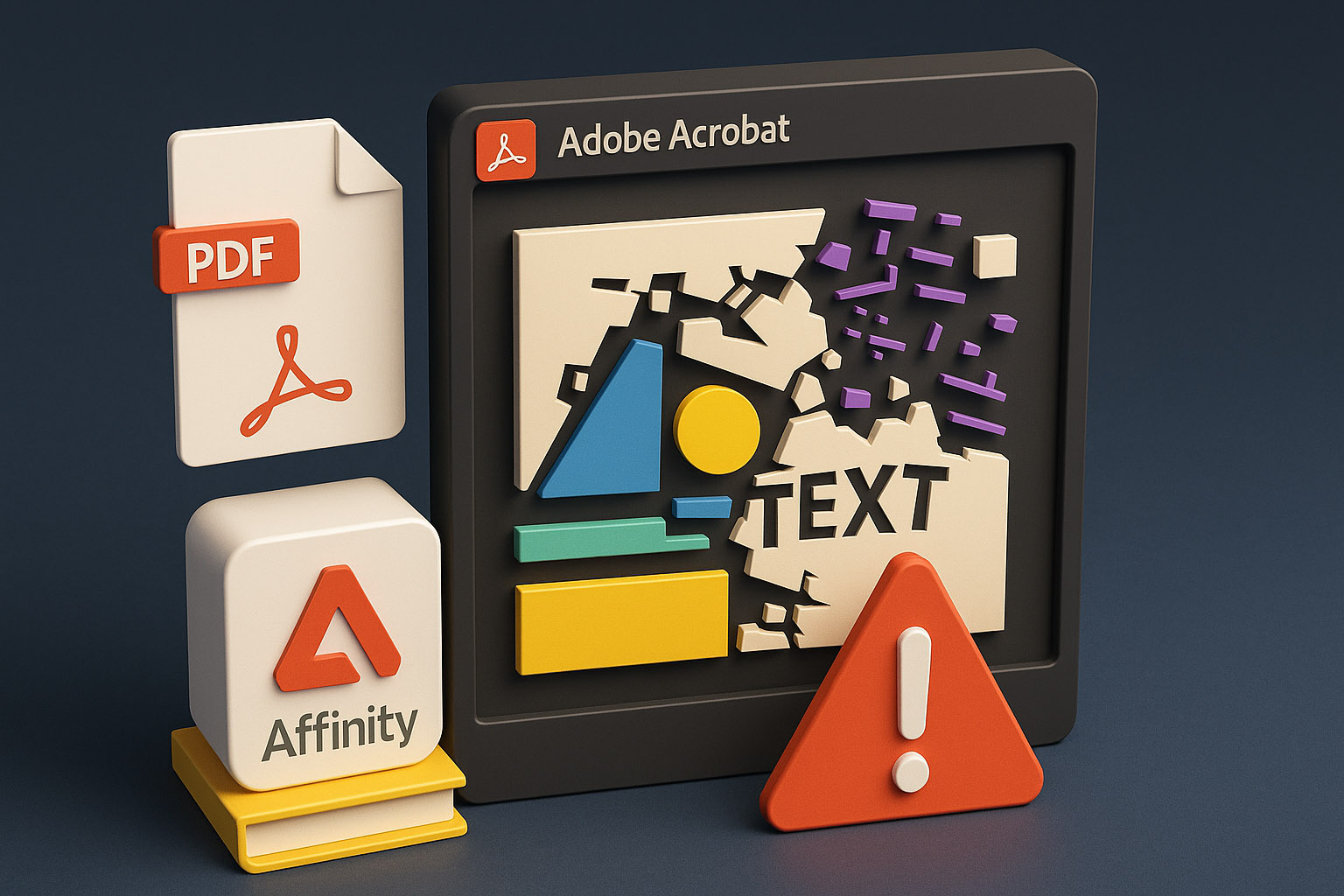
Try opening an Affinity-created PDF in Acrobat and you’ll see it: weird spacing, missing assets, broken fonts. It’s like watching your carefully crafted design do a bad impression of itself. Why?
This creates friction for teams or freelancers trying to break free from Adobe—even when the alternative tools are great. It’s the digital equivalent of trying to fit a square peg in a round hole, except the peg is your client’s expectations and the hole is Adobe’s ecosystem. And yes, it’s as frustrating as it sounds—sometimes you just want to scream at your screen and ask, “Why can’t you just open this file properly?”
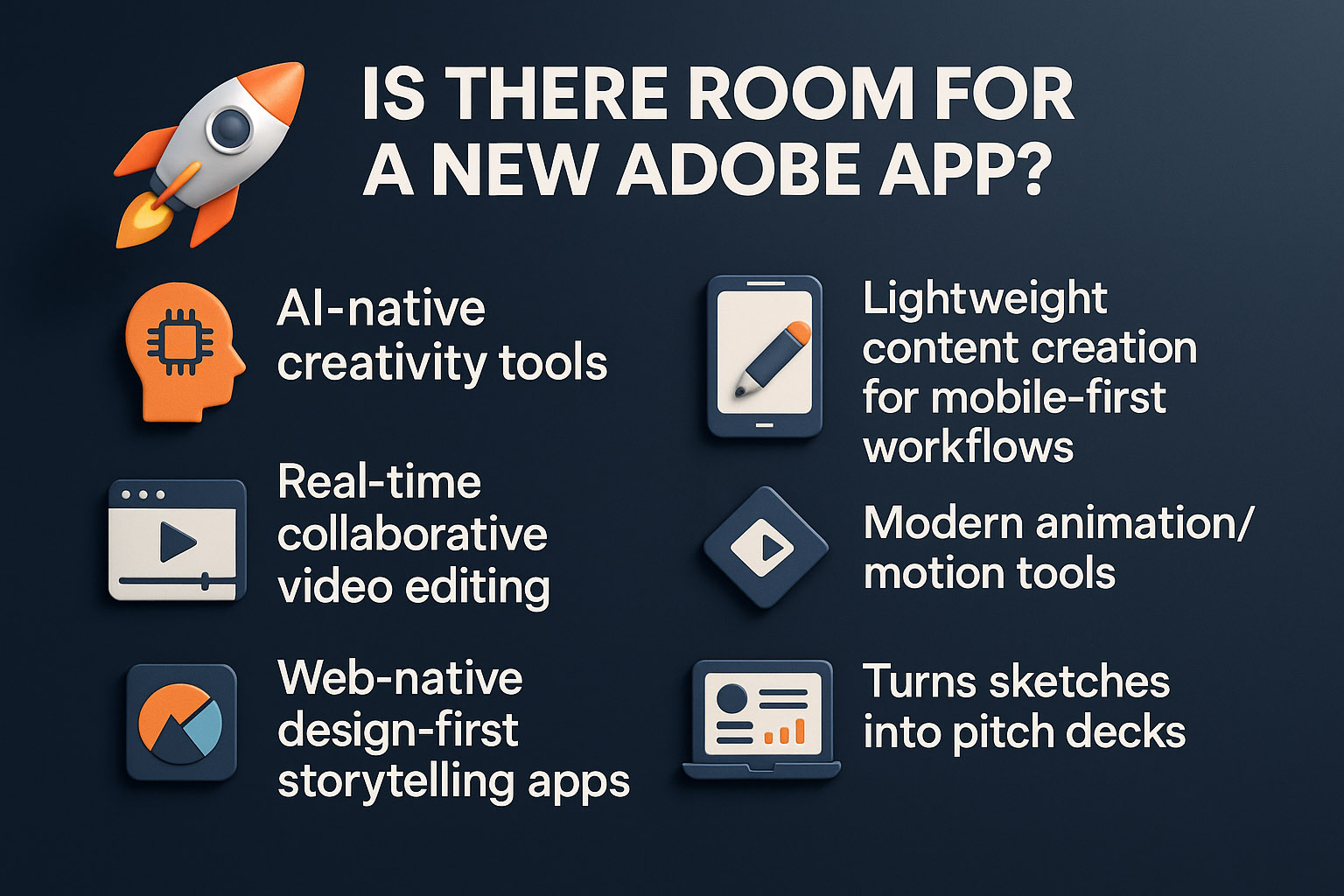
Absolutely. Despite its power, Adobe doesn’t cover everything. Gaps include:
Each of these could be its own niche tool—or the seed of a future “Adobe killer.” The creative world is hungry for fresh ideas that break free from legacy constraints.
Despite its flaws:
There’s also the muscle memory—the keyboard shortcuts ingrained after years of use, the fear of switching and losing productivity, and the comfort of a known interface. The “fear of switching” is real; it’s like learning to drive all over again but with your career on the line. Adobe is a shared language among designers, agencies, printers, and clients. That network effect is hard to beat, and it keeps the ecosystem locked in tight.
“Adobe’s reign in design software is no accident—it’s a combination of history, smart business, and ecosystem gravity. But its position isn’t unshakable. New tools are rising. Frustration is building. And where there’s pain, there’s opportunity.”

News, insights, case studies, and more from the rausr team — straight to your inbox.
Send us your brief, your wildest idea, or just a hello. We’ll season it with curiosity and serve back something fresh, cooked with care.