In brief
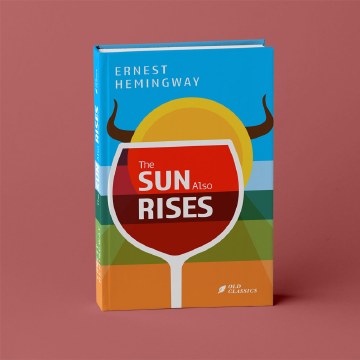
A cover invites the first encounter with a publication. Its front, spine, back, and physical finish must tell a coherent story at several scales.

Common tools
- Adobe InDesign
- Adobe Photoshop
- Adobe Illustrator
Skills in play
- Concept development
- Typography
- Technical accuracy
What it is
A cover is a promise about the work inside, not a summary of every chapter. It must create a relevant first impression while carrying practical information: title, creator, publisher, series, and sometimes an endorsement or edition marker. The front is only one face. On a shelf, the spine may be the main identifier; in a shop, the back may close the decision; online, a tiny thumbnail may be the first view.
A jacket adds another layer: a printed wrap around a book, often with flaps and a separate case beneath. That gives the designer more surfaces and more production dependencies. The idea should survive across the whole object rather than stopping at the front rectangle.
Begin with the reading position
Read the work or a reliable editorial brief. Identify its subject, emotional temperature, intended reader, and what neighbouring titles look like. Ask what would make this title recognisable without misrepresenting its content. Genre signals help readers orient themselves, but copying the most common signal can make the book disappear into its category.
Write a short creative proposition before opening a mock-up: what the cover should make someone notice, feel, or question. Develop several routes with genuinely different images and typographic ideas. Test them as a group of competing books, not as isolated presentation slides.
Design the full object
Resolve hierarchy at several scales
Check the front at full size, shelf distance, and thumbnail size. Which element reads first? Is the title legible enough for its role? Does the author name have the prominence the publishing brief requires? Typography can be the concept, a supporting voice, or a deliberate counterpoint to an image; it should never feel like a label pasted on afterward.
Treat the spine as its own composition. Measure its actual width from the approved page count and stock, then test the title, author, imprint, and reading direction. Do not assume the spine has room for a reduced front cover. On the back, place description, endorsements, publisher details, and machine-readable information in a clear order, with enough quiet space to read.
Consider image rights and materials
If commissioning photography or illustration, define the concept, formats, crops, territories, duration, and uses before production. Confirm rights and approvals with the publisher. Avoid building a cover around an attractive image whose licence or resolution cannot support the planned edition.
Print a physical proof. Paper, laminate, embossing, foil, and uncoated stock can change contrast and colour. Artwork near folds, flaps, or the spine needs tolerances agreed with the printer. Use the supplied template and verify bleed, safe areas, and export settings rather than guessing from a digital mock-up.
Series and editions
For a series, decide what remains fixed and what varies: type, grid, colour logic, image treatment, numbering, or placement. Put several volumes side by side. They should belong together without becoming indistinguishable. Plan for unusually long titles and future subjects that do not fit the first two examples.
An ebook may need a related but differently optimised cover; a tiny storefront image has no tactile finish to carry subtlety. Keep the identity of the concept while adapting the contrast and detail to each surface.
Handoff and final checks
Deliver approved print artwork, digital cover assets, production specification, rights information for commissioned imagery, and a record of fonts and finishes. Check front-spine-back alignment on the printer’s template, title spelling against the final manuscript, and the thumbnail in its actual storefront context.
Common mistake
Treating the cover as a poster and discovering the spine, back, and edition variants at the end. The most convincing covers are conceived as an object and a family of encounters from the beginning.
People and practice