In brief
A public-interest campaign needs more than a striking poster. It must explain a specific issue, respect the people represented, and give its audience a credible way to respond.
Common tools
- Figma
- Adobe Illustrator
- Adobe Photoshop
Skills in play
- Research
- Concept development
- Visual storytelling
What it is
A public-awareness campaign helps people understand an issue and decide what, if anything, to do next. A fundraising campaign asks for support, usually money, time, or advocacy. Both depend on trust. The message must be clear enough to travel across channels and specific enough to stand up to questions about its claims and its use of people’s stories.
The design may include a poster, short film, landing page, social assets, event materials, or partner toolkit. Shepard Fairey’s HOPE poster is a useful case of a single image becoming widely recognisable through circulation. Its lesson here is about visual compression and distribution, not a template for every cause. Different audiences and issues demand different voices.
Define the change you seek
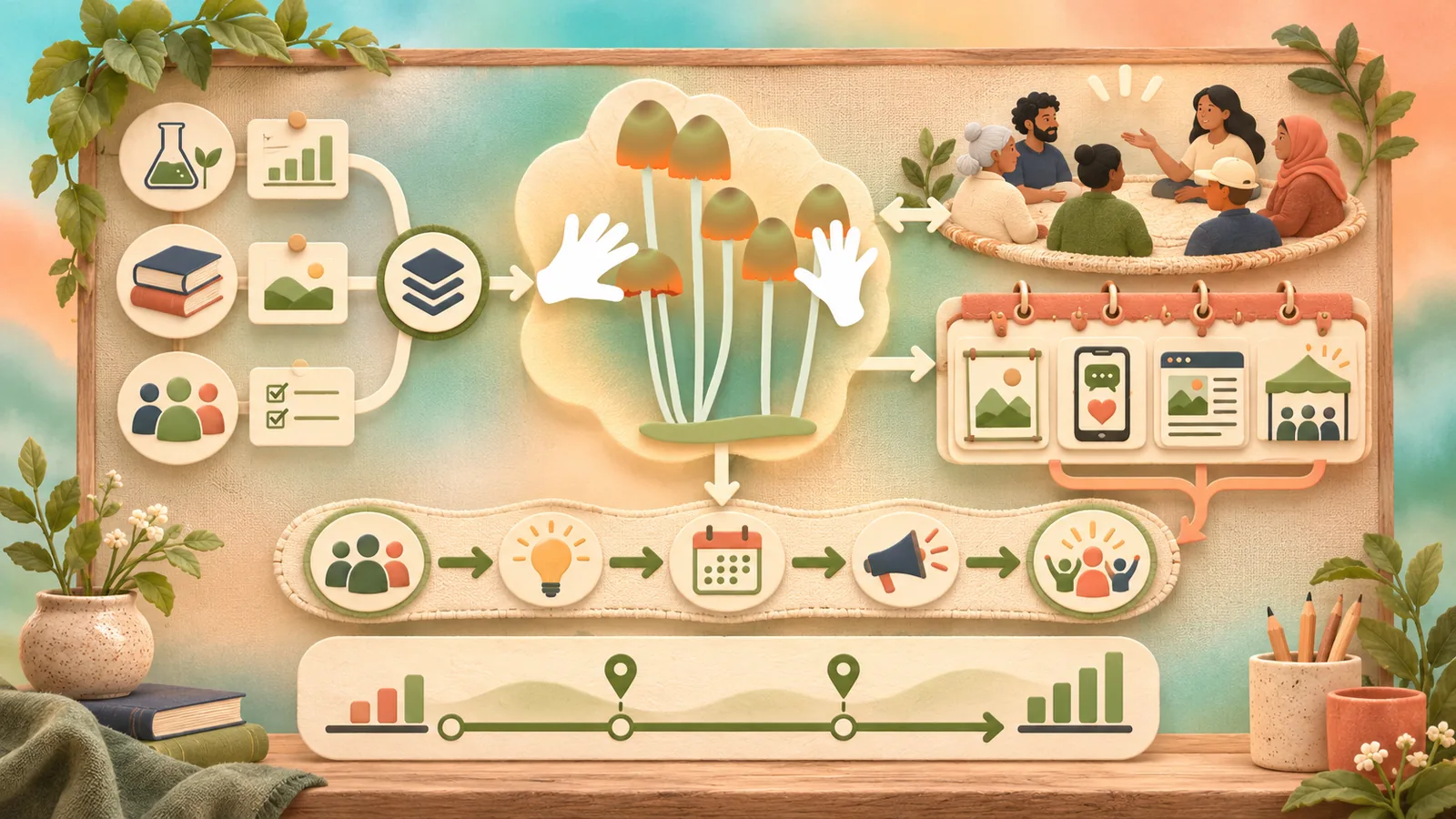
Write the desired outcome in plain language. Awareness is a starting condition, not an action in itself. Do people need to recognise a symptom, apply for a service, change a habit, volunteer, donate, or speak to someone? Separate the organisation’s goal from the audience’s immediate decision. If the next step is hard, the campaign must explain the process as well as the purpose.
Research the audience’s existing knowledge and barriers. Ask what they already believe, what information they lack, and what might make a message feel irrelevant or manipulative. Speak with people affected by the issue early and compensate them appropriately when asking for sustained input. A campaign concept should respond to evidence, not to a designer’s assumption about what will make people feel something.
Make one claim at a time
State the central proposition and the proof behind it. A strong image can attract attention, but the supporting text should explain the issue without implying an outcome that cannot be demonstrated. Review numbers, quotations, before-and-after stories, and donation claims with the people responsible for them. Record the source and approval date so old claims do not quietly return in later versions.
Avoid turning the people represented into anonymous symbols of distress. Give them agency and context where the story calls for it, and secure meaningful permission for images and words. An emotionally forceful image may raise attention while also reinforcing a harmful stereotype. Test both comprehension and unintended interpretations.
Design the action path
Use a clear action suited to the channel: learn more, check eligibility, book help, donate, share an official resource. Place it where people will encounter it after understanding the message. For fundraising, explain where a contribution goes and what happens after the click. For public-service information, give an accessible route for someone who cannot use the preferred digital channel.
Build a small visual system with stable type, colour, image treatment, and tone. Make a short message, a detailed explanation, and a partner version. A recognisable campaign should survive a change of format without reducing every audience need to the same poster.
Test the message and measure the result
Show unfinished work in realistic contexts. Ask viewers what they think the campaign says, who it is for, what they would do next, and what they doubt. Do not lead them with the intended interpretation. Include affected communities and people with different access needs in the review.
Plan evaluation before launch. Track reach, but also evidence closer to the intended outcome: understanding, qualified enquiries, service use, donations completed, or actions taken. Define a baseline and a review point. The Government Communication Service’s OASIS approach offers a useful sequence linking objectives, audience insight, strategy, implementation, and evaluation.
Practical checks
- Is the desired audience action specific and realistic?
- Can every factual claim be traced to a responsible source?
- Have people represented by the campaign been involved appropriately?
- Can someone understand and act without depending on a single device or format?
Common mistake
Using shock as a substitute for explanation. Strong emotion may stop a scroll, but if it obscures the issue or leaves no credible action, it can weaken trust. Design the path from attention to understanding to response.
People and practice