In brief
A print advertisement has to earn attention, make a clear proposition, and leave the reader with a trustworthy next step. The strongest executions connect image and copy around one idea.

Common tools
- Adobe InDesign
- Adobe Photoshop
- Adobe Illustrator
Skills in play
- Concept development
- Typography
- User testing
What it is
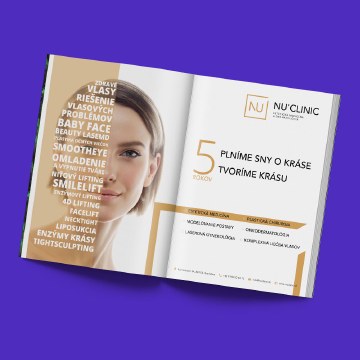
A print ad is a designed message placed inside another reading experience: a magazine, newspaper, programme, poster run, or other printed medium. The surrounding content, page position, paper, and viewing time affect how the message is understood. A strong ad does more than display a product. It gives a reader a reason to notice, understand, and remember a proposition.
Print advertising overlaps with campaign concepts and advertising systems, but the individual ad has a particular test: does this one page work when seen alone, at its final size, beside real content?
Write the proposition before the layout
Define the audience, the offer or idea, the evidence behind it, and the action the advertiser wants. Reduce the message to a sentence that can be understood without a presentation. If the brief contains five unrelated selling points, decide which one this placement can carry and which belong elsewhere.
Collect the approved facts, product details, required qualifiers, imagery rights, and publication specifications early. The visual idea must not imply something the claim cannot support. Rules differ by market and product; the responsible advertising and legal teams should approve claims and disclosures before release. In the United States, the FTC’s advertising guidance explains the general expectation that claims be truthful and supported.
Make image and copy work together
Find the visual idea
Explore several routes before polishing one. Try a product demonstration, a metaphor, a contrast, an unexpected scale shift, or an image that makes the headline mean something new. The image and line should each contribute; if removing either changes nothing, that element may be decoration.
Sketch in small rectangles at the real aspect ratio. Check the idea without a logo and without effects. A clear concept should still register in rough form. George Lois’s concise Esquire cover ideas offer one historical study in making a single image carry a public message, though an ad also needs to make its commercial purpose and claim clear.
Design the reading order
Choose the first point of attention, then the explanation and action. Headline, image, product, evidence, brand, and mandatory text should not all compete at once. Use contrast and space to show what belongs together. Give the reader enough information to understand the proposition without forcing them to decode a clever image.
Size disclosure and qualification text for the actual printed page. Avoid hiding information in a pale block that looked legible only on a zoomed monitor. Check crop, gutter, trim, and neighbouring pages in a realistic mock-up; a good composition can lose its focal point at the binding.
Test at print size and in context
Show the ad to someone outside the project for a few seconds, then ask what they think is being offered and what they would remember. Ask what claim they inferred, not only which words they read. Compare that answer with the approved proposition. If the strongest takeaway is a false implication, change the idea or wording.
Make a full-size proof on comparable paper. Check image detail, contrast, colour, fine type, and the transition between headline and supporting copy. Review any adapted versions separately; a half-page ad is not simply a smaller full page. Shorter copy or another crop may be necessary.
Deliver the final ad
Package the approved copy, original image assets, linked files, fonts or outlined artwork as required, colour profile, bleed, and export settings. Include the publication’s technical specification and the approved proof. Save the route that was published, so the campaign system can reuse what was learned without accidentally reviving a rejected claim.
Common mistake
Confusing an attention-grabbing image with an effective advertisement. The audience may remember the picture and miss the proposition. Test what people actually understood, then refine the relationship between idea, evidence, and brand.
People and practice